■ Combined heat and power plants and district energy systems that capture and reuse heat once left to waste.
These days, it is hard to get through the sweltering summer without air conditioning. But did you know that even in this scorching weather, we still need heat?
“What? Heat, in this weather?”
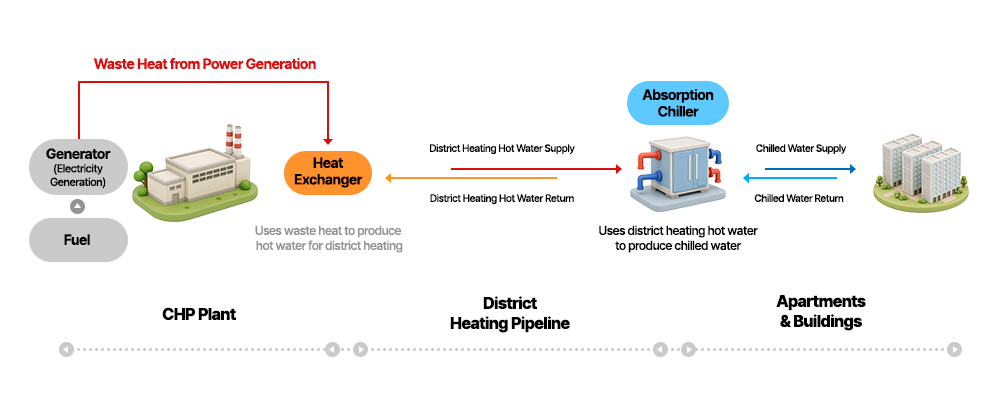
It may sound surprising, but heat is needed in every season. It is used throughout our daily lives all year round, and even plays a role in cooling. At the center of this system is a Combined Heat and Power (CHP) plant, which generates both electricity and heat at the same time.
| Machines Fight Heat with Heat, Too
Conventional power plants typically generate electricity by burning fuel, a process that produces a tremendous amount of heat. In the past, much of this heat was simply released into the air or discharged into the sea, resulting in significant energy loss.
CHP plants take a different approach. Instead of letting this waste heat go to waste, they recover it and turn it back into usable energy.
So where does the heat recovered from CHP plants go?
The first place that comes to mind is our home. It is used for heating in winter, of course, but also for the hot water we rely on even in summer. Hospitals and hotels need hot water 365 days a year, while industrial sites in sectors such as food, chemicals, and manufacturing use steam around the clock as a source of process heat.
In other words, thermal energy is needed all around us, regardless of the season or industry.And this recovered heat is used in one of the most unexpected ways as well: cooling.
| Heat for Cooling, How Is That Possible?
Have you ever heard of “district cooling”? The way it works is actually quite interesting.
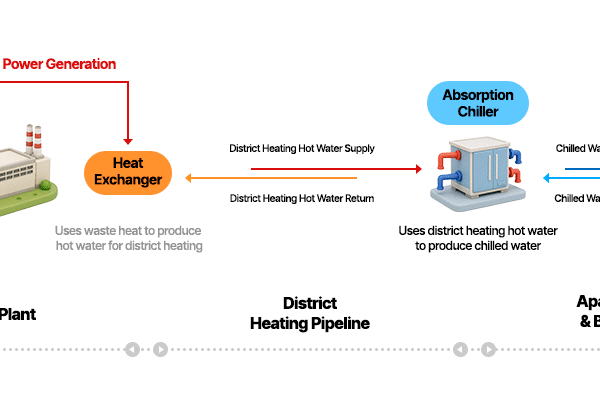
District cooling uses hot water and steam recovered from power plants to operate chillers. The chilled water produced through this process is then delivered to buildings through a network of pipes, where it is used to cool indoor spaces. At the core of this system is district energy, which supplies recovered heat from power plants to multiple buildings across a designated area.
Conventional air conditioners rely entirely on electricity to provide cooling. District cooling, on the other hand, uses waste heat recovered from power plants as its main energy source, helping significantly reduce electricity consumption.
During a heat wave, when air conditioners are running across the city, electricity demand can rise sharply in a matter of moments. District cooling helps reduce this strain by replacing part of that electricity demand with recovered heat, contributing to a more stable power grid. This is why district energy facilities are valuable throughout the year. From hot water at home and year-round heat demand at hospitals and hotels to industrial processes and summer cooling, heat has no off-season.
| SK Innovation E&S: Making Sure No Heat Goes to Waste
The warm water from your shower this morning, and the cool air in your office right now. Both may have come from the heat left behind as the city generated electricity last night.
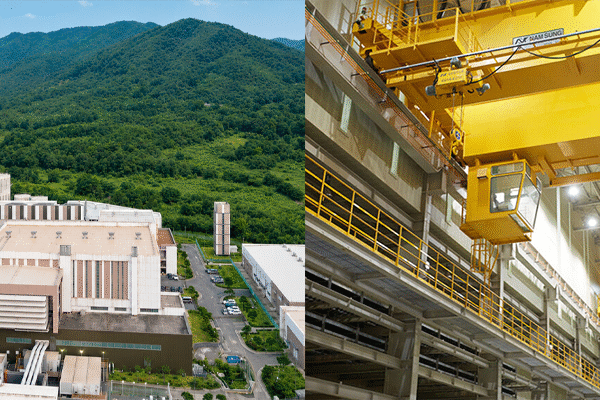
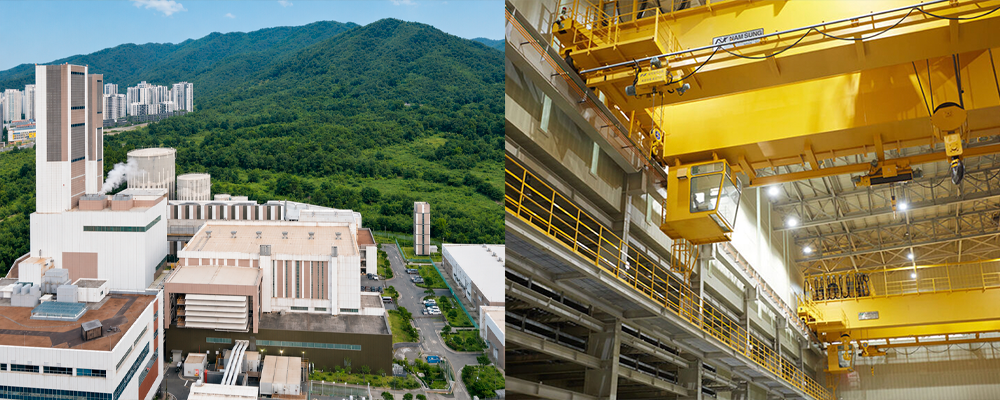
Together with its subsidiaries Narae Energy Service and Ensolve (formerly Busan Jungkwan Energy), SK Innovation E&S operates Combined Heat and Power (CHP) plants in key locations across Korea, including Wirye, Hanam, and Busan. Through these facilities, the company provides a stable supply of electricity and heat to nearby communities.
Because energy is produced close to where it is used, less is lost over long-distance transmission and distribution. In Busan, Ensolve quietly supports the everyday lives of around 28,000 households with heat that might otherwise have gone to waste. In the Wirye and Hanam areas, Narae Energy Service supplies energy to 139,054* households.
*Based on the 2025 District Energy Business Handbook
| From Producing More to Using Energy Better
Producing more energy is not the only answer. In the era of energy transition, the real challenge is how wisely we use the energy we already have.
District energy uses heat that would otherwise go to waste to warm cities, and even to help cool them again. At the center of this effort, SK Innovation E&S continues to support everyday urban life with its energy solutions.
Not just “more,” but “better.” That is the message CHP delivers to our cities today.
Energy has a way of surprising us. Stay tuned for our next story.
■ Related articles

- [Tech Chat] A Solution to Skyrocketing Power Demand: District Energy