💡 Quick Summary
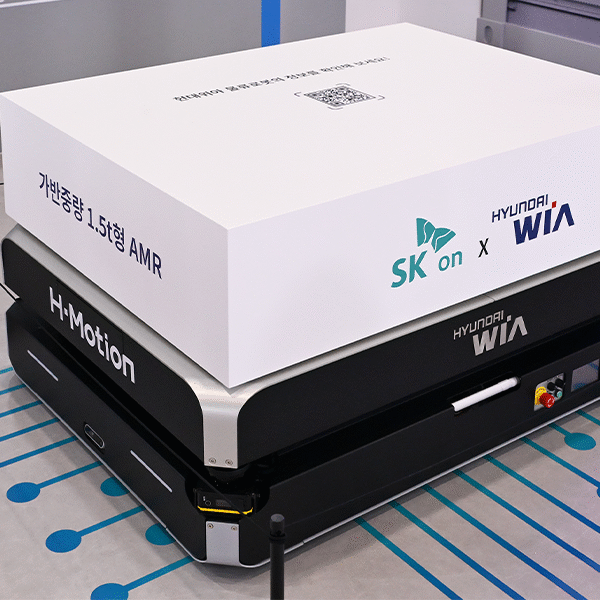
- SK On’s NCM (nickel-cobalt-manganese) batteries power Hyundai WIA’s parking robots, which work in pairs to lift and move vehicles and can increase parking capacity by up to 50% within the same area.
- To repeatedly lift and move heavy vehicles, parking robots need batteries that combine high energy density and high power output with a lightweight design.
- SK On supplies high-nickel NCM batteries for parking robots, autonomous mobile robots (AMRs), and mobile picking robots (MPRs), expanding its battery applications beyond electric vehicles into robotics.
| Why does every trip to the parking garage break a sweat?
There’s a scene that repeats itself every time we pull into a crowded parking garage. You circle around for an open spot, and even when you finally find one, the car next door is parked so close you can barely crack your door open.
Sometimes you have to twist your whole body just to squeeze out, or climb across to the passenger side entirely. Other times you open your door with extreme care, terrified of leaving a “door ding” on the car beside you. It’s the kind of parking stress that never gets easier, no matter how many times you go through it — and something just about every driver has experienced.
Then I remembered a video I’d seen on social media not long ago. Two slim robots slid out from under a car, spun around in circles to the beat of classical music, glided beneath another vehicle, and lifted it right up — almost like they were performing a ballet.
I’d vaguely known parking robots existed, but I was struck by how smoothly and precisely they moved. As it turns out, the video was a playful, AI-enhanced take on the real movements of actual parking robots. It spread across social media and news outlets at home and abroad, sparking a real surge of interest in parking robots.
So, curious as ever, I dug deeper. What exactly is this robot?
| How does a parking robot move a vehicle?
As it turns out, this parking robot was developed by Hyundai WIA, a Korean automotive and machinery company within the Hyundai Motor Group. It has already been rolled out at an office building in Seongsu-dong — a trendy district in central Seoul — and more recently launched a pilot program at an apartment complex in Siheung, just southwest of Seoul. Reportedly, it can fit up to 50% more cars into the same footprint.
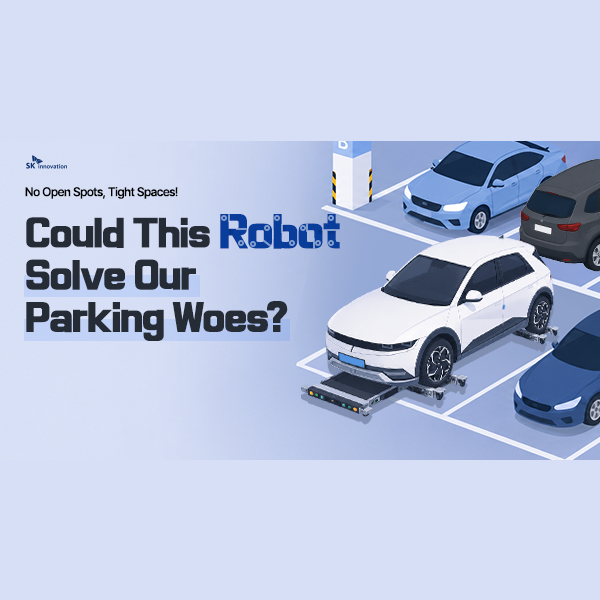
The way it works is more sophisticated than I expected. Two thin, flat robots operate as a pair: once the driver parks and steps out, each robot slides beneath the front and rear wheels. Because the robots do the moving — not the car itself — there’s no need for that endless back-and-forth shuffling in tight spaces. They can even move sideways as well as forward and back, scuttling laterally like a crab.
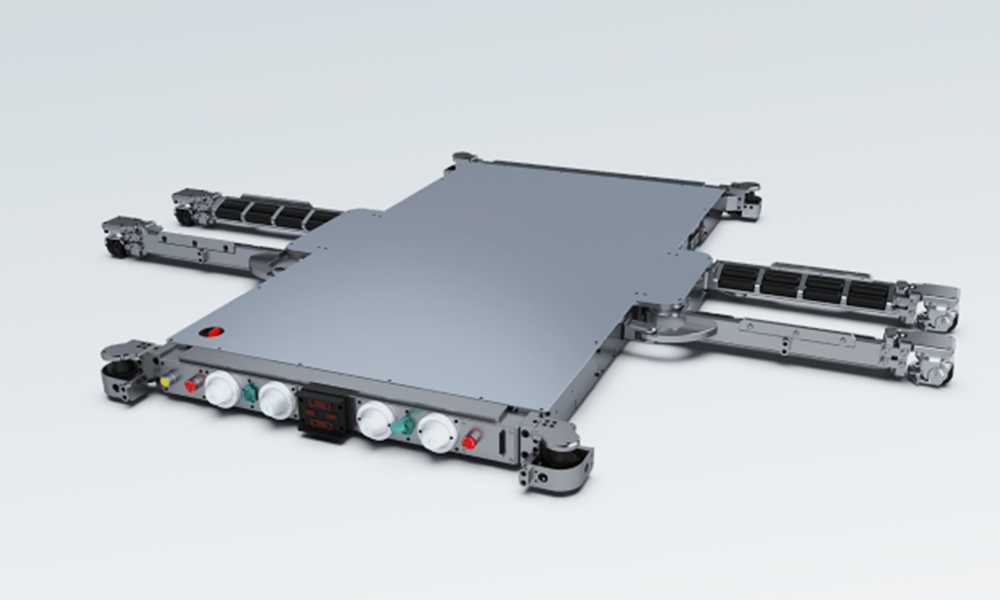
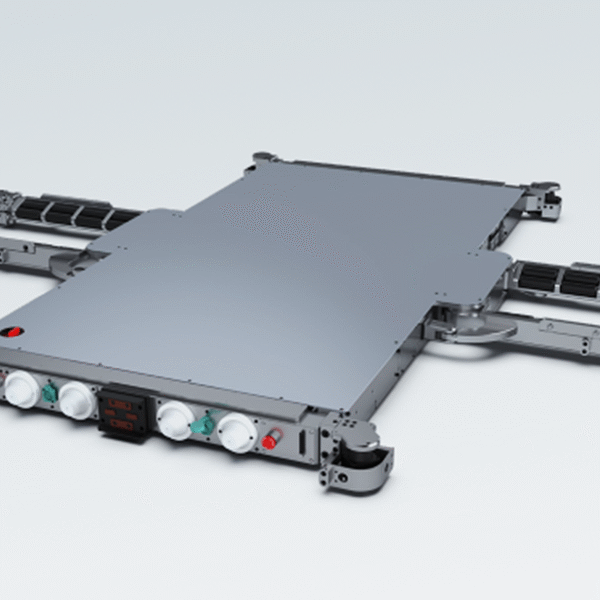
Since every car has slightly different wheel positions and sizes, the robot doesn’t just blindly slide underneath. It first uses a LiDAR sensor* to check the size and location of each wheel, then lifts from exactly the right points. According to the specs I found, this robot is just 110mm thick yet can move vehicles weighing up to 3.4 tons, traveling at speeds of up to 1.2 meters per second. Surprisingly slim — and surprisingly strong.
*LiDAR (Light Detection and Ranging): a remote-sensing technology that uses laser beams to measure precise distances and movement in an environment in real time.
In short, that same tight gap where I’d fold myself up like a shrimp just to get out of my car? A parking robot can breeze right through it, vehicle and all. Pretty impressive on its own, don’t you think?
| “I can do this all day!” — What keeps this robot going
But that got me wondering about something else. If it’s lifting and lowering multi-ton vehicles all day long, wouldn’t it wear out pretty quickly?
As I learned, keeping a robot running smoothly over the long haul takes two key technologies. The first is its “eyes and brain” — the LiDAR sensors and autonomous driving tech that perceive surroundings and make decisions. The second is its “stamina” to carry out those decisions under its own power: the battery. No matter how smart it is, a robot can’t move a heavy car without enough muscle — so the real key to a parking robot turns out to be its battery.
Parking robots, in particular, don’t travel long distances. Instead, they repeat short movements — moving, stopping, and lifting vehicles, over and over. Because they need to deliver powerful bursts of force on demand while operating reliably across many vehicles, what matters isn’t just long endurance. It’s a battery that can pack plenty of energy into a limited space and release strong output at the exact moment it’s needed.
| A parking robot battery that packs big power into a small space
So I looked into which battery powers this parking robot — and it turns out it runs on SK On’s NCM (nickel-cobalt-manganese) battery. NCM batteries combine nickel, cobalt, and manganese to deliver high energy density and high power output while staying relatively lightweight. That makes them a great fit for parking robots, which need to store enough energy within a tightly limited space while summoning the strength to move heavy objects.
As a partner in Hyundai WIA’s robotics ecosystem, SK On supplies its high-nickel NCM batteries not only for parking robots but also for autonomous mobile robots (AMRs), mobile picking robots (MPRs), and more.
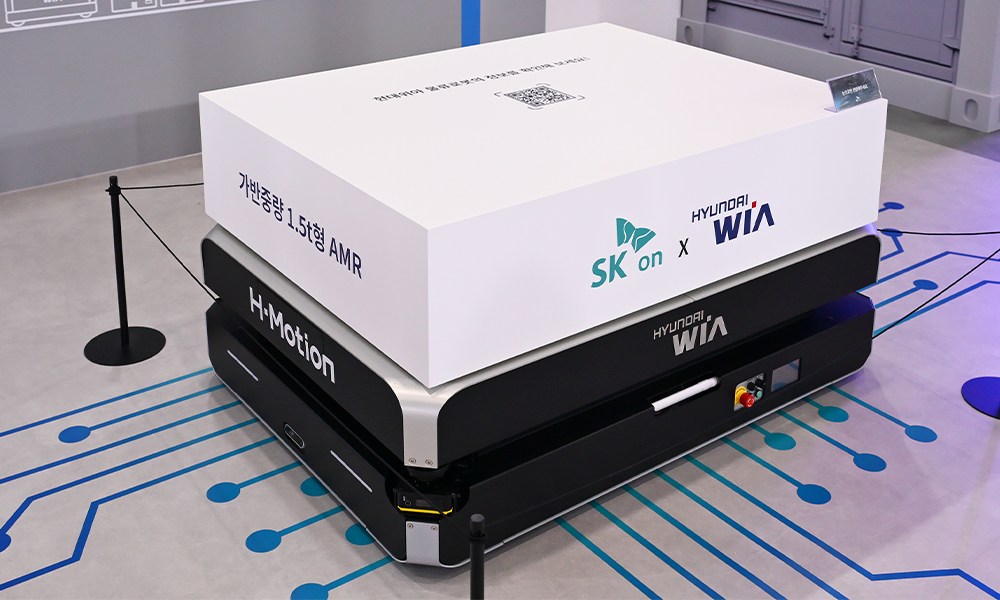
The very batteries that once got electric cars rolling are now becoming the muscle for the robots that park them. Kind of amazing when you think about it, isn’t it?
| Until the day parking robots put our parking troubles to rest!
Before I started looking into parking robots, I’d thought of them as just neat machines that move cars for you. But taking a closer look, I found precise control technology driving every movement — and a battery quietly shouldering all the robot’s stamina behind the scenes.
An NCM battery that fills a limited space with all the energy it needs, delivers powerful output the instant it’s called for, and still keeps weight to a minimum. It’s that balance that lets the robot lift heavy vehicles again and again without ever tiring out.
The days of circling for a spot or wedging yourself into a cramped gap may soon be behind us — before long, a robot will simply find the empty space and park your car for you. And honestly? Just knowing that day is coming already lifts a weight off my shoulders!
■ Related articles

- “The Camping Upgrade I Didn’t Know I Needed” — Electric Car Camping, Real Review

- [Expert Lens] The Case for Ternary Batteries in Emerging Industries

- [INTERBATTERY 2026 Preview] Unlock the Next Energy – Next-Generation Battery Innovation at the SK On Booth

- [Inside ESS] Beyond NCM: SK On’s Next-Gen LFP