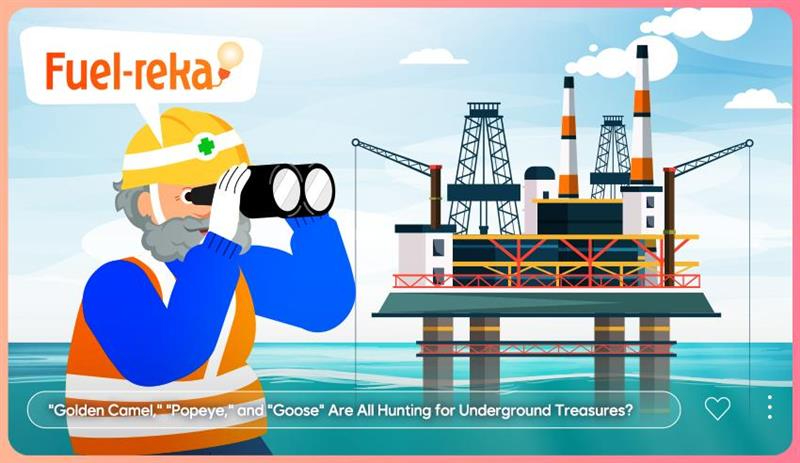
“Penguin,” “Mad Dog,” “Golden Camel,” “Kepler,” “Popeye”—what’s the deal with these names? If you’re thinking they sound like a lineup from a quirky zoo or a retro comic book, you’re not far off. But here’s the kicker: these are actually names of oil fields, each hiding a treasure trove of resources underground.
So, why are these names? Today, we’re diving into the intriguing world of energy project names to uncover the stories and inspirations that fuel them.
But first, let’s get a handle on some key terms:
• Block: A designated geographic area where the government or regulatory body grants exploration and development rights to energy companies. Each block is identified by a unique number or name and can contain multiple structures or fields.
• Structure: A geological formation (e.g. an anticline or fault trap) capable of capturing oil or gas. It is primarily identified through geological and geophysical surveys, serving as the initial target for assessing potential accumulation of resources.
• Field: A geological formation within a block where oil or gas has actually been discovered and confirmed to be commercially viable for production. A field may consist of one or more reservoirs.
• Reservoir: A porous rock layer that physically stores oil or gas. Multiple reservoirs may exist within a single field, and development and production strategies vary based on the characteristics of each reservoir.
• Well: A drilled hole into a reservoir to explore or extract oil or gas. There may be multiple wells within a reservoir or field, and their location and design are determined by the reservoir’s characteristics.
With the basics down, let’s explore who made these names, why they chose them, and take a look at some interesting examples.
Q1. What are some of the names?
In the bustling realm of oil and gas fields near the North American continent, you’ll find names that echo beloved elements of popular culture. Take the “Block Mississippi Canyon 387 (MC 387)” in the Gulf of Mexico, whimsically dubbed “Nearly Headless Nick,” after the beloved character from the Harry Potter series. Over in the Delaware Basin, there’s the “Castle Black” oil field, inspired by the iconic fortress from the hit TV show “Game of Thrones.”
Across the North Sea, between Norway and the UK, the influence of Norse mythology is palpable. Names like “Valhall Oil Field” draw from Valhalla, the legendary paradise for warriors. You’ll also spot fields named after mythological figures like Odin, Thor, and Njord. Shell has creatively labeled five UK oil fields with names of seabirds. Take the “Brent Field (Block 211/29),” named after the Brent Goose, a frequent sight in the area. You might recognize “Brent” from oil price news, as Brent Crude is one of the world’s top three oil benchmarks, alongside Dubai Crude and West Texas Intermediate. Imagining “Brent Crude” as “black goose oil” adds a playful touch! The North Sea also boasts fields like the “Kittiwake Field (Block 21/18),” named for the Kittiwake seabird, and the “Penguins Field (Block 211/13a and 211/14).”
Quick Trivia! Guess what SK Earthon’s oil fields in Vietnam are called?
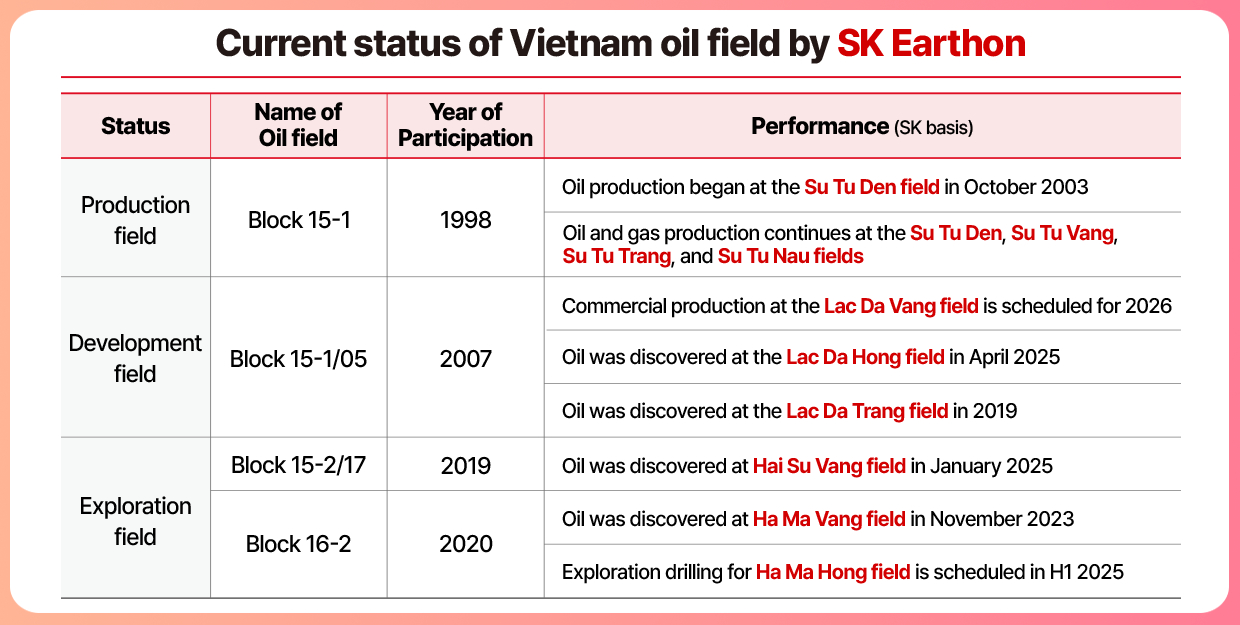
SK Earthon’s projects in Vietnam are filled with intriguing names as well. Since 1998, SK Earthon has been involved in developing oil and gas fields in Block 15-1 within the Cuu Long Basin in Vietnam. In Vietnam, it’s common practice to name oil and gas fields by combining animal names with colors. Within this block, there are several structures named “Lion (Su Tu),” and each structure is distinguished by combining a color with “Lion,” resulting in names like “Golden Lion (Su Tu Vang)” and “Black Lion (Su Tu Den).”
Additionally, SK Earthon plans to commence full commercial production from the “Golden Camel (Lac Da Vang)” structure in Block 15-1/05 in Vietnam by the second half of 2026.
Below is a summary table of SK Earthon’s ongoing projects in Vietnam, showcasing the unique names of these structures.
Q2. Why use nicknames when there are official names?
Simply put, they’re easier to remember. Oil and gas development projects are typically identified by official names consisting of numbers and letters. For instance, in Vietnam’s “Block 15-1,” the “15” denotes the exploration area number assigned by the Vietnamese government, while the “-1” serves as an identifier for specific locations or contracts within that area. Similarly, in Indonesia’s Natuna D Alpha, “Natuna” refers to the archipelago where the gas field is located, “D” specifies a particular block, and “Alpha” indicates a development phase or specific location.
However, a block covers a broad geographic area and can include multiple oil or gas fields. Within these areas, there are also structures with potential oil or gas reserves and wells for extraction. Due to this complexity, official names can be challenging to remember and cumbersome to use on-site. Therefore, field teams and project stakeholders often assign more intuitive and memorable nicknames to projects. These unique names make it easier to identify projects, facilitate natural and friendly communication among participants, and enhance collaboration. Additionally, if a nickname reflects local nature or culture, it can forge a closer connection with the area, contributing to the project’s social acceptance.
Take Norway’s “Block 34/10” as an example. Its official designation may not stick in your memory—but its nickname, Gullfaks, is much more memorable. Derived from the Norwegian word Gullblokken, meaning “Golden Block,” the name is not only easy to remember, but also highlights the project’s value. In essence, nicknames serve as more than just names—they’re vital elements that support a project’s success.
Q3. How do these unique names originate?
In the early stages of exploration, geologists identify areas with potential oil or gas as “leads” or “prospects,” based on geological structures. These terms are used during the evaluation of the petroleum system elements and the resource potential. Once exploration progresses and the presence of oil or gas is confirmed, an official name is given to the project or discovery according to the energy company’s policies or government regulations.
While not every country has official rules, most governments recommend considering informal guidelines or practices when naming oil and gas fields. For example, in the UK, names that could cause confusion, have inappropriate meanings, or are difficult to pronounce may be restricted. In Norway, it’s common to use Norwegian-based names following government guidelines. For instance, the “Troll Field,” a major offshore oil and gas field in the North Sea, is named after the mythical giants from Nordic folklore.
Project names are often inspired by natural environment, local culture, or historical context. In Australia, there’s a tendency to name oil and gas fields after fish. “Ichthys,” a natural gas field off the northern coast of Western Australia, takes its name from the Greek word for “fish,” reflecting the region’s marine setting. Meanwhile, in Victoria’s Gippsland Basin, the “KTT Project” stands for Kipper, Tuna, and Turrum, names of fish species easily found in the area.
As these examples show, oil and gas field names aren’t just identifiers—they reflect the unique character of each project, shaped by geography, culture, and history. Behind every name, there’s a story to be told.
Additionally, there are fields named after cattle breeds like Holstein and Angus, and even liquor names like the Whiskey Buttes Unit. Some nicknames are commonly used worldwide, not tied to any specific field. For instance, an exploratory well for new oil fields is commonly referred to as a “Wildcat” in the industry. These unique names not only serve identification purposes but also reflect the history and culture of the areas and provide a bit of joy and a communication bridge for those working on-site. Resource development sites are often located in challenging terrains like deep seas, jungles, or deserts, making them hard to access and operate. The creativity and humor embedded in these names might mean even more to those working in such tough environments. Fuel-reka!