The Mainstreaming of Electric Vehicles and Emerging Challenges
“Ten minutes of charging for a round trip between Seoul and Busan — a journey of nearly 400 kilometers.” It is an idea any electric vehicle (EV) user has dreamed about at least once. Over the past decade, the EV market has expanded rapidly and has taken center stage in future mobility, increasingly replacing internal combustion engine vehicles. What was once a niche market for early adopters has now moved into a mass-market phase, where everyday consumers weigh performance and convenience before making a choice.
With this shift, expectations have grown higher. EVs are no longer judged simply as cars that run on electricity. They are expected to offer long driving ranges comparable to internal combustion vehicles, fast charging, and, above all, uncompromising safety. Lithium-ion battery technology, which remains the industry standard, has evolved at an impressive pace to meet these demands. Yet pushing beyond its physical limits will require a fundamentally new approach. This is why all-solid-state batteries, often referred to as the benchmark for next-generation batteries and even as a “dream battery,” are attracting growing attention.
The Electrolyte as a Core Component of the Battery
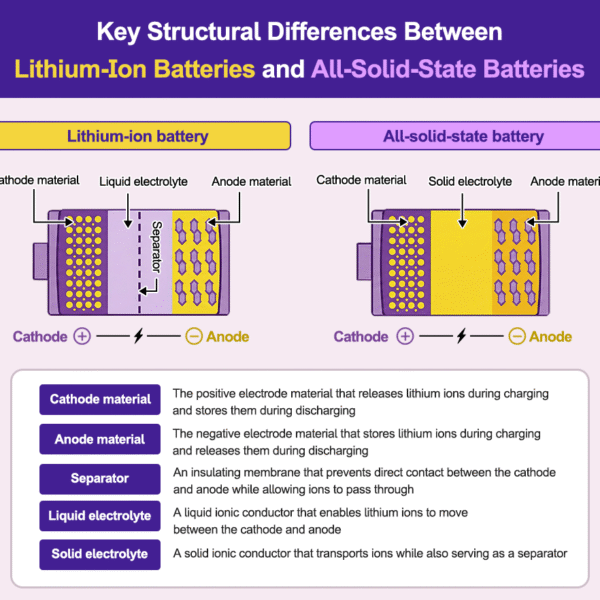
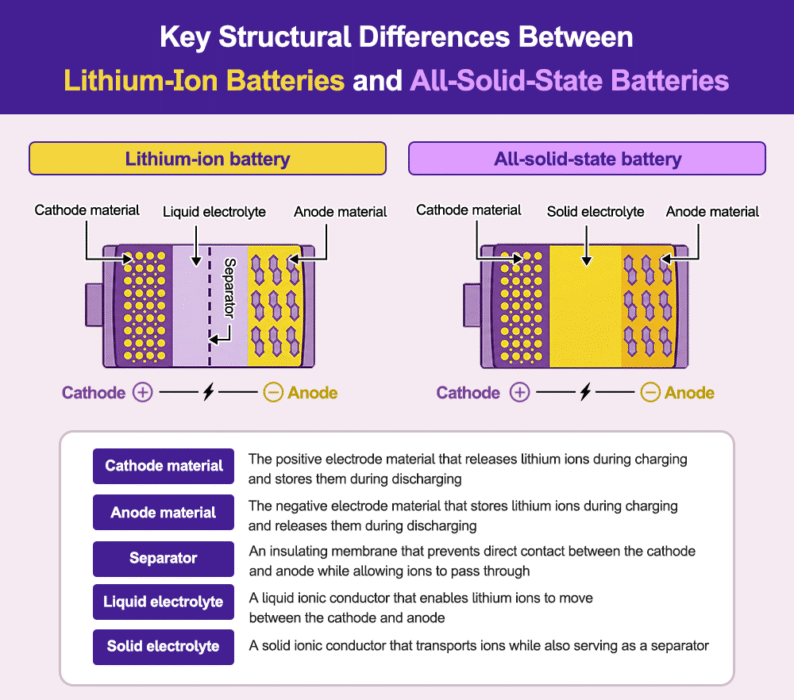
To understand how a battery functions, it helps to look at what is inside it. A battery consists of four core elements: the cathode, the anode, the separator, and the electrolyte. The cathode and anode store and release energy through the movement of lithium ions, while the separator keeps the two electrodes from coming into direct contact.
The component that deserves particular attention is the “electrolyte.” It serves as the pathway that allows lithium ions to travel between the cathode and the anode. Most lithium-ion batteries in use today rely on liquid electrolytes. These liquids offer high ionic conductivity, making them well suited for delivering power, and the technology has reached a high level of maturity. This is what has enabled the current generation of high-performance EVs. At the same time, liquid electrolytes are inherently sensitive to temperature changes and external shocks. For that reason, battery systems must be supported by robust safety measures and carefully engineered system designs.
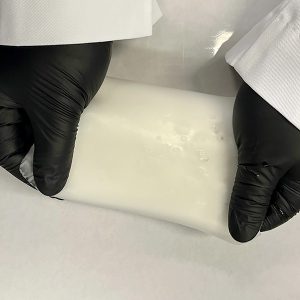
All-solid-state batteries represent a step forward by replacing liquid electrolytes with solid ones. Once the electrolyte is solid, the battery structure becomes mechanically stronger and thermal stability improves substantially. The absence of liquid eliminates concerns related to liquid leakage and helps material properties remain stable even when external conditions change. In practical terms, changing the physical form of the electrolyte alone creates a clear path to strengthening the overall stability of the battery system.
Why All-Solid-State Batteries: Balancing Safety and Performance
The reason battery manufacturers around the world are committing significant resources to all-solid-state battery development is clear. The technology offers a way to maximize two values that are often difficult to achieve at the same time: safety and energy density.
As noted earlier, solid electrolytes carry little risk of leakage or gas generation, helping to reduce flammability concerns. This high level of safety, somewhat counterintuitively, also serves as a catalyst for improved battery performance. Complex cooling systems and safety components that were essential in conventional battery packs can be reduced. With fewer components required, more space becomes available for battery cells. This allows energy density to increase substantially within the same volume.
In addition, solid electrolytes provide favorable conditions for the use of high-capacity anode materials such as lithium metal. This has the potential to extend driving range on a single charge beyond 800 kilometers and to significantly shorten charging times. In short, all-solid-state batteries are not simply about replacing one material with another. They increase design flexibility at the battery-pack level and redefine the performance limits of electric vehicles.
The Remaining Hurdles and a Five-Year Window of Opportunity
All-solid-state batteries do not, of course, guarantee a smooth path forward. Significant technical challenges still remain before true commercialization can be achieved. The most fundamental barrier is the interfacial issue, which arises where the solid electrolyte comes into contact with the electrodes. Liquid electrolytes can fully wet electrode surfaces. When two solid materials meet, however, microscopic physical gaps are unavoidable. These gaps hinder ion transport and destabilize the interface, becoming a primary cause of reduced battery performance and shorter lifespan.
To address this contact issue, current manufacturing approaches rely on ultra-high-pressure processes such as Warm Isostatic Pressing (WIP), which force particles into close contact during production. Such processes are difficult to apply to continuous manufacturing lines and require separate measures to secure productivity. An even greater challenge is that high pressure may also be required after the battery is manufactured, under actual operating conditions. During charging and discharging, volume changes in active materials can disrupt particle contact. To prevent this, additional mechanisms are sometimes needed to apply sustained pressure within the battery system.
These requirements can increase the size and weight of battery packs and weaken cost competitiveness. For this reason, reducing the burden of pressure during manufacturing and lowering reliance on pressure during operation are urgent development priorities. The next five years are widely seen as a critical turning point in determining technological maturity. How quickly and effectively materials innovation and process technologies advance during this “golden window” will shape future leadership in the battery market.
The K-Battery Approach: SK On’s Challenge and Innovation
South Korea, as a leading battery nation, is well positioned to drive this shift. Among domestic players, SK On is delivering concrete and practical progress in the all-solid-state battery field, building on its established lithium-ion battery manufacturing capabilities.
SK On has built an all-solid-state battery pilot plant in Daejeon and is accelerating the development of sulfide-based all-solid-state batteries, with commercialization targeted for 2029. A particularly notable point is the company’s progress in addressing interfacial resistance between electrodes and solid electrolytes, long regarded as a major technical hurdle, through proprietary technologies.
In general, expanding contact between solid electrolytes and electrodes requires the use of WIP, a process that applies high temperature and pressure. However, this approach is complex and time-consuming, making it less suitable for mass production. SK On has improved on this by retaining the advantages of the WIP process while developing its own compression technology that delivers sufficient performance using conventional press methods. This approach significantly improves productivity while maintaining battery lifespan and performance, making it a technology suitable for mass production.
Moving beyond laboratory-scale performance to secure technology that can be deployed in actual manufacturing environments suggests that SK On is positioning itself as a potential game changer in the next-generation battery market. In parallel, the company is strengthening its technological portfolio through research into lithium-metal batteries and other advanced battery technologies.

A Clear Milestone on the Road to Future Mobility
All-solid-state batteries are not from a science fiction set in the distant future. They are a near-term reality, moving beyond the laboratory to pilot lines and preparing to appear on real roads in the not-too-distant future. Early on, high costs may act as a barrier to adoption. As the technology matures, however, cost competitiveness is expected to improve alongside it.
The intense technological race surrounding all-solid-state batteries is reshaping the landscape of the future mobility industry. That shift is driven by the innovation and technical expertise of Korean companies.
A world of electric vehicles that are safer, go farther, and charge faster—that is the future all-solid-state batteries are set to unlock.
■ Related articles

- SK On Opens All-Solid-State Battery Pilot Plant, Eyes 2029 Commercialization

- SK On Presents New Research Advances in Solid-state Batteries

- SK On Unveils R&D Breakthroughs on All-Solid-State Batteries

- [Battery Explorer] ④ Better battery: Unlocking the future of energy storage

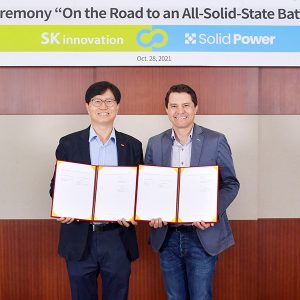
- SK On strengthens partnership with Solid Power to accelerate all-solid-state battery development