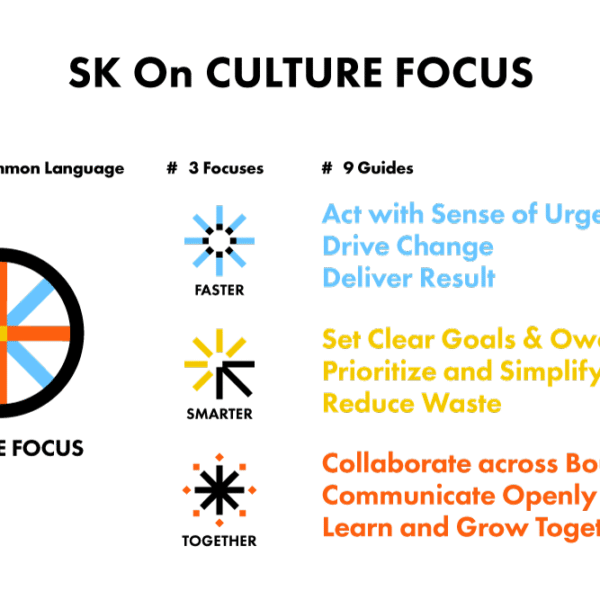

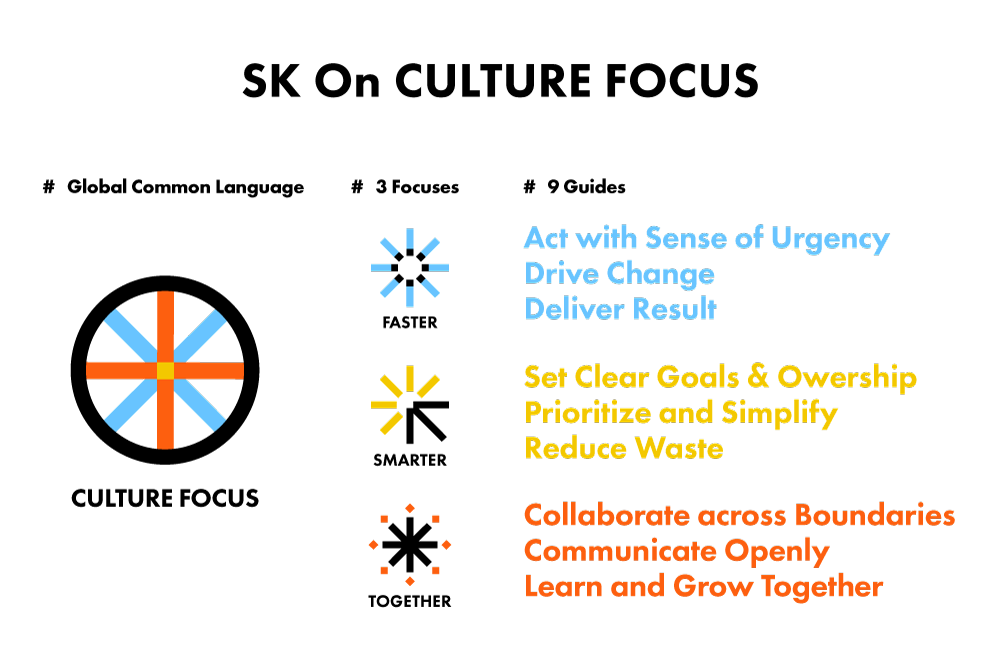
SK On is a leading player in the global EV battery market. But how does SK On actually work, and what fuels the growth of its people and the organization? At the center is SK On’s Culture Focus, a framework for how its people work and grow together. Culture Focus is built around three pillars: Faster, Smarter, Together, with each pillar being made up of three practical guides that can be directly applied in the field. Among them, the Manufacturing Intelligence Office’s Data Science (DS) education program is a flagship example of how the Together pillar — especially the Learn and Grow Together practical guide — comes to life in the workplace. The story moves into the DS learning space, where SK On employees are in full study mode, learning and growing together in real time.
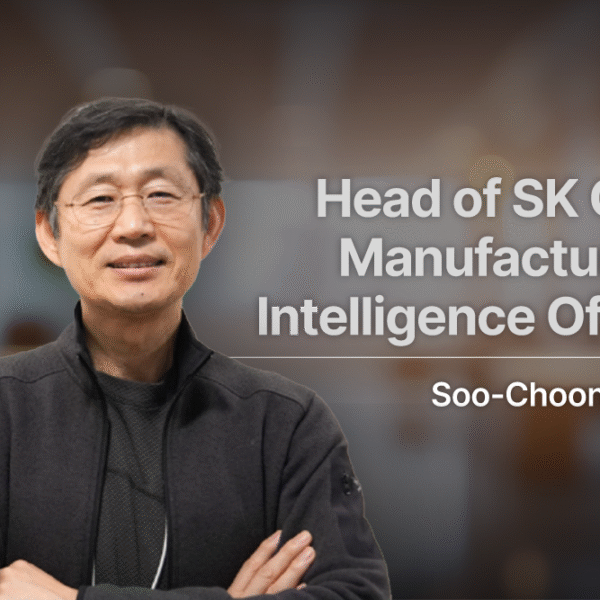
The speed at which people learn often defines the pace of growth. In a fast-changing industry like batteries, even a minute can impact competitiveness. With this in mind, the Manufacturing Intelligence Team runs its DS program to help frontline employees read data, solve problems, and drive improvements on their own. The program goes far beyond theory; it is hands-on training designed for immediate application in the field. What kind of change is this program creating across SK On? SK On Newsroom spoke with Soo-Choon Kang, Head of the Manufacturing Intelligence Office, to learn more.
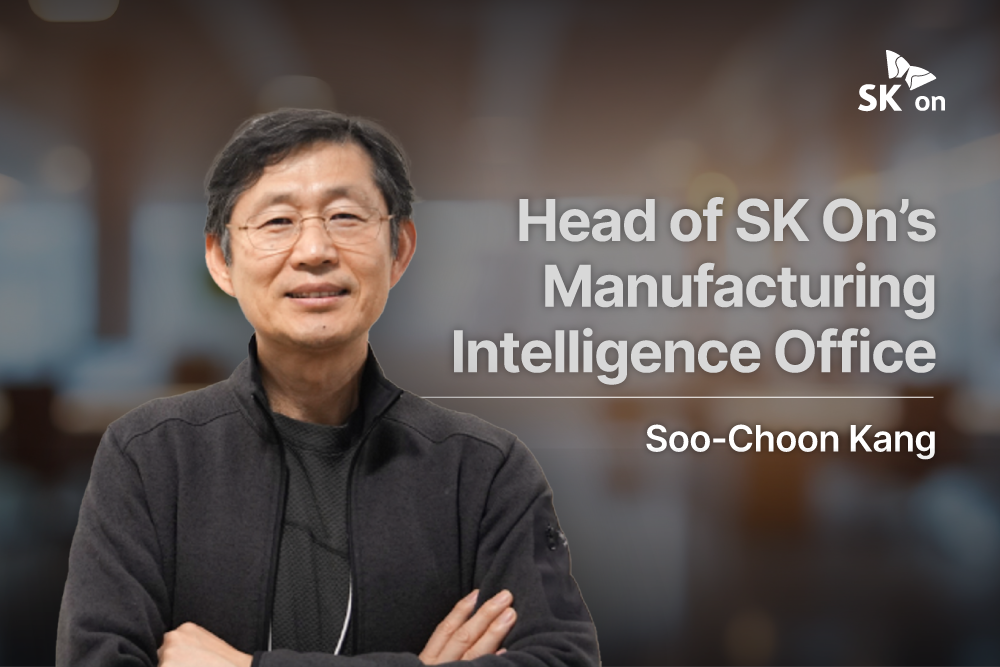
Q. Could you start by introducing the Manufacturing Intelligence Office?
The Manufacturing Intelligence Office combines on-the-ground experience with data science to advance SK On’s manufacturing automation and intelligence. This includes diagnosing issues accurately, optimizing each process, and even working to predict risks before they arise. The goal is to establish a data-driven decision-making framework across manufacturing and, through it, secure top-tier competitiveness in battery production. One of the key enablers is building data science capabilities across our workforce through DS education.
Q. What exactly is Data Science education at SK On?
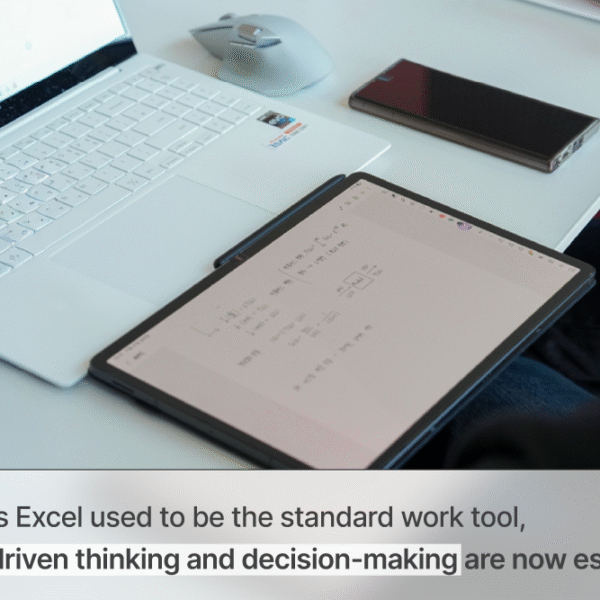
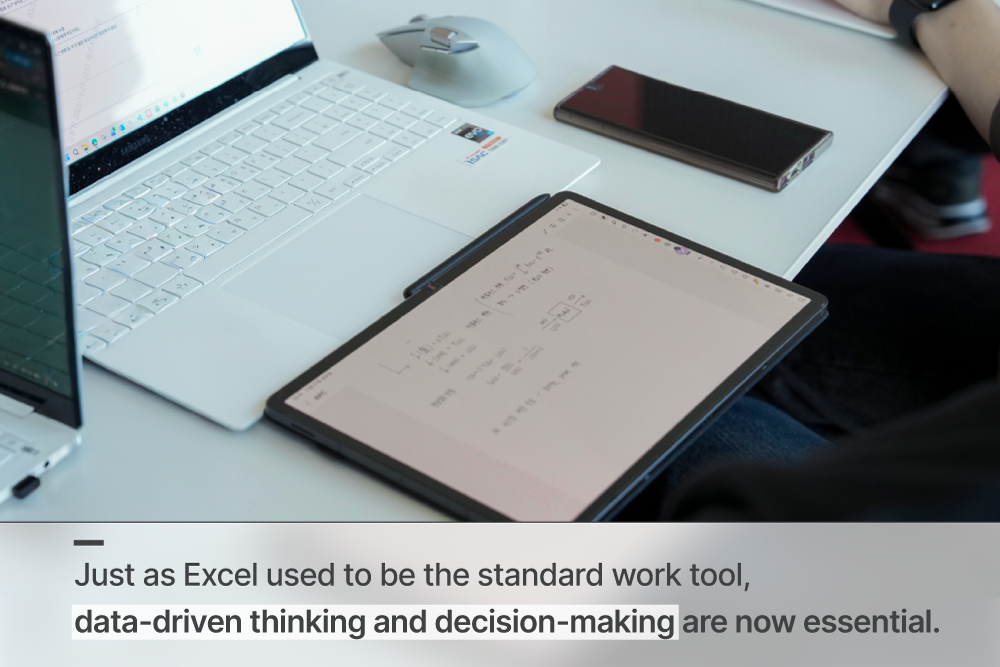
In the age of AI, being able to understand and use data is now a basic requirement on the manufacturing floor. It isn’t limited to a particular job function. In the past, Excel was the default tool for almost every task. Today, data literacy is becoming a core capability across all areas, including manufacturing, quality, planning, and support functions. Our DS education program was launched to allow any SK On employee to respond to this shift. We started by upskilling members of the Manufacturing Intelligence Team and are now spreading that capability to colleagues on other frontline teams.
Q. What topics do people actually learn in the DS program?
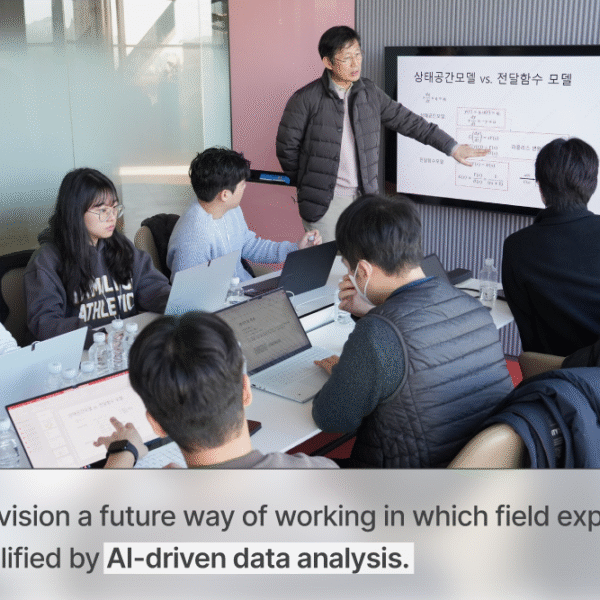
We focus on topics that can be applied directly on the manufacturing floor. The program starts with machine learning (ML), which forms the foundation of data analysis. It also extends to areas such as Advanced Process Control (APC) — where process parameters are automated — as well as image analysis used in manufacturing environments. The entire course is delivered over a span of ten days.
Q. What is the core of the Data Science program?
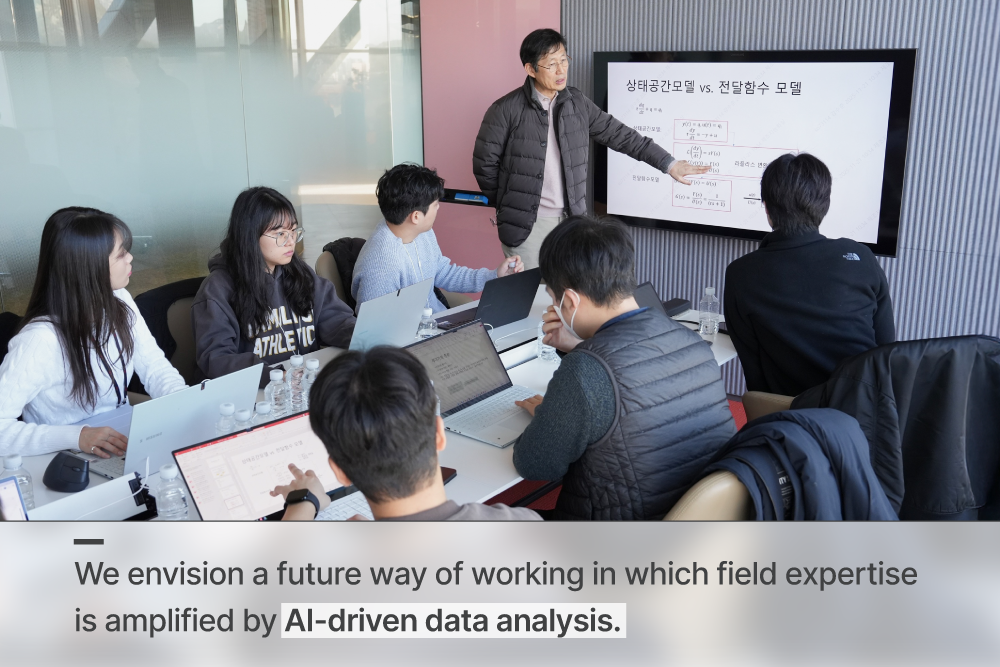
The heart of the program is helping people truly understand the underlying concepts of data analysis. To make the basics clear, we use Excel — the tool most widely used on the manufacturing floor — as the foundation for hands-on practice. We prefer this approach because it allows participants to focus on the overarching logic of data analysis. Programming tools like Python or Java, on the other hand, require writing code from scratch, which is a more granular approach that often makes it harder to clearly convey the concepts of data analysis. Above all, we believe that you only make something your own when you build it yourself. That’s why we keep the sessions small, usually with fewer than ten participants, and run them offline so people can freely ask questions and engage in active discussion.
Q. There must be a gap between classroom learning and fieldwork. How do you bridge that?
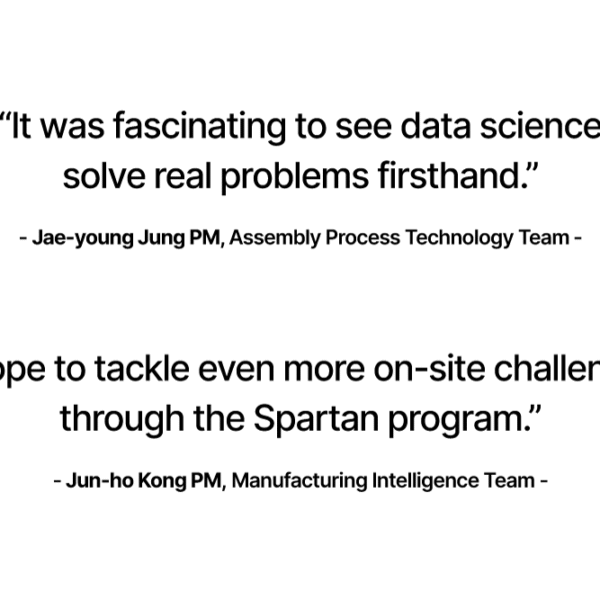
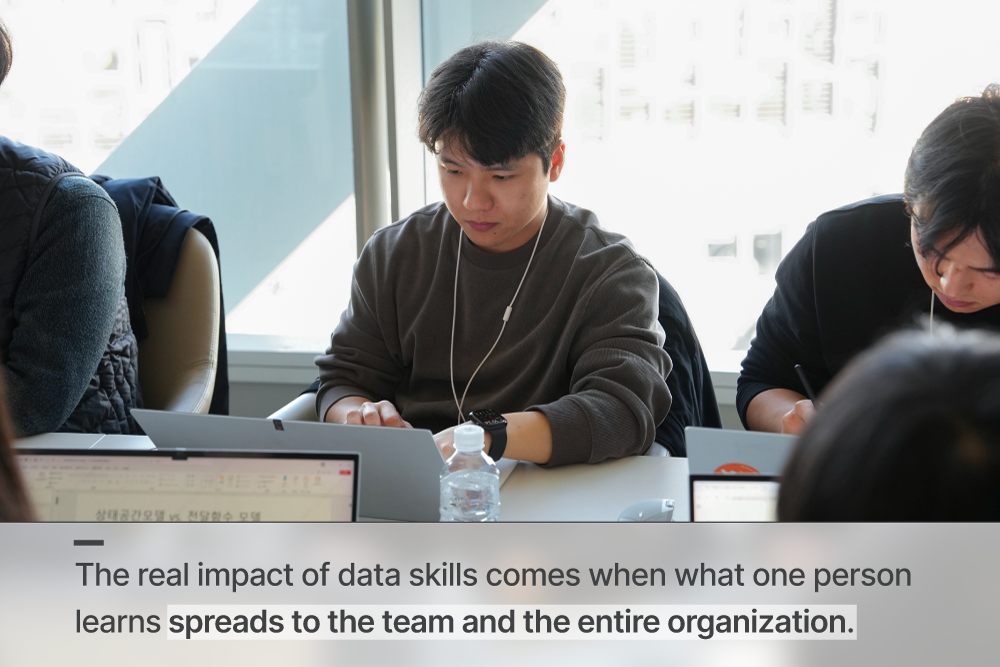
That’s true. This is why we focus on field-centered training that leads directly to real problem solving. Sometimes our team visits other departments to run on-site sessions, and we also invite employees to the Manufacturing Intelligence Team for deeper, hands-on work. A good example is the Spartan program. For about two to three months, employees join our team and work side by side with us to tackle actual issues from their operations. After building that capability here, they return to their home teams and naturally become the “go-to data science person” for their colleagues.
Q. The Spartan program sounds like a great idea. Have you seen meaningful results?
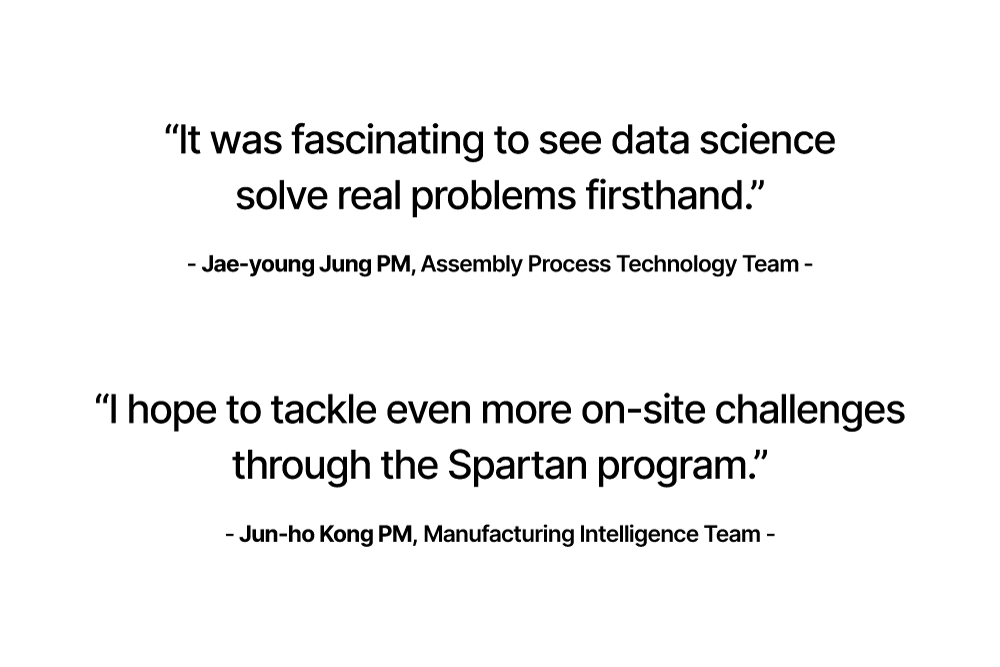
Let me share an example from Assembly Process Technology Team, who participated in 2025. Their project focused on reducing defects in the tab welding process 1), where the tabs are bonded using ultrasonic welding. Production volume was growing, but the defect rate did not decline as much as anticipated. This was a major concern for the team. Ultrasonic defects also come in many different forms, making them particularly difficult to consistently manage. Through the Spartan program, the team identified the root causes behind each defect category and defined optimal control values. As a result, they were able to reduce overall defects by 14.8%. This reduction represented a major improvement, as even single-digit improvements can have a substantial impact on high-volume battery cell production lines, including enhanced safety, reduced risks from defects, and cost savings at scale. It was a joint achievement — the team’s field experience combined with the Manufacturing Intelligence Team’s data analysis expertise produced a meaningful, measurable improvement.
1) In tab welding, electrode tabs are ultrasonically welded to the jelly-roll cell composed of stacked electrodes and separators
Q. Lastly, what do you hope the Data Science program will mean for SK On employees?
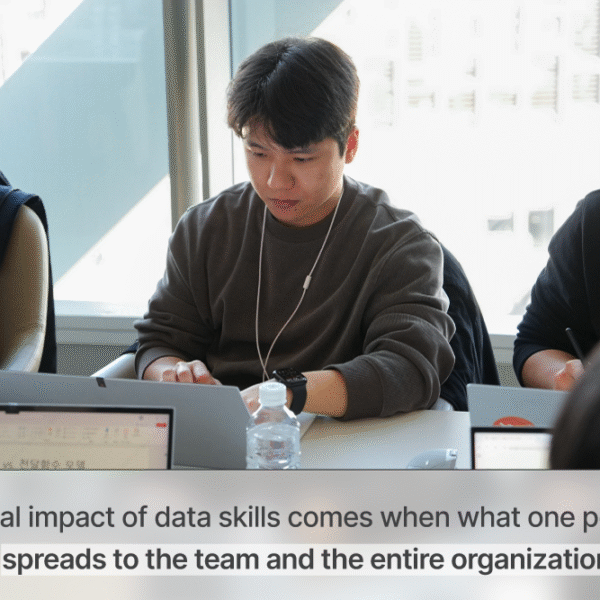
Data capability isn’t something that belongs to a single department — it’s a shared capability that we all need to build together. It’s what I would call an “omni-use” skill 2), one that’s recognized and valued in any organization. It strengthens individual growth and is also one of the most reliable ways to elevate our competitiveness as a company. My hope is that this program becomes a solid growth asset for each employee, and a critical foundation for SK On to secure an advantage in the next generation of the battery market.
2) An all-encompassing skillset for making optimized, data-driven decisions across various functions—not limited to any specific task or department.
Growing a Data-Driven Culture, Together
Learn and Grow Together at SK On is, quite literally, about learning from one another and growing together. Through Culture Focus, the company will continue to support employee development and expand an organization-wide data-driven problem-solving culture. As battery technology evolves at breakneck speed, SK On is moving forward with employees who are constantly learning — growing faster, thinking smarter, and advancing together.
■ Related Articles

- SK On Unveils Breakthrough in Next-Generation Cathode Research