💡 Quick Summary
- SMR (Small Modular Reactor) is a next-generation nuclear power plant that divides reactors into small modules, manufactures them in factories, and assembles them on-site—the key difference from traditional large-scale nuclear plants is that they are built “small” by design.
- Because of their smaller size, SMRs offer fast and cost-effective construction, simplified safety design, flexible siting near demand centers, and are gaining attention as dedicated power sources for AI data centers, semiconductor fabs, and industrial complexes.
- SK Innovation stepped into SMR business in 2022 with an investment in TerraPower, and is now preparing an integrated energy platform combining SMRs with LNG and energy storage solutions.
| SMR, A Solution for AI Era’s Power Shortage?
The talk of electricity shortages due to AI data center power consumption has become increasingly serious. A single data center can consume as much electricity as an entire mid-sized city. But there’s an unexpected solution to this problem: nuclear power.
“Nuclear power plants? Those massive facilities take forever to build!”
But this isn’t the nuclear power plant you’re thinking of. Meet the star of today’s story: the Small Modular Reactor (SMR)—a much smaller yet powerful reactor that’s manufactured in factories and assembled on-site. Let’s explore what makes it different from traditional nuclear plants and why it’s capturing attention right now.
| Why Did Nuclear Power Plants Have to Be So Large?
Nuclear power plants had to be built large because larger reactors were more efficient, and the massive heat they generated required enormous amounts of cooling water.
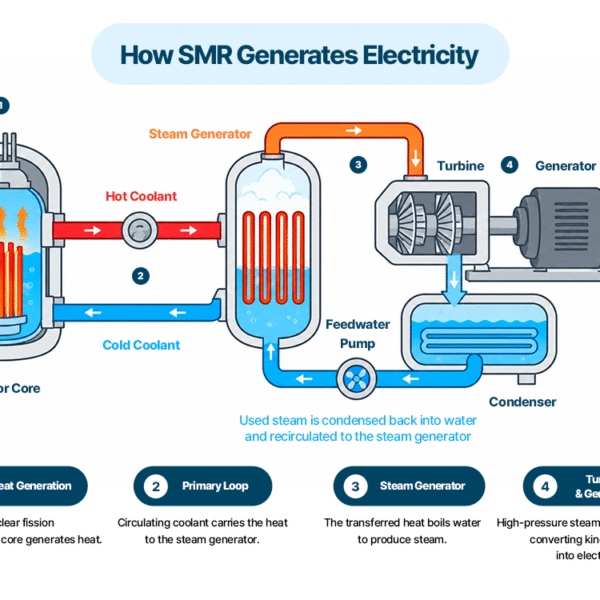
Nuclear power works by splitting uranium atoms, which releases tremendous heat that boils water into steam, which then turns turbines to generate electricity. A small amount of fuel produces enormous energy, and virtually no carbon is emitted during power generation.
That’s why nuclear plants were built as national-level projects on vast coastal sites, requiring many years and enormous investments. The image of a nuclear plant we’re familiar with—sprawling land, massive domes, over a decade of construction—was built on this necessity for scale.
| What is SMR, and How is It Different from Traditional Nuclear Plants?
SMR, true to its name, divides a reactor into small modular units, manufactures them in factories beforehand, and then assembles them on-site. It’s the next-generation nuclear power solution—and the biggest difference from traditional plants is this: instead of assuming you must build large, SMRs are designed to be built small from the ground up.
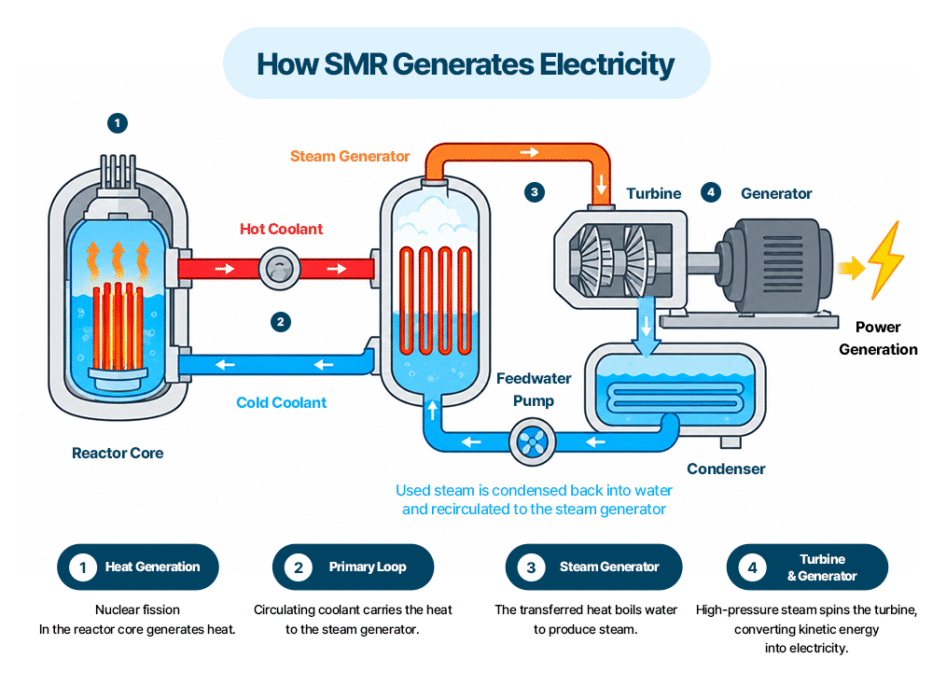
The power generation principle remains the same as traditional nuclear plants. Nuclear fuel undergoes fission inside the reactor, releasing tremendous heat. This heat boils water into high-pressure steam, which then drives turbines connected to generators, producing electricity.
The real strength of SMR is not in the amount of electricity a single unit produces, but in the flexibility to scale as needed.
| Small Reactor, But Big Energy Output
One SMR unit has a power generation capacity of 300MW or less, according to the International Atomic Energy Agency (IAEA) standard. Compared to large-scale nuclear plants that often exceed 1,000MW per unit, this certainly seems small. However, 300MW is enough to power a typical mid-sized city.
But here’s the real game-changer: you can add as many modules as you need. There’s no need to build everything large from the start. Instead, you can scale up incrementally to match growing power demand. SMR doesn’t produce less electricity because it’s small—it produces the electricity you need, flexibly. This is the plot twist of SMR power generation.
| The Key Advantages of SMR Power Generation
SMR’s smaller design delivers compelling advantages across construction speed and cost, safety, siting flexibility, versatility, and energy integration.
① Fast and Cost-Effective Construction
The reactor and major equipment are manufactured in standardized modular units at factories, then mass-produced. Because manufacturing happens indoors, it’s unaffected by weather. As identical modules are produced repeatedly, quality becomes consistent and unit costs drop. On-site work is simplified—crews just assemble the pre-made modules like building blocks. This dramatically reduces construction timelines, costs, and project risk.
Modules can be added incrementally, allowing facilities to match power demand expansion with capital spending—a major advantage over traditional plants requiring massive upfront investment.
② Simpler Safety Design
When the reactor is smaller, the amount of heat to be managed is inherently lower. Less heat means the structure can be designed to cool itself naturally, reducing the need for high-pressure systems. The simplified design directly translates to safer operation and easier regulatory approval.
Unlike massive traditional reactors that require complex cooling systems and backup safety mechanisms, SMR’s compact design makes passive safety features more effective—meaning the reactor can cool itself through natural processes even without active intervention.
③ Flexible Siting Near Demand Centers
SMRs can be built close to where power is actually needed. Their enhanced safety profile and smaller size mean they require far less cooling water, eliminating the need to locate plants exclusively on coastlines. This is a game-changer for energy logistics: electricity loses power over long transmission distances. By generating power at the point of use, you reduce transmission losses and avoid expensive grid upgrades.
Additionally, just as aging coal plants are being decommissioned, their existing grid connections can be repurposed for SMR deployment—reducing infrastructure costs even further.
④ Diverse Applications
SMRs are gaining recognition as dedicated power sources for AI data centers and semiconductor fabrication plants that require continuous 24/7 electricity. Beyond these applications, SMRs can be used to supply both electricity and heat to urban districts, or to generate hydrogen for industries requiring massive amounts of power. The versatility of SMR applications far exceeds that of traditional large reactors.
⑤ Flexible Integration with Other Energy Sources
SMRs can be operated alongside existing power generation technologies—a critical advantage. Combined with LNG power generation and energy storage (ESS) technology, SMRs enable a flexible energy portfolio: in the short term, LNG and ESS respond to rapidly fluctuating power demand, while in the long term, SMRs serve as a stable, carbon-free baseload power source. This creates what we call an integrated energy platform—delivering the right power in the right way, wherever it’s needed.
| Small Modular Reactors’ Big Dream: SK Innovation’s K-Natrium SMR and Energy Platform Strategy
SK Innovation has been preparing for the SMR era for years. The company recognized early that SMR’s greatest strengths—fast construction, flexible on-demand siting, and responsive scaling—address the most urgent power challenge of our time: powering AI data centers.
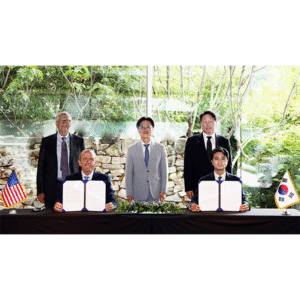
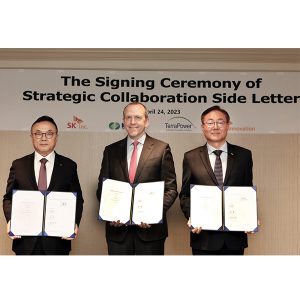
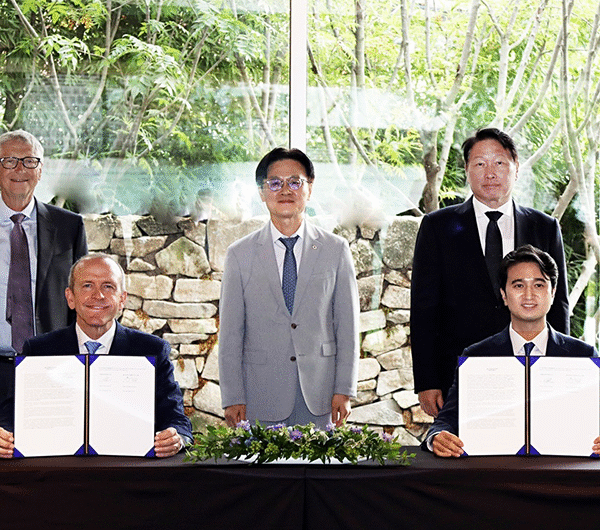
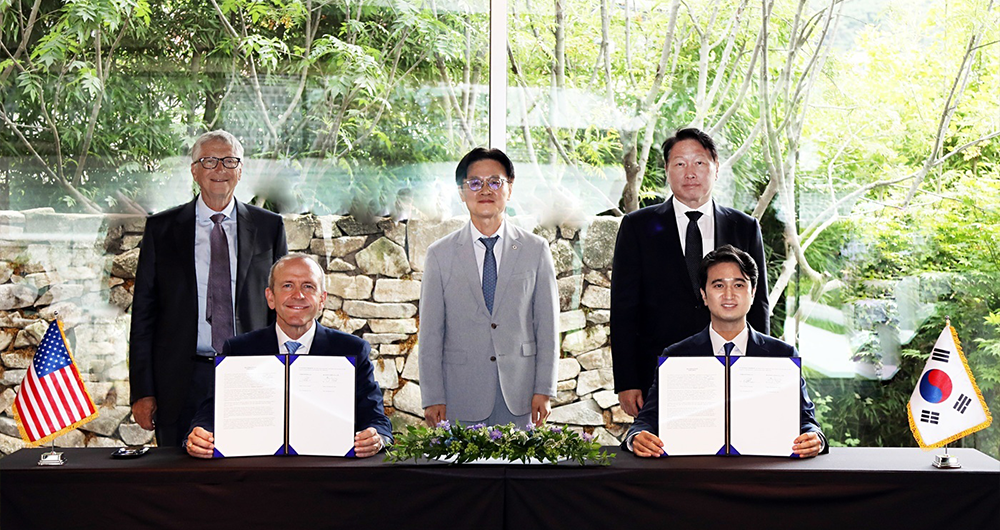
In 2022, SK Innovation became a co-investor and second-largest shareholder of US-based TerraPower with a $250 million investment. Then, in August 2026, SK Innovation signed a cooperation agreement to jointly develop sodium-cooled SMR technology. Beyond being a mere investor, the company is an active participant in project development and execution.
SK Innovation is gaining hands-on experience in design, construction, and operations through participation in the Kemmerer Unit 1 project in Wyoming, USA. The company plans to adapt this proven technology into a Korea-specific model called “K-Natrium.”
|
What is Natrium SMR? This advanced technology uses sodium (instead of water) as a coolant, enabling stable heat control at even higher operating temperatures—making nuclear power safer and more efficient. Sodium remains liquid at much higher temperatures than water while delivering superior heat transfer performance, opening new possibilities for next-generation nuclear design. |
By combining SMR with its existing LNG power generation and energy storage (ESS) technology, SK Innovation aims to shape an integrated solution: LNG and ESS handle immediate power demand surges, while SMR provides long-term, carbon-free baseload power. The result is a true integrated energy platform—delivering the right power source for every demand, at every moment.
What was built small became faster, more flexible, and more versatile than anyone expected. The power plant of tomorrow isn’t about size—it’s about intelligence, adaptability, and meeting energy needs exactly where they arise.
Energy always finds a way to surprise us. Stay tuned for our next story in the Energy’s Plot Twist series.
SMR FAQs
Q. What is SMR and how is it different from traditional nuclear power plants?
A. SMR (Small Modular Reactor) is a next-generation nuclear power technology that divides reactors into small modules, manufactures them in factories, and assembles them on-site. While the power generation principle—using heat from nuclear fission to create steam that drives turbines—remains the same as traditional plants, the fundamental design philosophy is different: SMRs are designed to be built small from the ground up, rather than assuming larger is always better.
Q. What is the power generation capacity of a single SMR unit?
A. The International Atomic Energy Agency (IAEA) defines SMRs as reactors with a power generation capacity of 300MW or less per module. A 300MW unit can supply electricity to a typical mid-sized city. The key advantage: you can add multiple modules to scale capacity as power demand grows, without building a single massive facility from scratch.
Q. Are SMRs safer than large traditional nuclear plants?
A. SMR has significant safety advantages due to its smaller scale. Because it handles a smaller amount of heat, SMR can be designed for safer cooling—easier natural cooling systems and lower pressure requirements make the overall structure simpler and more robust.
Q. What is the relationship between SK Innovation and TerraPower? What are they doing with SMR technology?
A. SK Innovation became a co-investor and second-largest shareholder of TerraPower (the US-based advanced reactor company chaired by Bill Gates) with a $250 million investment in 2022. In August 2026, the two companies signed a cooperation agreement to jointly develop sodium-cooled SMR technology. SK Innovation is moving beyond the role of passive investor to become an active participant in project development, engineering, construction, and operations—including hands-on work on the Kemmerer Unit 1 project in Wyoming, USA. The company aims to bring proven SMR technology to South Korea through its K-Natrium SMR program.
■ Related articles

- SK Innovation and TerraPower Sign Sodium SMR Collaboration Agreement

- SMRs: A Game Changer for Powering the AI Era

- SK Innovation, TerraPower, and Korea Hydro & Nuclear Power Form Alliance to Lead the Global SMR Market