Quick Summary
- Opportunities for Korea-Indonesia cooperation in future industries. Korea leads in technology and industry; Indonesia offers a young population and a gateway to Asian markets. Together, they can move beyond trade into genuine partnership in AI and climate tech.
- Supporting young entrepreneurs through MAJU:ON. Mentoring, expert networking, and one-on-one investor matching help young teams rethink their business direction — and reach the market.
- Three keys to lasting cooperation: continuity of programs, stronger government–business mechanisms, and real pathways for startups to scale.
In September 2025, SK Innovation E&S launched MAJU:ON, a project supporting young entrepreneurs in Indonesia. Maju means “to move forward” in Indonesian, and on signals continuity — together, a promise that Korea and Indonesia will keep moving forward side by side.
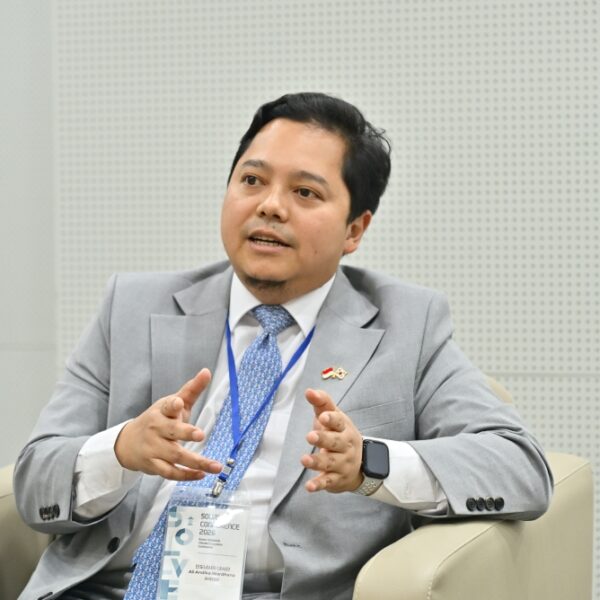
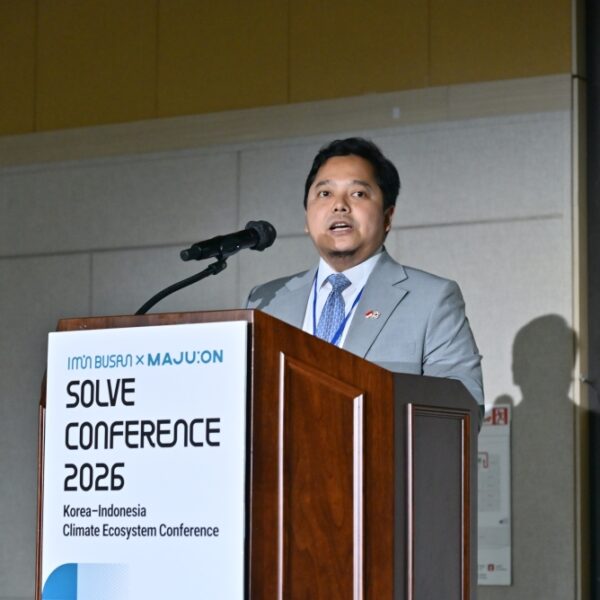
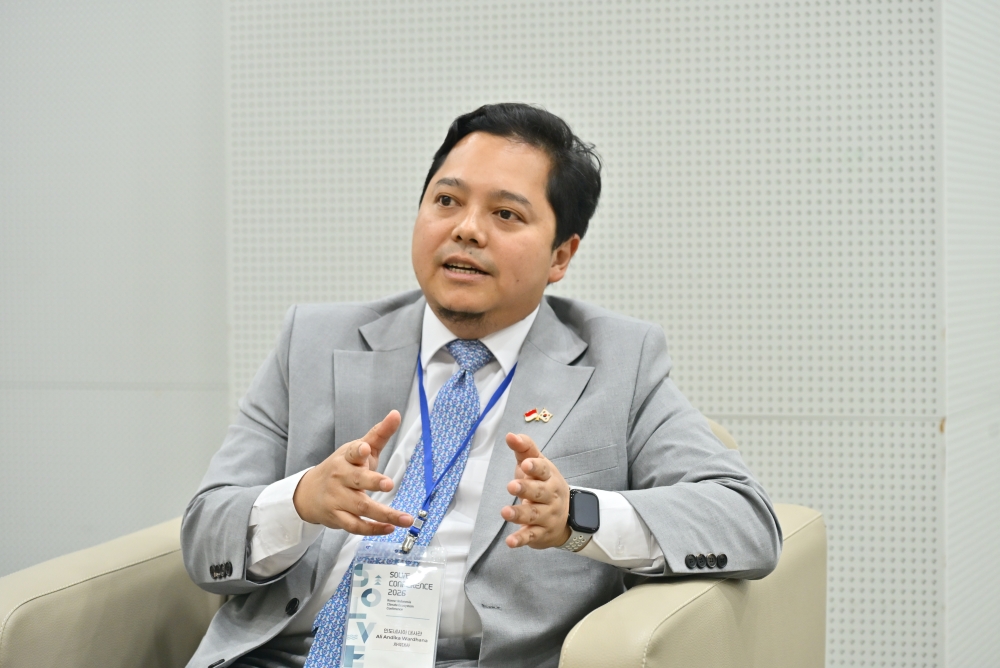
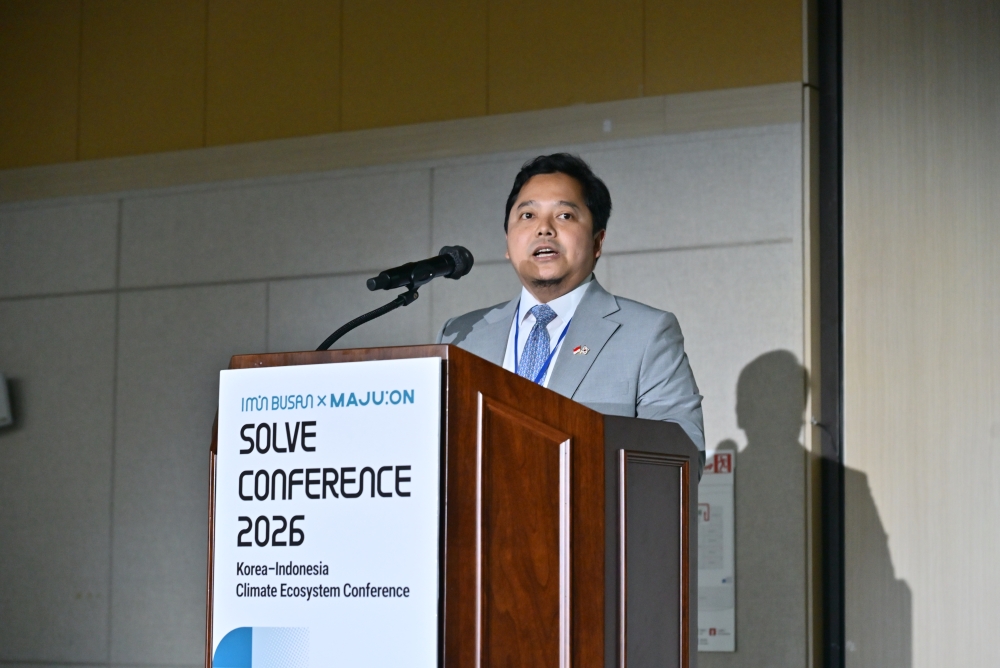
One year later, the results came together at the 2026 SOLVE Conference, held on September 8 at the Busan Port International Exhibition & Convention Center (BPEX). Delivering the welcoming remarks, Ali Andika Wardhana, Deputy Chief of Mission at the Embassy of the Republic of Indonesia in Korea, said: “I hope MAJU:ON will reach beyond Korea and Indonesia — into the wider Asian market, and eventually Europe and the United States.”
We sat down with him to talk about where the two countries’ strengths meet, and what MAJU:ON has changed in Indonesia’s startup ecosystem.
Q1. Where can Korea and Indonesia combine their strengths most effectively in AI and climate tech?
Indonesia and Korea complement each other naturally. Korea is strong in technological innovation and industry, while Indonesia brings a young population and broader access to Asian markets. That is why we need to grow our partnership beyond trade alone.
We are already applying AI across healthcare, education, and industry. I believe AI will keep playing an important role in helping both countries run and transform these sectors more efficiently.
Q2. Energy transition and mitigating climate change are important challenges for both countries. What role do you expect cooperation with Korean companies to play in Indonesia’s sustainable growth?
Korean companies have already brought a range of initiatives to Indonesia — and their support goes beyond business. They have shared practical know-how on how Indonesia can draw on Korea’s own experience of sustainable growth. SK Innovation E&S’s MAJU:ON program has been a significant part of that.
Take one of the participating startups: it uses satellite data to monitor and analyze Indonesian forests, turning that into a commercial service that helps preserve forests while still using them productively and reducing climate risk. To me, that is a clear illustration of Indonesia’s potential. Tapping into innovative technologies like these will benefit cooperation with Korean companies — and, ultimately, Indonesia’s sustainable growth.
* About MAJU:ON
A program launched by SK Innovation E&S to create social value and nurture young talent in Indonesia’s energy and environment sectors, where the company runs businesses including LNG. Since September 2025, MAJU:ON has partnered with eight regional hub universities across Indonesia to recruit youth startup teams, supporting the full startup journey: entrepreneurship and AI education, networking with government officials and industry experts, and one-on-one matching with leading regional venture capital firms.
Q3. What role should young entrepreneurs play in Indonesia’s future growth?
Indonesia has a population of 280 million, and roughly 60% are young. We currently have around 3,000 active startups. These companies already matter a great deal to our economy, to job creation, and to deeper cooperation with Korea — and we expect that to continue.
But we cannot leave them to work in isolation or simply survive. They need sustained support and an enabling ecosystem where they can deliver results and reach economies of scale. That is exactly why partnerships with companies like SK Innovation E&S, and with countries like Korea, matter so much.
MAJU:ON is a model example. What makes it excellent is that it helps young entrepreneurs grow themselves and create a positive impact on the market and on society.
Q4. What has MAJU:ON’s full-cycle support changed most in Indonesia?
I would point to its holistic approach. Young startups obviously need funding and technical support. But because most are small, working alone makes it hard to see other perspectives or spot new opportunities. An integrated solution is therefore essential. MAJU:ON delivers that: continuous mentoring that opens up new ways of thinking about the business, plus concrete routes into the market.
One team illustrates this perfectly. They had developed post-harvest processing technology — originally for corn, not mushrooms. Through MAJU:ON mentoring, they recognized that mushrooms offered a far larger market and a better chance of success, and they pivoted. The team told us that shift was decisive. Enabling that kind of turn toward a stronger idea is the greatest strength of MAJU:ON’s holistic approach.
Q5. How much do people-to-people exchanges matter to the bilateral relationship?
As I told the young entrepreneurs during the SOLVE Conference session, people-to-people collaboration has to be the bedrock of our partnership. Government-to-government cooperation ultimately exists to create an environment where people can connect more freely and live better lives. And more active exchange between cities and communities also helps companies find new opportunities, including moves into adjacent business areas.
It works in both directions: exchanges between governments and industry can encourage people-to-people ties, and those ties can in turn generate cooperation at the industry or government level. Busan and Surabaya, for instance, have been sister cities for about 30 years. The cultural and social exchange that relationship generates can drive further growth and strengthen the bond between our two countries. That is why I want to stress once more how fundamental people-to-people collaboration is.
Q6. What should governments and businesses do together to make this a lasting partnership rather than a one-off?
Three things are crucial.
First, continuity. Programs like MAJU:ON need to be sustained so that these efforts carry on and opportunities keep expanding.
Second, stronger cooperation mechanisms. To steer the partnership where we want it to go, governments and businesses have to keep talking about what is needed and work toward a shared goal. Governments can develop the right policies and incentives; companies can build startup hubs and the surrounding ecosystems and systems. Programs like MAJU:ON can supply the momentum — direct meetings with investors, space to develop ideas, and business-to-business matchmaking. All of this requires both sides at the table.
Third, helping young entrepreneurs scale. Everything I have described has to lead, in the end, to real economies of scale.
Korea and Indonesia already have a very strong partnership. Many Korean companies operate in Indonesia, and SK Innovation E&S in particular continues to expand its LNG and other businesses there. I hope these companies will strengthen not only their business presence but also the linkages and value chains between our countries. The stronger those ties, the easier it becomes for startups to plug into the resulting industrial ecosystem.
Q7. Finally, what are your goals for Korea–Indonesia collaboration going forward?
Korea is one of Indonesia’s top seven investors, and bilateral trade currently stands at USD 18 billion — projected to reach USD 30 billion by 2030. My hope is that the relationship behind those numbers becomes something more than figures: a partnership in which we grow together and open larger markets for each other. And as we expand into Asian, European, and U.S. markets, I hope we achieve genuine technological breakthroughs along the way.
■ Related Articles

- SK Innovation E&S Hosts Climate SOLVE Week in Busan to Support Korean and Indonesian Young Entrepreneurs

- Came for Validation, Left With a New Perspective: ARUPONIC at MAJU:ON and Climate SOLVE Week

- Young Innovators Take on Energy and Environment — Inside the MAJU:ON 2026 Final Demo Day