SK Innovation funds the renovation of the Book Lounge at Siloam Center for the Visually Impaired, drawing on a fund built from 1% of employees’ paychecks
💡 Key Takeaways
- SK Innovation contributed KRW 50 million to renovate the Book Lounge at Siloam Center for the Visually Impaired, reopened this week as Korean braille turns 100 years old.
- The money came from the 1% Happiness Sharing Fund, built from employees who each give 1% of their base salary. The renovated space is expected to host around 7,000 visits a year.
- It follows three years of hands-on work. Since 2024, more than 3,000 employees across SK Innovation and its affiliates have proofread text line by line to turn printed books into accessible e-books.
Korean braille is 100 years old this week.
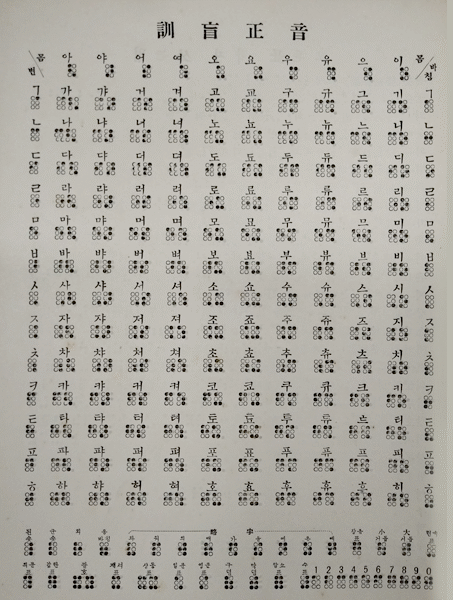
On November 4, 1926, a teacher named Park Du-seong published Hunmaengjeongeum, the braille system that finally gave Korean readers who are blind a way to read and write in their own language. The name was chosen deliberately: it echoes Hunminjeongeum, the 15th-century text in which King Sejong introduced the Korean alphabet itself. Park is still widely known in Korea as “the King Sejong of the blind,” and November 4 is now Korean Braille Day.
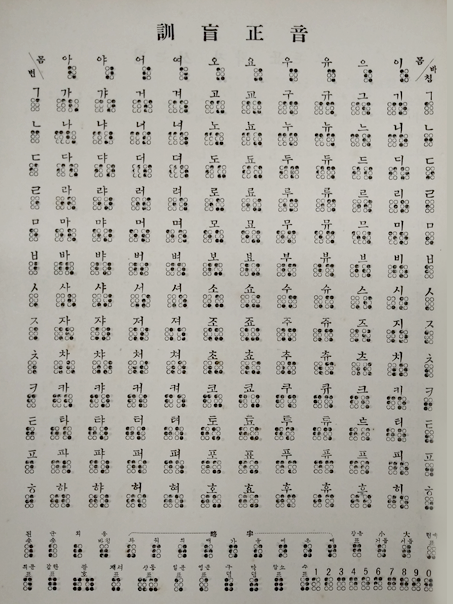
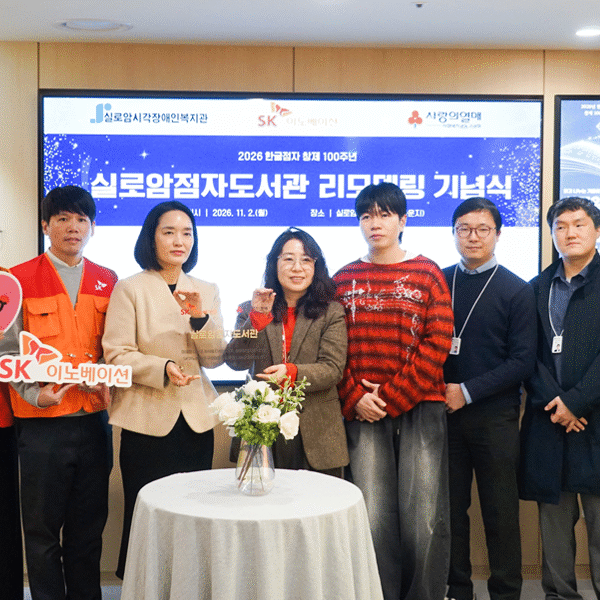
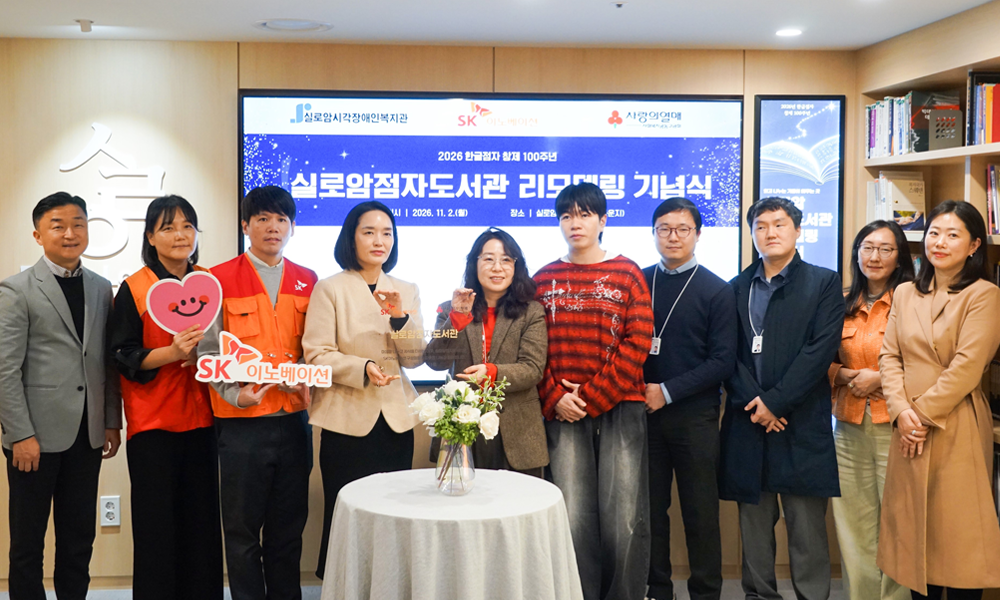
Two days before that centennial, on November 2, the Siloam Center for the Visually Impaired in Eoncheon-dong, Gwanak-gu, Seoul, opened the doors of its newly renovated Book Lounge on the fourth floor of its main building. Center Director Kim Mi-kyung and SK Innovation Head of PR Office Kim Woo-kyung attended, along with Center staff, employees from SK Innovation and its affiliates, and the readers who will actually use the room.
The renovation was funded with KRW 50 million from SK Innovation’s 1% Happiness Sharing Fund.
From a Storage Room with Books in It to a Room People Want to Stay In
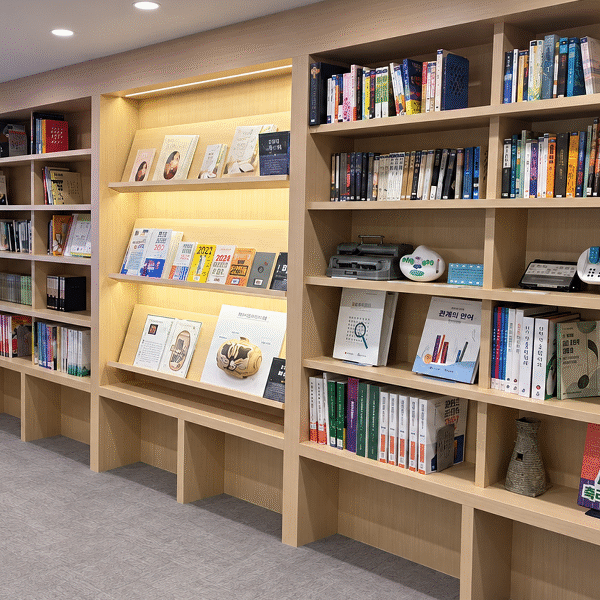
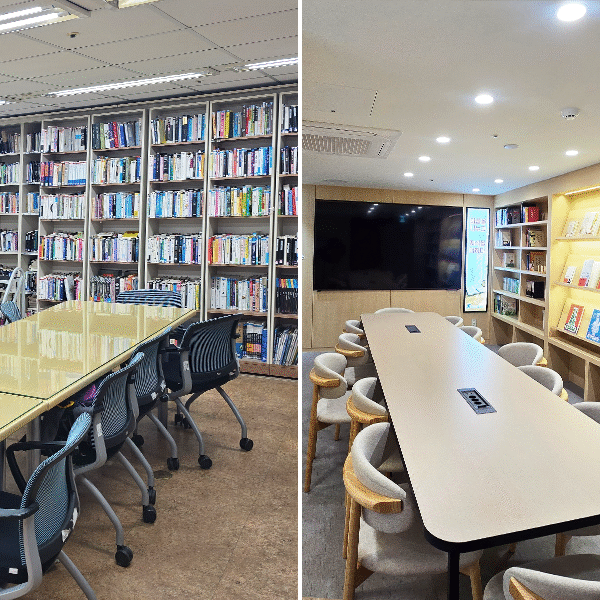
The Book Lounge is small — 33 square meters (roughly 355 square feet). Before the renovation, most of that was taken up by shelving and equipment, and whatever was left had to serve three incompatible purposes at once. Browsing, classes, and individual study all happened in the same few meters. Running a program meant displacing whoever had come in to read.
One month of construction changed what the room can hold. It now has a large-format LED screen, catalog search computers, and a hands-on area for the digital library — all usable by sighted and blind visitors alike — alongside alternative-format materials, braille displays, and an exhibit of tactile reproductions of well-known artworks.
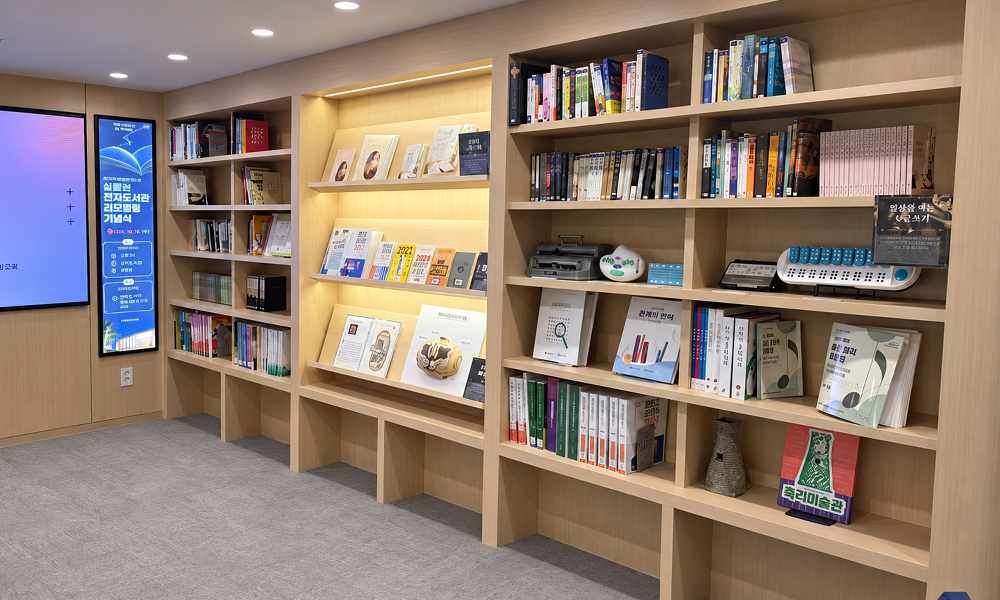
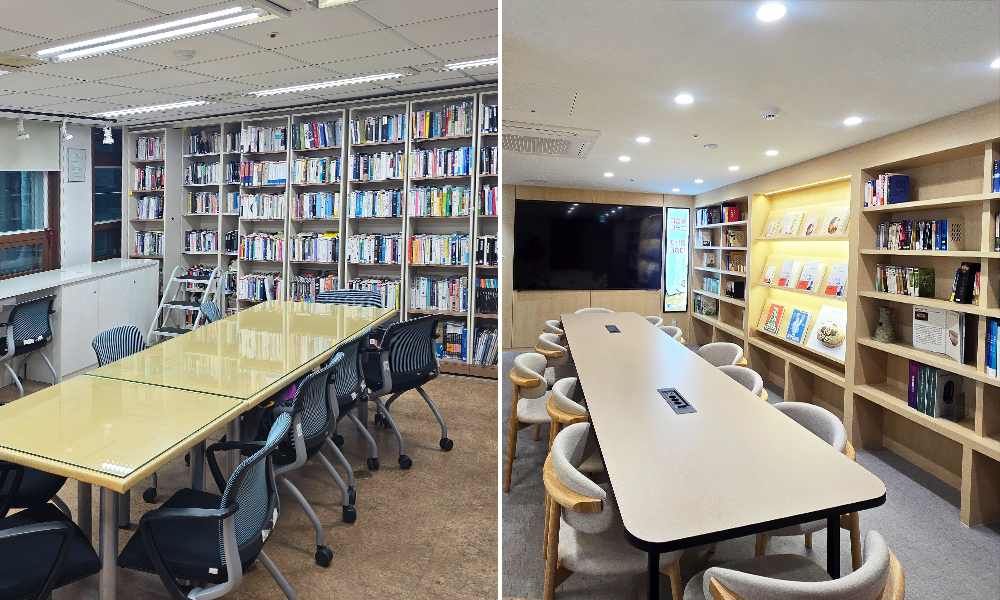
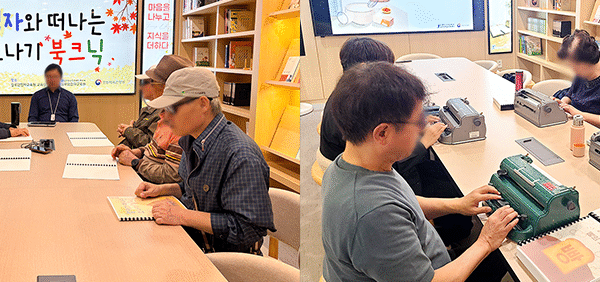
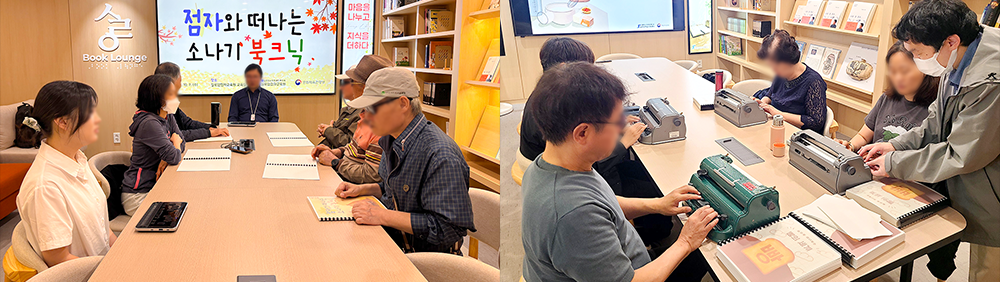
The bigger shift is in what the space is for. Beyond reading, the Book Lounge will host braille instruction, foreign language classes, author talks, meetings, and peer support groups. The Center expects about 7,000 visits a year.
1% of a Paycheck, and Three Years of Commas
The 1% Happiness Sharing Fund works exactly as its name suggests. Employees across SK Innovation and its affiliates each contribute 1% of their base salary, and the pooled money goes toward community projects. No single contribution is large. The Book Lounge is what they add up to.
But the relationship with Siloam didn’t begin with a check. It began with proofreading.
In Korea, only a small fraction of published books are ever converted into braille, audio, or accessible digital text — which means most of what gets published is simply unavailable to readers who are blind or have low vision. In 2024, SK Innovation began working with Siloam to narrow that gap through employee volunteering on MyPick, the Center’s online platform for producing accessible e-books.

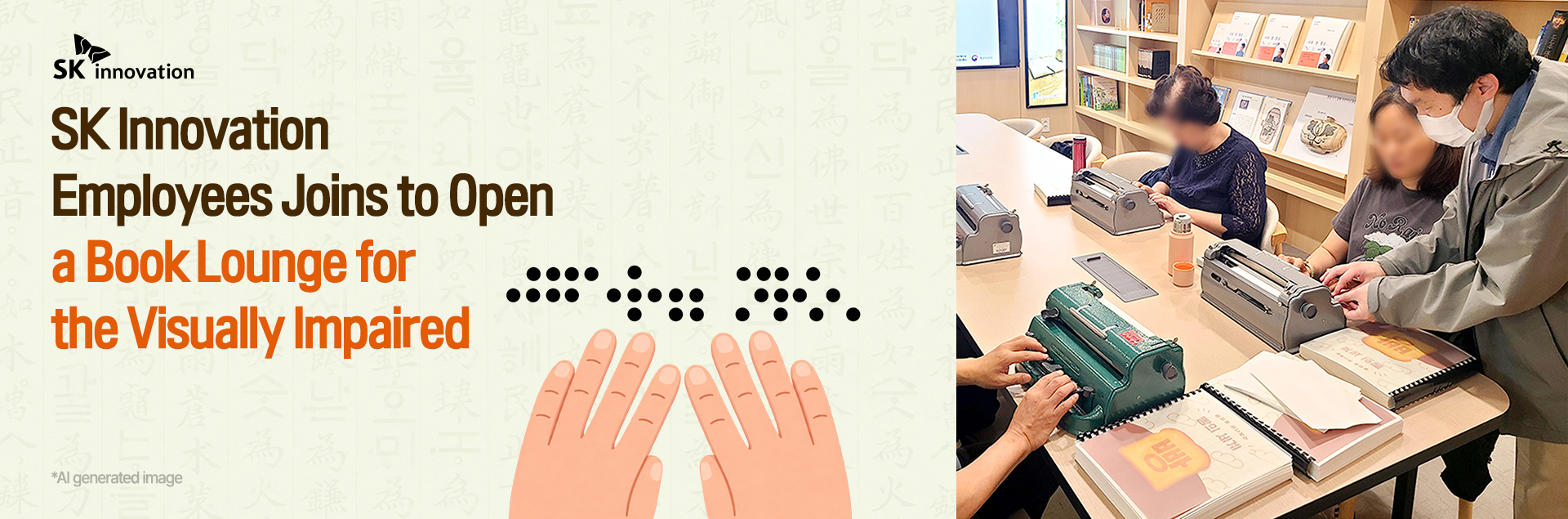
The work is unglamorous and genuinely necessary. Raw text is extracted from a printed book, and volunteers go through it line by line, correcting punctuation, fixing line breaks, and catching typos — because a screen reader will faithfully read aloud every error left behind. Finished books are published through Siloam e-Library iFree, where readers can access them in braille, in enlarged text, or as audio, using a braille display, computer, or smartphone.
Over three years, more than 3,000 employees have done this work. What stands out is how many came back: 43% of those who volunteered in 2024 returned the following year. For a remote, text-based activity with no event, no photos, and no applause, that’s an unusually high return rate — and the clearest sign that this stopped being a one-off some time ago.
Five Writers, Reading Their Own Work
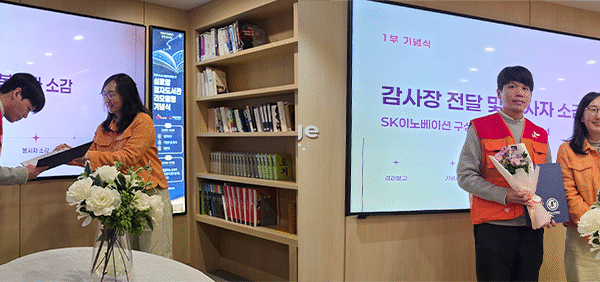
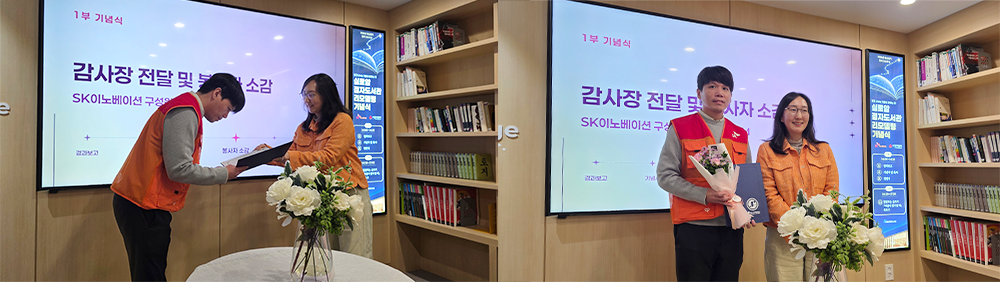
The ceremony itself was brief: a short film tracing the volunteer work the two organizations have done together and the renovation that followed, then remarks and a certificate of appreciation presented to employees.
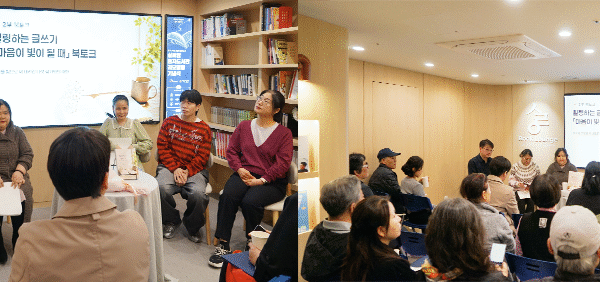
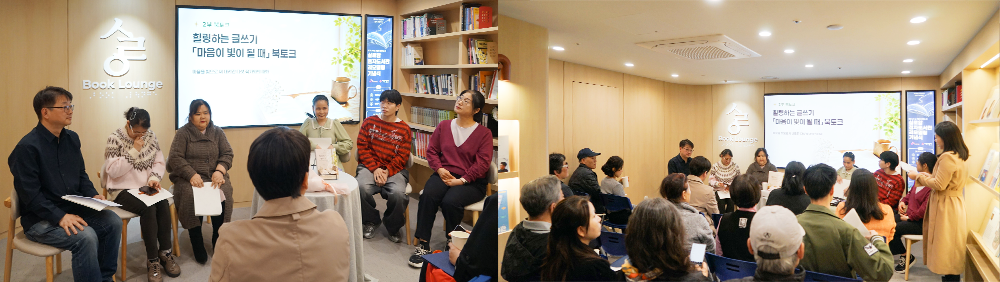
What filled the rest of the afternoon was a book talk — “Healing Through Writing: When the Heart Becomes Light.” Healing Through Writing is one of the Center’s signature creative programs, helping people with visual impairments write their own stories and reach the world through literature.
Billed as Conversations with Five Writers Who Wrote Their Hearts into Light, the session brought together five authors, each reading their own work aloud and talking about how it came to be written. The audience traded experiences and responses with them, and the new room got the only kind of opening that matters: it was used.
In Their Words
Kim Mi-kyung, Director of the Siloam Center for the Visually Impaired, on the timing:
“It means a great deal that our library has been renewed through the generosity of SK Innovation’s employees, in the very year that marks a century since Park Du-seong created Hunmaengjeongeum. For the past hundred years, braille has been how people with visual impairments reach knowledge and culture, and share it with one another. We’ll work to make this new Book Lounge a genuinely open space, where blind and sighted visitors come together — not only to read, but to talk, through classes, lectures, and cultural programs.”
Kim Woo-kyung, Head of PR at SK Innovation, on what the fund produced:
“It’s a pleasure to see what our employees have given take shape as a space like this one. For a century, braille has been a window onto the world for people with visual impairments, and I hope that value carries even further from here. My hope is that the Book Lounge becomes a place where blind and sighted readers talk to one another and make new stories together.”
Choi Sun-wook, a project manager on SK Innovation’s Tax Team 1, who accepted the certificate of appreciation on behalf of his colleagues:
“Volunteering taught me how much care and how many careful hands it takes to finish a single book that someone who is blind can read. I think of this certificate as recognition for everyone who worked on the e-books and everyone who contributes to the 1% Happiness Sharing Fund. Knowing that what we did also led to this room makes it mean more. I’ll keep showing up for the e-book work.”
The day was framed as a facility reopening, but it functioned as something closer to an anniversary — a chance to mark 100 years of Korean braille and to ask a question that the centennial makes hard to avoid: a century on, how much of what gets published is actually available to read?
It started with 1% of a paycheck, multiplied by everyone who signed up, and three years of people correcting commas on a screen. It ends as 33 square meters where anyone can open a book.
■ Related Articles

- [Recap] SK Innovation Affiliates’ Volunteer Week in H2 2026: A Diary Full of Volunteer Plans to Give Back

- [Recap] SK Innovation Affiliates’ Volunteer Week in H1 2026: One Team Spirit, 7,300 Hours – A Record of Giving