💡 Quick Summary
- ESS batteries wear down with use, too. But because they are purpose-built to charge and discharge every day for more than a decade, there is no need to go easy on them. An ESS left idle creates no value at all, so the more diligently it charges and discharges, the more it earns its keep.
- Making this possible are LFP batteries for ESS, which use cathodes with an olivine structure. Wear builds up slowly, so even with daily charging and discharging, they can still store 70–80% of the electricity they held when new after 10 years.
- Building on its NCM pouch batteries for electric vehicles, SK On is preparing power infrastructure for the AI era with LFP batteries for ESS and its next-generation ESS solution, GRIDON.
Every time we use and recharge a battery, its performance declines a little. Just think of the smartphone in your hand. When it was new, a full charge lasted all day. A year or two later, the battery indicator might be in the red after just half a day.
So we tend to think of batteries this way: Go easy on them, and they’ll last longer.
Yet some batteries charge and discharge every morning and evening, day after day, and keep working for more than a decade. These are lithium-ion batteries too, just like the one in your phone, and they wear down with use. The difference is that they were designed from the start to be used every day and to last — which means there is no need to spare them.
| Why Do Batteries Lose Their Staying Power?
The reason is cycle degradation. Each time a battery charges and discharges, lithium ions travel back and forth between the cathode and anode. Over time, this gradually changes the battery’s internal structure, reducing the amount of electricity it can store.
Our habits play a part, too. Summer heat, frequent fast charging, and keeping a battery at 100% for long stretches all speed up battery aging. Smartphone batteries are also designed around a replacement cycle of a few years.
“So if you charge and use it every day, it’s bound to wear out pretty quickly!”
That’s right, and every battery goes through this. What differs is how fast that wear builds up, which depends on how a battery is built and how it is used. The story changes quite a bit when a battery is designed from the start to work every day, for more than a decade.
| Use More, Lose More? With ESS, It’s the Opposite
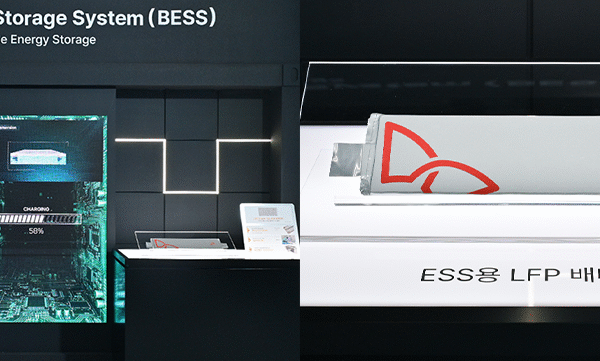
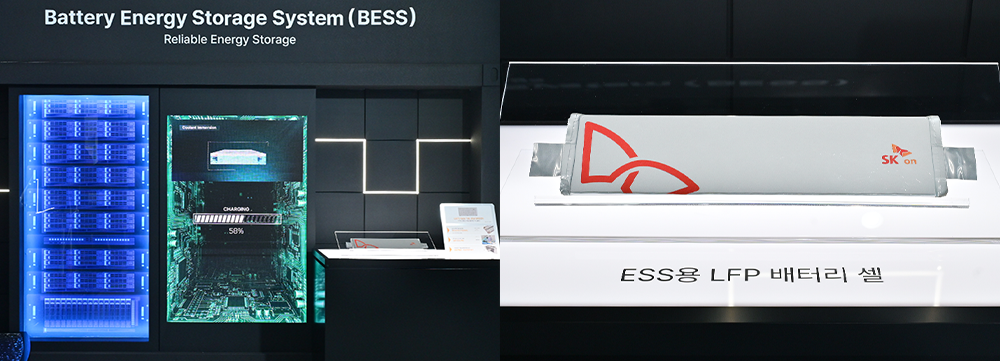
Meet the energy storage system, or ESS: a large-scale system that stores electricity for later use. Systems that use batteries to store that electricity are called battery energy storage systems, or BESS. From power plants managing peak demand to solar and wind farms, large factories, and data centers, ESS bridges the gap between when electricity is generated and when it is used.
An ESS battery’s daily routine is in a different league. It fills up and empties out once a day, sometimes twice. And it keeps doing so for more than a decade. You might replace your smartphone several times over that period. ESS batteries have to keep going without being replaced.
“Doesn’t using a battery more cost you more?”
Fair question. Tires wear down as they roll, and shoe soles wear thin as we walk. Most things last longer when we use them sparingly.
First, one thing worth making clear: ESS batteries are not immune to wear. They are lithium-ion batteries like any other, and repeated charging and discharging takes its toll. What differs is whether sparing use pays off. Batteries for ESS are built for a schedule of daily charging and discharging over more than a decade, with materials and design chosen for exactly that job. There is little point in holding back on a battery engineered to go the distance — and an ESS left standing idle creates no value at all.
So with ESS, it’s the opposite. The gain comes not from using it less, but from getting as much work as possible out of the life it was designed for.
You may not notice it at home, but factories and office buildings pay different electricity rates at different times of day. Power costs less when electricity is plentiful and more when demand piles up. ESS works in that gap, taking electricity in when it is cheap and sending it back out when it is expensive — in effect, shifting electricity across time.
So the logic is simple. Shift it once a day and it delivers value once; shift it twice and it delivers value twice. An ESS kept busy does its share.
And the job doesn’t end there. Solar and wind output fluctuates with the weather. There can be a surplus on a sunny day and a shortfall on a cloudy day or at night. ESS stores the surplus and releases it when supply falls short, filling that gap. Paired with sources that respond quickly to shifts in demand, such as LNG power generation, ESS makes the supply-demand balance that much tighter.
For ESS, the longer the downtime, the greater the loss. A good ESS battery here is not one that is kept in reserve, but one that makes full use of the life it was designed for.
There is one condition, of course. The battery must withstand that demanding schedule. If wear builds up so quickly thatit needs replacing after just a few years, the replacement cost could swallow up the value it worked so hard to build. That’s why ESS uses batteries designed for the job from day one.
| Different Jobs Call for Different Battery Designs
Lithium-ion batteries are used in smartphones, electric vehicles, and energy storage systems alike. But they don’t all use the same kind. The basic principle is the same in all three — lithium ions move between the cathode and anode to store and release electricity — and so is the fact that wear builds up with use. What is not the same is how they are specified. Materials and design change with the job, and nowhere does that difference show more clearly than in the cathode material. The material used to make the cathode, one of the electrodes lithium ions travel between, helps determine the battery’s character.
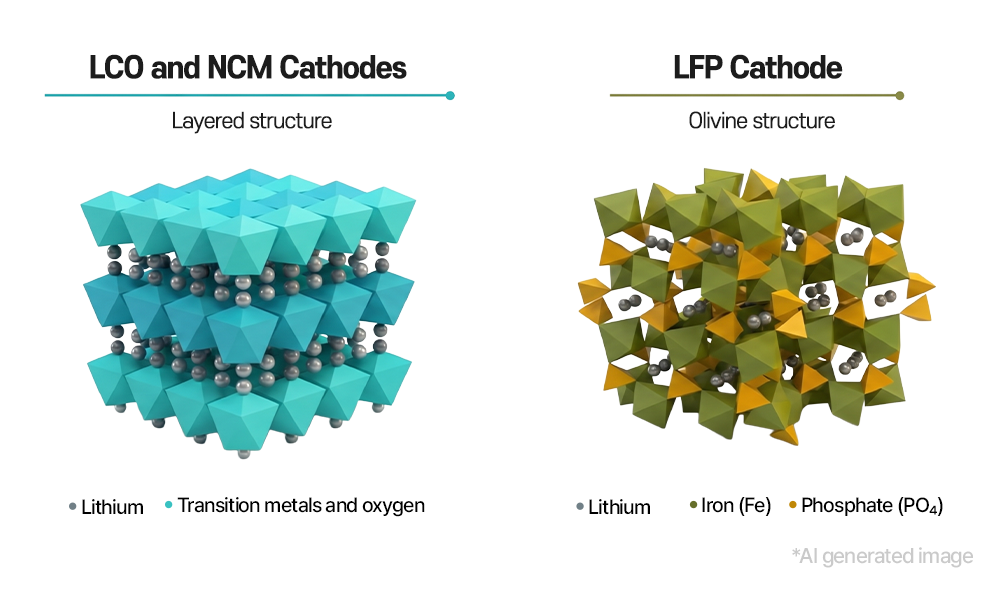
A smartphone needs to last all day in a package that fits in your hand. That’s why small IT devices commonly use cathodes based on lithium cobalt oxide, or LCO. Their layered structure, like thin sheets stacked on top of one another, allows lithium ions to be packed into a small space.
Electric vehicles have a different set of demands. They need to travel as far as possible within tight weight and space limits, making high energy density essential. SK On’s mainstay NCM (nickel-cobalt-manganese) pouch batteries are designed for exactly this task. A thin pouch replaces a rigid, box-shaped can, making the most of limited space to deliver high energy density.
ESS has a third set of priorities: fitting as much electricity as possible onto a limited site, while running day after day without tiring — and doing so safely. Lithium iron phosphate, or LFP, batteries are particularly well suited to this job.
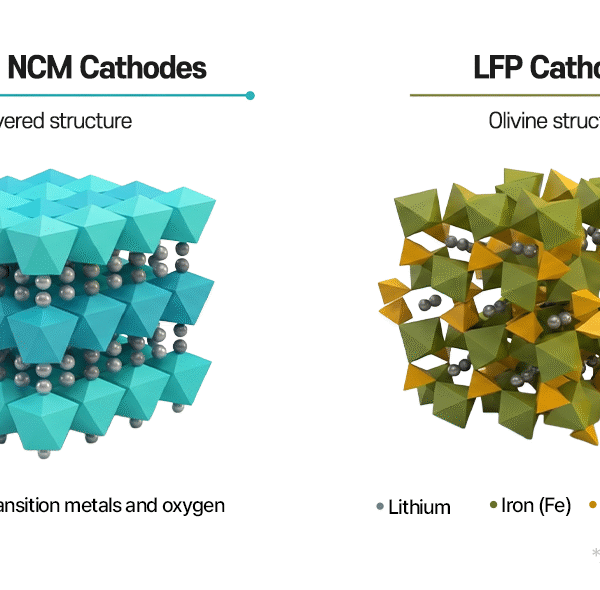
LFP cathodes have an olivine structure. Their tightly bonded framework is a little like a building’s steel frame. Think of the difference between a stack of books and a welded steel structure. Even as lithium ions move in and out countless times, the internal chemical framework holds up well. This is why wear builds up slowly in LFP batteries. Even with daily charging and discharging, they can still store 70–80% of the electricity they held when new after 10 years.
Their resistance to heat is another major advantage. The olivine structure holds its shape as temperatures climb, making a sudden spike in internal heat far less likely. That is what makes LFP well suited to securing fire safety in an ESS, where hundreds of cells are packed together in one place.
LFP batteries store less electricity than NCM batteries of the same weight. That does not mean density is unimportant for ESS. With usable land often limited, how much electricity can be packed into a given footprint is a key requirement for ESS, too. The difference is that the weight and space constraints are not as extreme as in an electric vehicle, leaving more room to prioritize long life and thermal stability. It is also why the figure that matters is not the density of a single cell alone, but the efficiency achieved once those cells are assembled into a complete system.
◆ EV Batteries and ESS Batteries at a Glance
| Category | NCM Batteries for EVs | LFP Batteries for ESS |
| Cathode structure | Layered | Olivine |
| Design priority | Go farther at the same weight | Last longer with daily use, stay safer |
| Key strength | High energy density | Long life and high thermal stability |
| Main applications | EVs and other mobility applications | ESS, power grids, and data centers |
* Performance may vary depending on materials, cell design, charging and discharging conditions, temperature, and other operating conditions.
If an EV battery is a distance runner built to go farther, an LFP battery for ESS is a marathoner built to keep going for 10 years. In ESS, the rule that batteries should be used sparingly is turned on its head — not because these batteries don’t wear down, but because that wear has been slowed down so much.
| 💡 SK On Makes Both: High-energy-density NCM pouch batteries for EVs. Long-life LFP batteries for ESS. Different applications demand different strengths, and SK On supplies batteries to match. |
| Keeping ESS on the Job with SK On’s GRIDON
For a marathon runner, stamina alone is not enough. Wear cannot be eliminated, only watched and managed. Lasting long and staying safe are, in the end, two sides of the same thing.
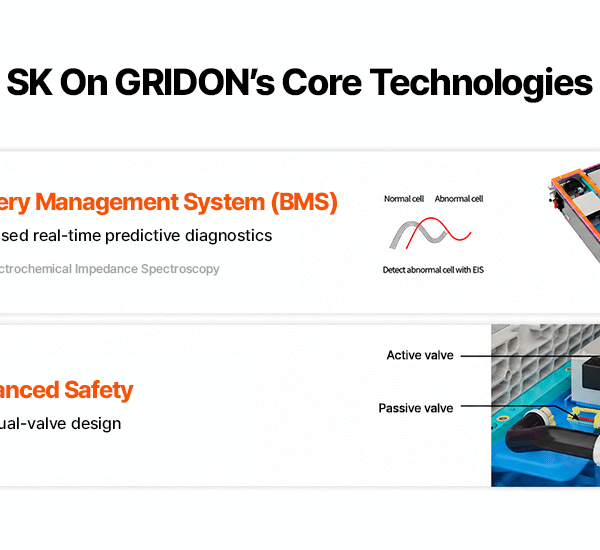
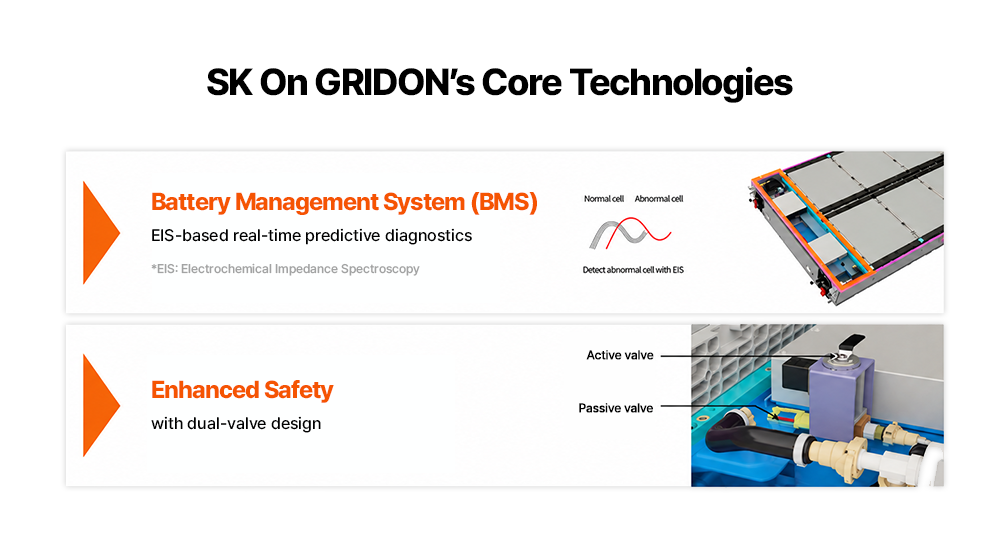
This is what GRIDON, SK On’s next-generation integrated ESS solution, is built for. Like an ECG at a hospital, EIS* reads what is happening inside a battery without opening it up, spotting changes before they become visible on the outside, while a dual-valve design further enhances safety. By catching those changes early and keeping battery conditions under close watch, GRIDON also lifts the operating efficiency and cost competitiveness of an ESS that has to keep running for more than a decade.
* Electrochemical Impedance Spectroscopy (EIS): A non-destructive analysis technology that applies alternating current signals at various frequencies and measures the battery’s impedance at different frequencies, to evaluate a battery’s internal performance and condition.
| Beyond Storage: Supporting Power Infrastructure in the AI Era
As AI expands, electricity demand from data centers is surging. Delivering reliable power exactly when it is needed is becoming more important, too. Small modular reactors (SMRs) will take time to enter widespread use, while solar and wind output varies with the weather and time of day. ESS can help ease the immediate pressure on power supply by storing electricity and delivering it when needed.
SK On is picking up the pace. In August, it signed a contract to supply 9 gigawatt-hours (GWh) of LFP batteries to U.S. ESS company NeoVolta Power. It is also converting production lines in Korea and overseas for ESS batteries and building out its materials supply chain. The company is expanding beyond EV batteries into energy storage.
Within SK Innovation’s proposed integrated energy platform, this ESS capacity can help balance fluctuations in renewable generation and, over the medium-to-long term, could also work alongside SMRs. The idea is to meet today’s power needs flexibly while preparing for tomorrow’s demand.
Built to go the distance, these batteries left no reason to hold back. The harder they work, the more they earn their keep!
Energy has a way of surprising us. Stay tuned for the next installment of Energy’s Plot Twist.
★ Frequently Asked Questions about ESS Batteries
Q. What’s the difference between ESS and BESS?
A. Energy storage system (ESS) is a broad term for a system that stores electrical energy for later use. A battery energy storage system (BESS) is a type of ESS that uses batteries to store that electricity.
Q. Are ESS batteries free from degradation?
A. No. Batteries for ESS are lithium-ion batteries, just like those in smartphones and electric vehicles, and repeated charging and discharging causes wear to build up. What sets LFP batteries for ESS apart is that their materials and design are matched to the job, which slows the pace at which that wear accumulates. Because they are purpose-built to charge and discharge daily for more than a decade, an ESS is better served by getting as much work as possible out of its designed life than by being held in reserve.
Q. Why use LFP batteries for ESS? Aren’t NCM batteries better?
A. It comes down to what the battery needs to do, not which one performs better. EVs need to travel far within tight weight and space limits, which favors NCM’s high energy density. ESS also has to make good use of a limited site, but its weight and space constraints are not as severe as an EV’s. That leaves more room to prioritize long life and stability, making LFP a good fit. LFP also offers high thermal stability, which helps secure fire safety in an ESS where large numbers of cells are grouped together. SK On supplies both types.
Q. How does the olivine structure help batteries last longer?
A. The tightly bonded olivine structure of an LFP cathode helps its internal chemical framework resist deformation, even as lithium ions move in and out countless times. Degradation does not disappear altogether, but it accumulates far more slowly. The structure also stands up well to heat, making it well suited to repeated operation over many years.
Q. What is SK On’s GRIDON?
A. GRIDON is SK On’s next-generation integrated ESS solution brand. Its EIS-based battery management system (BMS) diagnoses battery conditions in real time, and a dual-valve structure secures a high level of safety.
■ Related articles

- ESS: Powering the AI Era – SK On Sets a New Standard for ESS Safety

- [Inside ESS] Powering the Future of Energy SK On ESS: GRIDON

- [Inside ESS] From Early Detection to Rapid Response: SK On’s Proprietary Safety Technologies for ESS

- [Energy’s Plot Twist] “Small Size, But Big Energy!” How Small Modular Reactor (SMR) is Redefining Nuclear Power with its Advantages