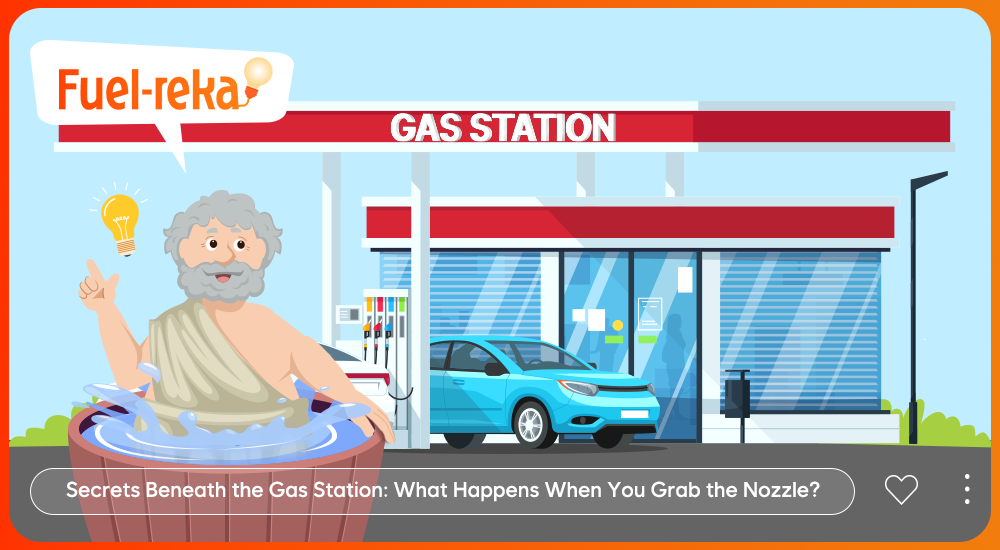
Long ago, in ancient Greece, a brilliant scientist named Archimedes had a problem to solve. King Hiero II of Sicily had tasked him with determining whether his crown was made of pure gold. Deep in thought, Archimedes stepped into a bathtub and noticed the water overflowing. Then, inspiration struck! Overjoyed, he ran through the streets naked, shouting, “Eureka!” (“I’ve found it!”) This discovery led to the principle of buoyancy—by measuring displaced water, Archimedes could uncover whether the crown was truly gold. Ever since, “Eureka!” has become synonymous with moments of sudden, groundbreaking discovery.
“Fuel-reka!”—Fueling Your Curiosity!
What if we could experience our own “Eureka!” moments in the world of energy? Welcome to Fuel-reka!—a series dedicated to uncovering the fascinating discoveries hidden in everyday energy. For our first exploration, let’s take a closer look at gas stations. They may seem ordinary, but beneath your feet lies a world full of surprising secrets. Ever wondered where the endless stream of fuel at the pump actually comes from? Or how gasoline stays safely stored underground, even during earthquakes or storms? Let’s dive beneath the surface and uncover the science that keeps it all running smoothly. By the end, you might just find yourself saying—”Fuel-reka!”
Quick Trivia!
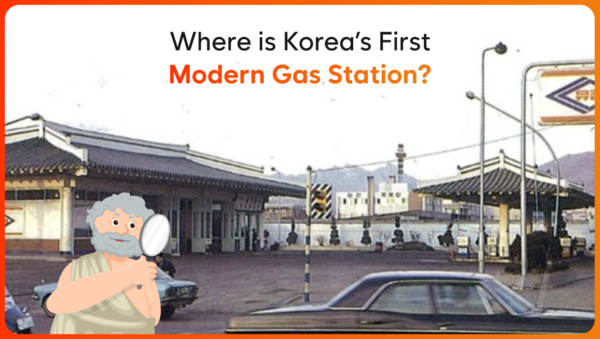
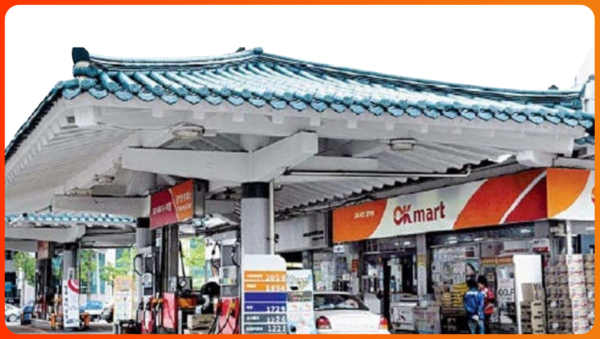
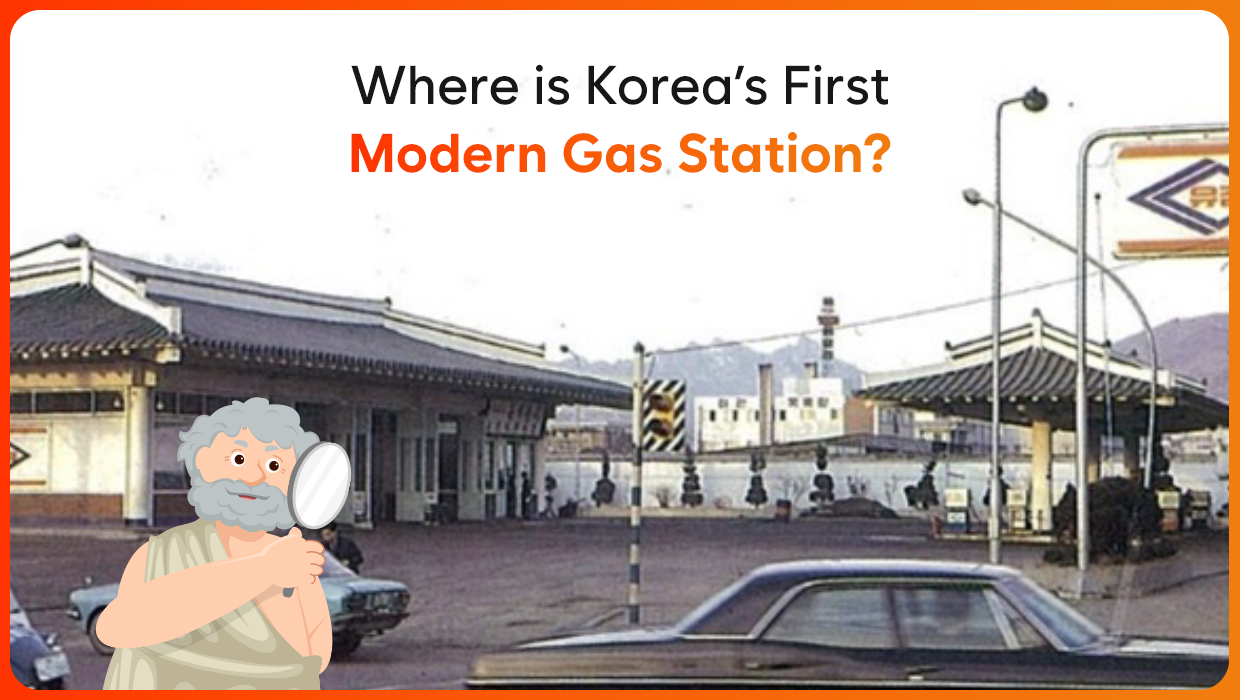
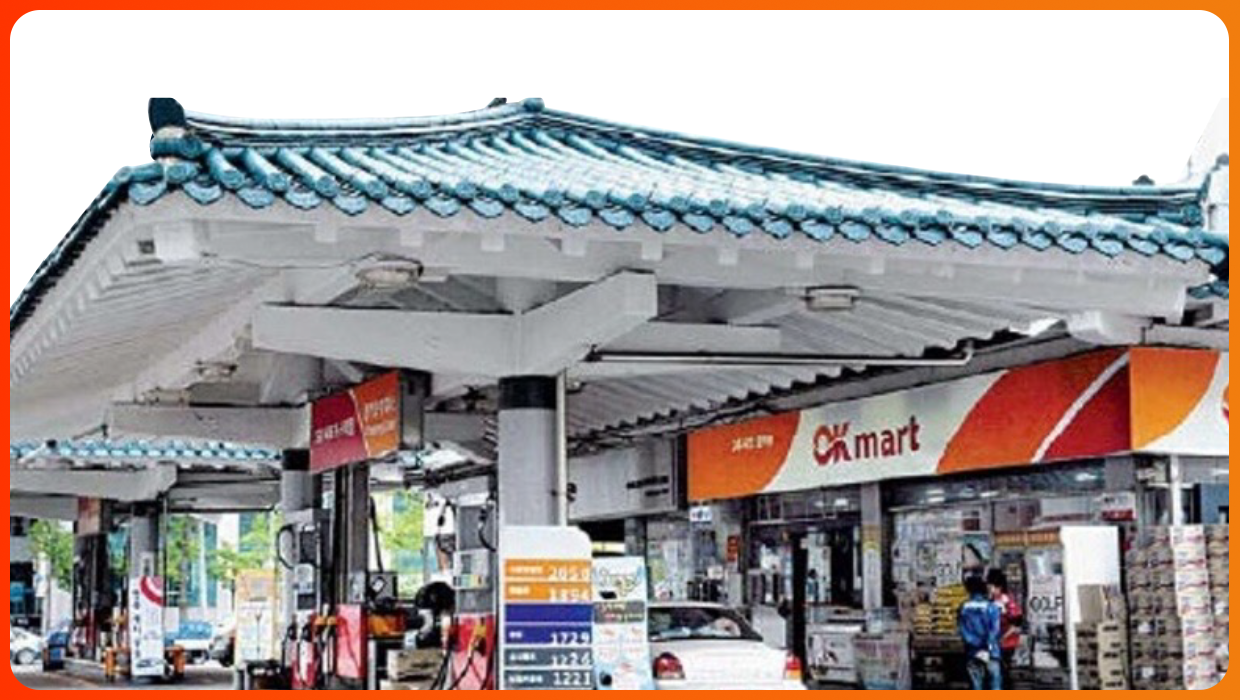
The answer is Cheonggiwa Gas Station, built in 1969 by SK (then known as Yukong). The name “Cheonggiwa” was inspired by Korea’s iconic blue-tiled roofs, often seen in historic architecture like Cheong Wa Dae (the Blue House). Hard to imagine, but before this station, drivers had to carry fuel in cans and manually pour it into their cars—what a hassle! Cheonggiwa revolutionized the fueling process, becoming a game changer for drivers. Located in front of Hongik University in Seoul, it served as a well-known landmark in the vibrant Hongdae area for over 40 years.
Q1. Where does all that fuel come from?
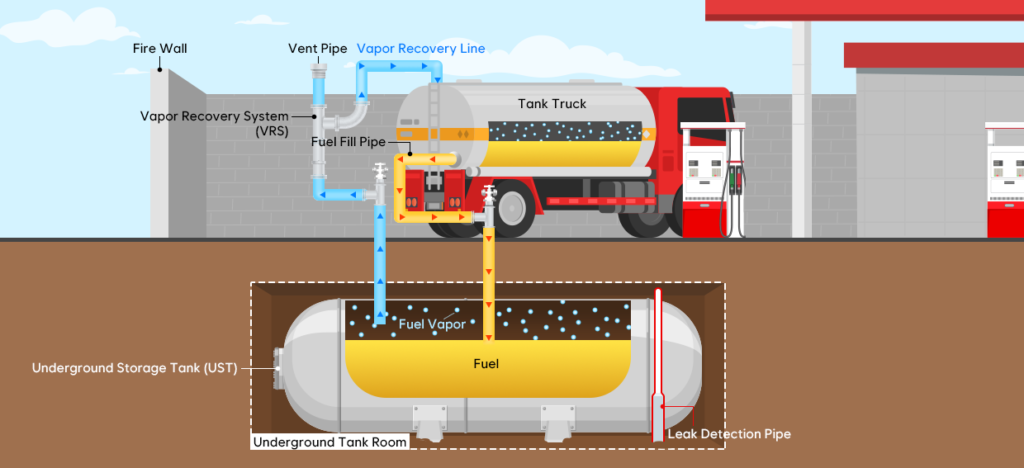
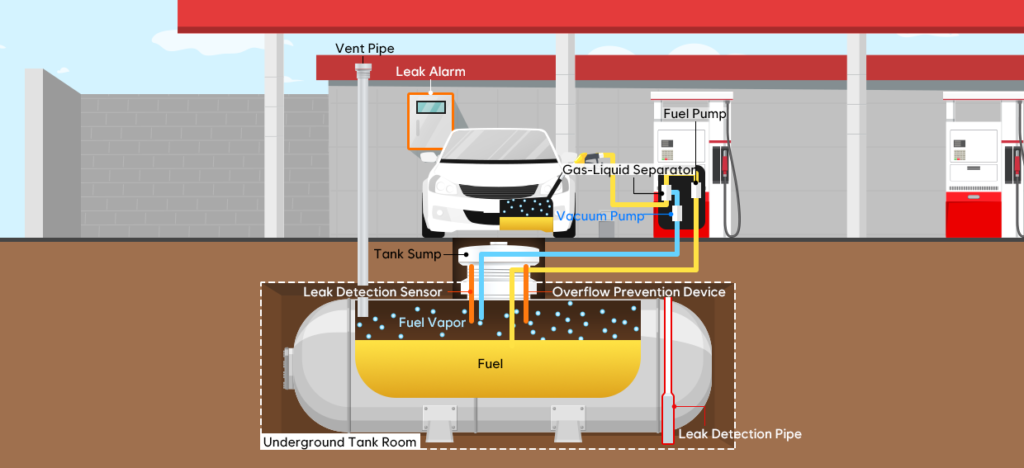
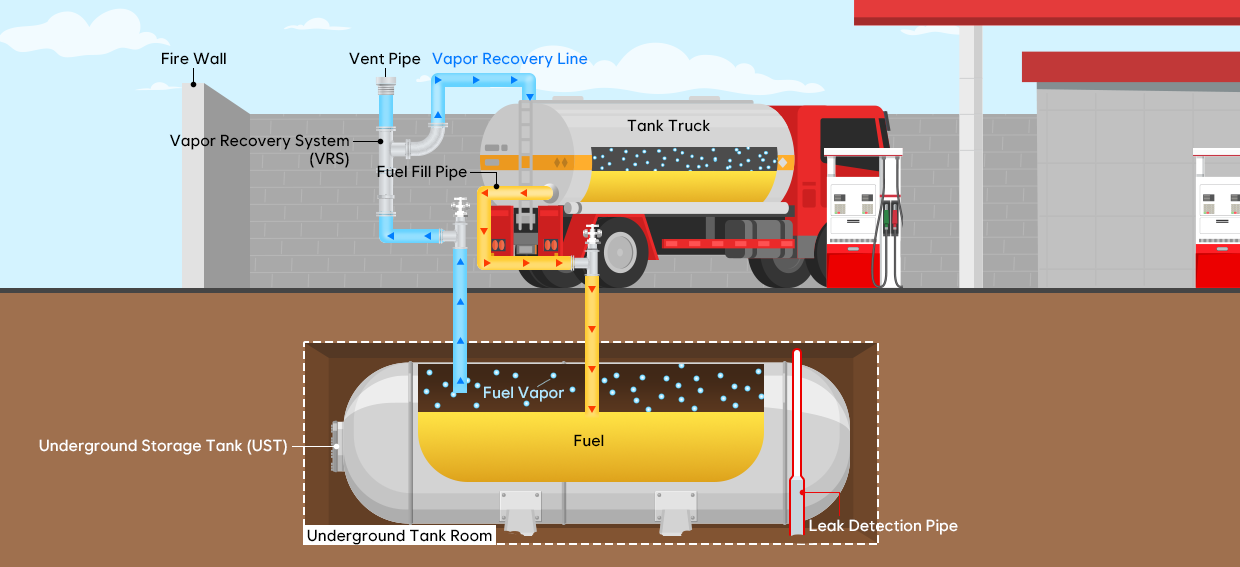
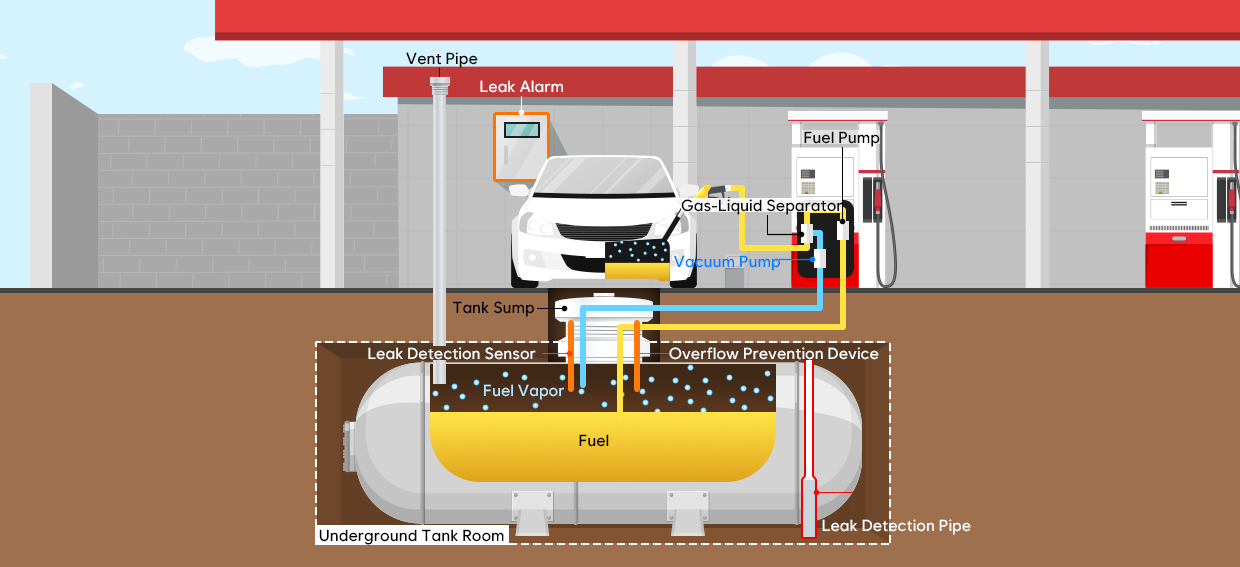
The secret to the seemingly endless fuel supply at gas stations does not lie in the fuel dispensers you see above ground—it’s the massive storage tank hidden underground. Buried about 0.6 to 1.2 meters below the surface, these underground tanks can hold up to an impressive 50,000 liters of fuel. To put that in perspective, an average passenger car fuel tank holds just 40 to 60 liters, meaning a single underground tank could refuel over 1,000 cars!
Safely storing such vast quantities of fuel is no small feat. Underground tanks must be installed on solid ground to prevent shifting or tilting, and they are designed to withstand hazards like earthquakes, explosions, and environmental risks. Their flawless operation is supported by multiple safety systems, including overflow prevention systems, leak detection sensors, alarm systems, and tank sumps*. Once stored, the fuel is drawn up by motor pumps and transported through dedicated pipelines for gasoline, diesel, and kerosene, eventually arriving at the fuel dispensers—and into your car.
(*) Tank sump: A containment unit made from corrosion-resistant material, installed at the manhole or base of underground fuel tanks. It prevents fuel spills from seeping into the ground, ensuring environmental safety.
Thanks to this hidden underground system, gas stations operate smoothly and efficiently, ensuring a seamless experience every time you refuel. Fuel-reka!
Q2. How do gas station tanks stay safe during earthquakes?
In 2016, a powerful magnitude 5.8 earthquake struck Gyeongju, Gyeongbuk—the strongest recorded in Korea’s modern history. Yet remarkably, no major accidents occurred at gas stations. So, how do underground fuel tanks remain safe even during strong earthquakes?
The answer lies in double-walled storage tanks! Think of them like vacuum-insulated thermoses: there is an empty space between two layers, making them exceptionally resistant to external impacts while preventing fuel leaks. The inner layer is made of durable steel, but since steel can rust over time, it is reinforced fiber glass reinforced plastic (FRP) or high-density polyethylene (HDPE) to ensure long-lasting protection. Combined with advanced safety systems, these tanks are truly built to handle the unexpected.
Here’s a breakdown of the key safety features:
• Leak Detection Sensor: Instantly detects fuel leaks from the steel inner wall
• Overflow Prevention System: Emits an alarm and automatically stops fuel flow when the tank reaches 90% capacity
• Safety Valve: Release pressure during earthquakes to prevent explosions
• Waterproof & Anti-Corrosion Treatment: Protects the tank from moisture and rust to prevent structural damage
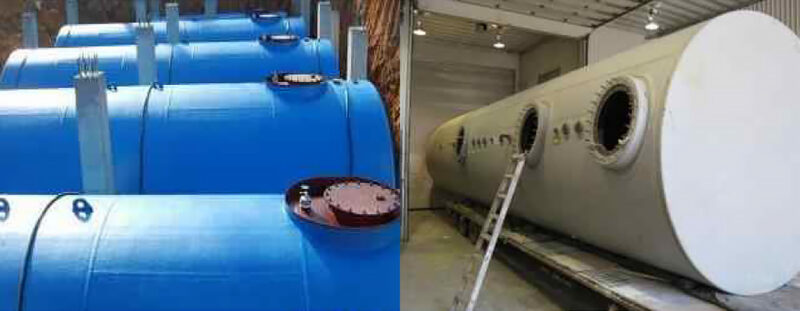
▲(Left) FRP double-walled underground tank / (Right) HDPE double-walled underground tank
(Source: Ministry of Environment, Korea’s official Website)
But that’s not all. The double-walled tank is also encased within a concrete protective box. This added layer of defense shields the tank from groundwater and soil pressure, keeping it stable and preventing any leaked fuel from spreading in the event of an accident.
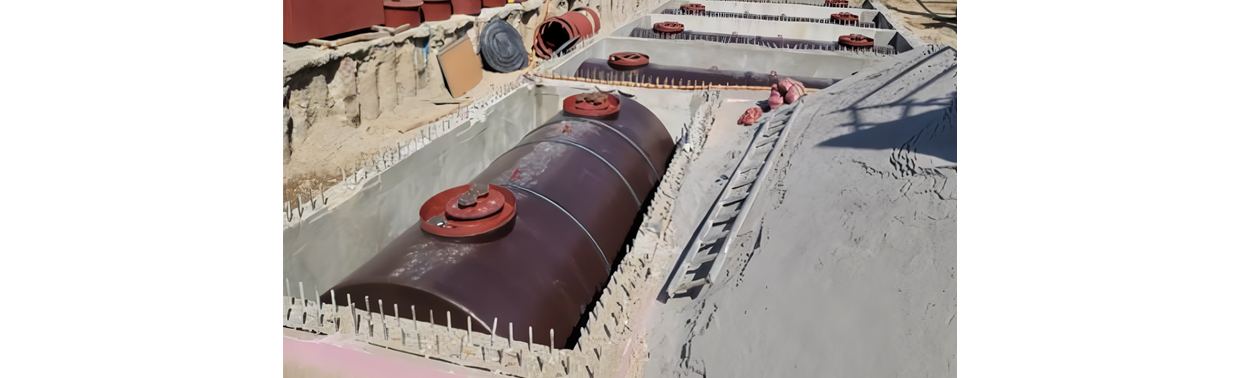
▲ Concrete protective box is being installed around a double-walled underground tank
Q3. How do gas stations keep track of invisible underground fuel levels?
Gas stations always seem to have just the right amount of fuel to keep us going, but how do they monitor the fuel levels in underground tanks they can’t even see?
Back in the day, gas stations relied on a tool called a “fuel stock gauge.” Think of it as a thermometer for fuel. It had measurement markings and a dual-valve system that allowed fuel to rise naturally inside the gauge, showing an accurate reading of the remaining fuel level. It could even detect contamination inside the tank, helping station operators identify irregularities or potential issues.
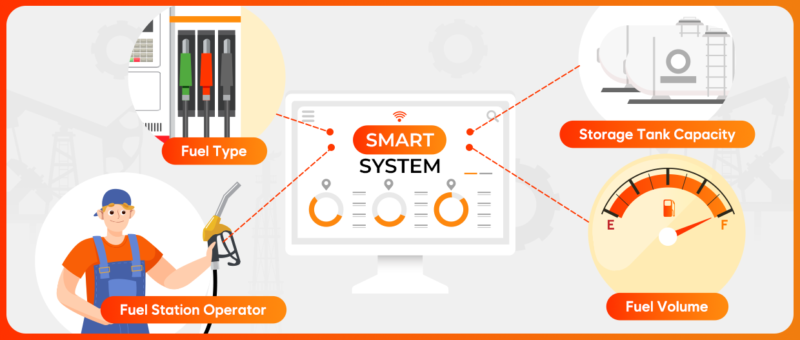
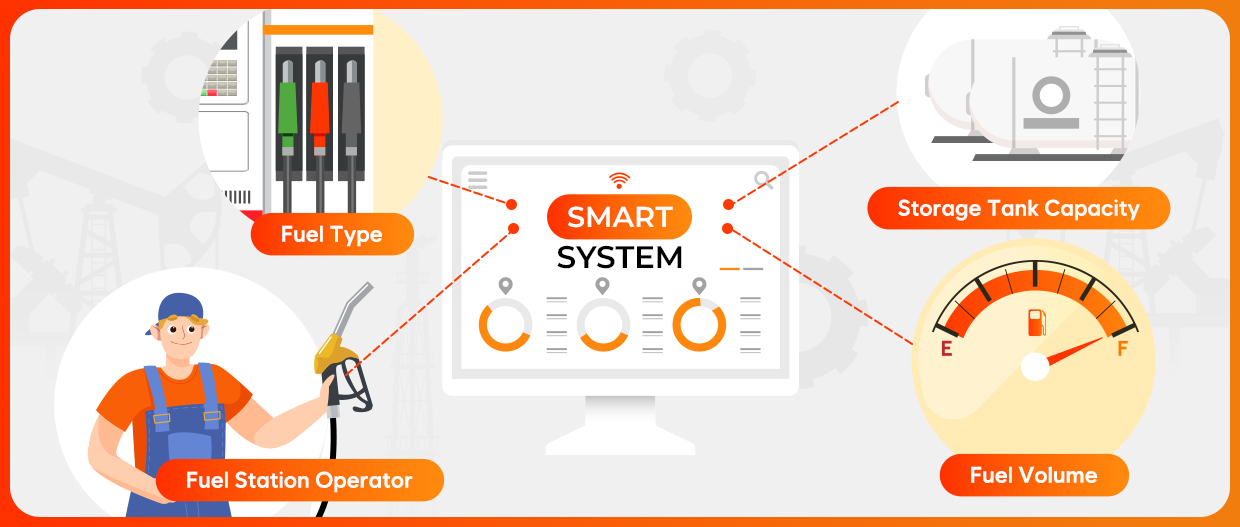
Fast forward to today, cutting-edge technology has transformed the process. Internet of Things (IoT)-based smart sensor systems now monitor underground tanks with precision and ease. These advanced sensors enable real0time communication between connected devices, providing instant data on fuel levels, temperature, and even water content. When integrated with fuel dispenser systems, this technology creates an intelligent monitoring network that ensures accurate inventory management every step of the way.
Here is how it works: automatic alerts notify station operators as soon as fuel levels drop below a set threshold, ensuring timely refills without disruption. These sensors can also detect leaks and abnormal consumption patterns early, allowing for quick response to prevent safety risks. By eliminating the need for manual tank inspections, IoT sensors have revolutionized gas station operations—enhancing efficiency, improving accuracy, and significantly boosting safety.
Quick Trivia!
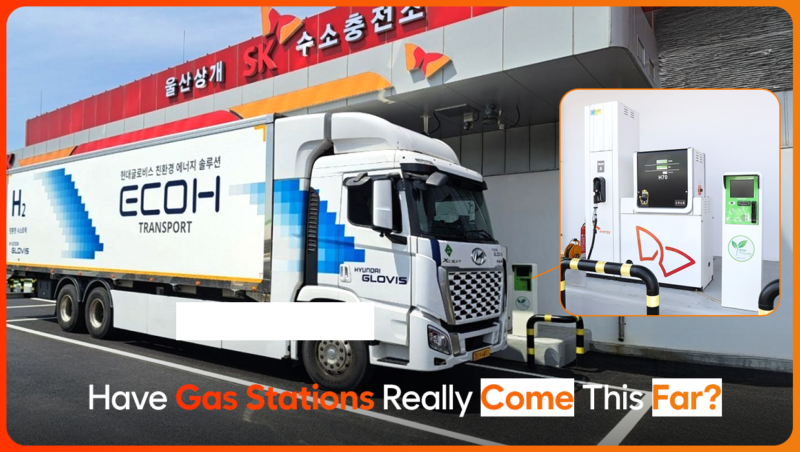
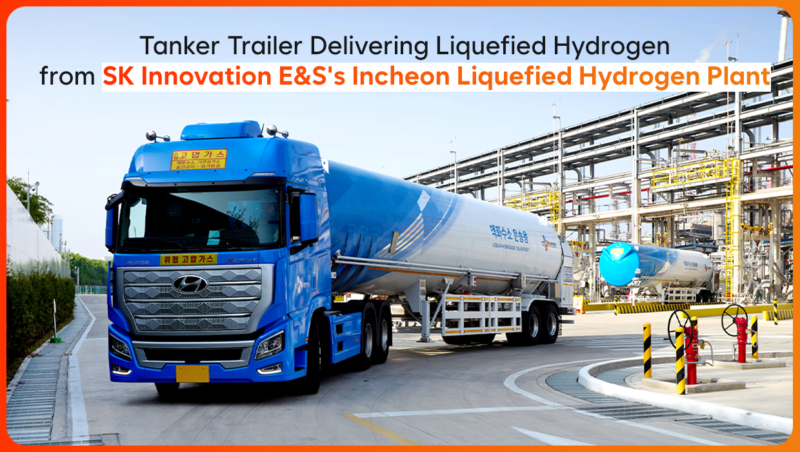
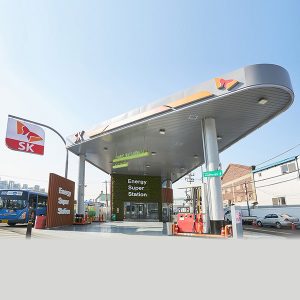
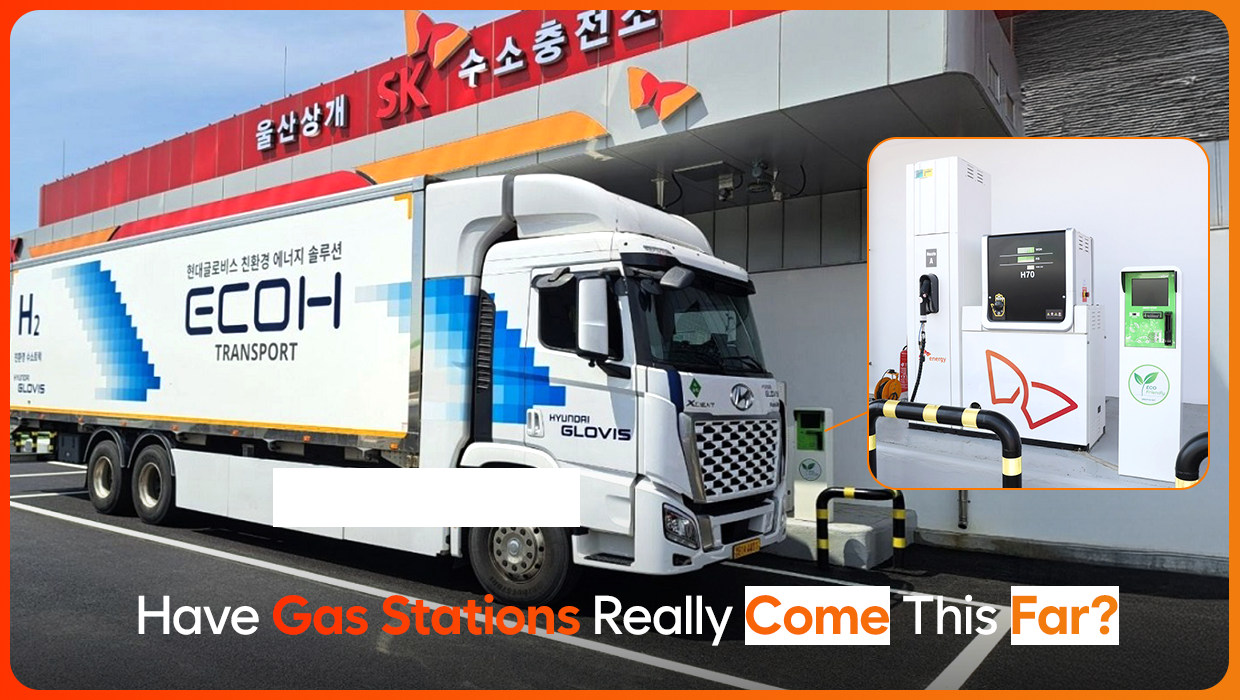
Gas stations today are no longer just places to fuel up on gasoline or diesel—they’ve evolved into multi-energy hubs! Beyond traditional fuels, they now offer electricity, hydrogen, and biofuels—paving the way for the future!
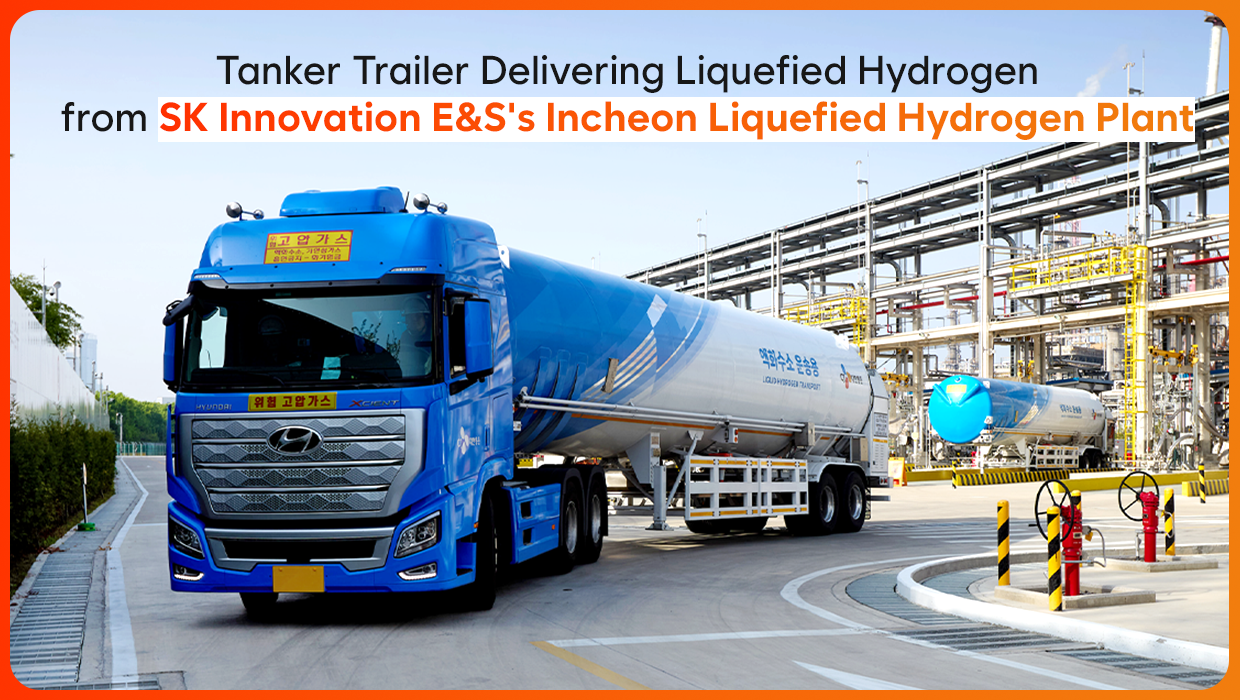
SK Innovation E&S is leading the charge in this transformation by actively developing liquefied hydrogen projects. This approach enables the efficient transportation of hydrogen from production sites to hydrogen charging stations. Liquefied hydrogen, with a volume 1/800th that of gaseous hydrogen, offers significant advantages in large-scale storage and transport. It can be safely transported at lower pressures using tanker trailers, making it a safer and more efficient alternative to gaseous hydrogen.
Today, we explored the hidden world beneath gas stations—an underground system that operates seamlessly yet often goes unnoticed. Fascinatingly, the principle behind measuring fuel levels in storage tanks draws inspiration from the same buoyancy principle Archimedes discovered in his bathtub over 2,000 years ago. Isn’t that incredible?
Science never stops evolving, and gas stations are evolving right along with it. From their humble beginnings to becoming multi-energy hubs, they now support not just gasoline and diesel but also electric charging and hydrogen-powered vehicles. The future of energy is taking shape, and gas stations are at the heart of it.
So, the next time you stop to refuel, take a moment to appreciate the incredible science and innovation happening just beneath your feet. Who knew gas stations could be so fascinating? Fuel-reka!