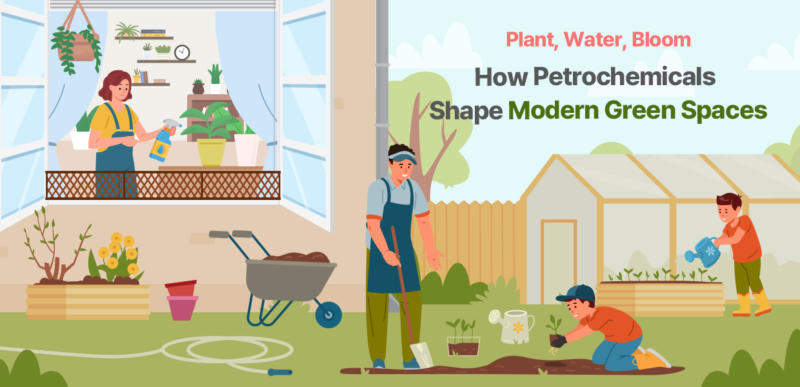
| From Cozy Corners to Blooming Backyards—Petrochemicals Supporting Your Green Space
Spring is the season of new beginnings—a time when plant lovers bring fresh energy into their homes and gardens. For those who tend to their leafy companions, this season comes with a special sense of excitement. From indoor gardening with air-purifying plants to outdoor spaces like gardens and balconies, greenery brings warmth and vitality into everyday life.
While the joy of growing plants takes center stage, there’s quiet support at work behind the scenes: petrochemical technology. At first glance, plants and petrochemicals may seem like an unlikely pair—but petrochemicals have their own story to tell. Let’s take a closer look at how these materials help keep green spaces thriving.
| No Green Thumb? No Problem—Petrochemicals Make Indoor Gardening a Breeze
A single small planter can breathe life into indoor spaces, bringing nature one step closer to our daily lives. The rise of indoor gardening owes much to one simple innovation: plastic planters made with polypropylene (PP).
Ceramic and clay pots were once the go-to choice, but they came with drawbacks—they were heavy, easy to break, hard to ship, and often pricey. Polypropylene planters changed all that. Lighter, tougher, and easier to handle, they helped turn indoor gardening into a fun and accessible hobby. You can place them anywhere—on a balcony, a desk, or a sunny windowsill—without worrying about cracks or extra weight.
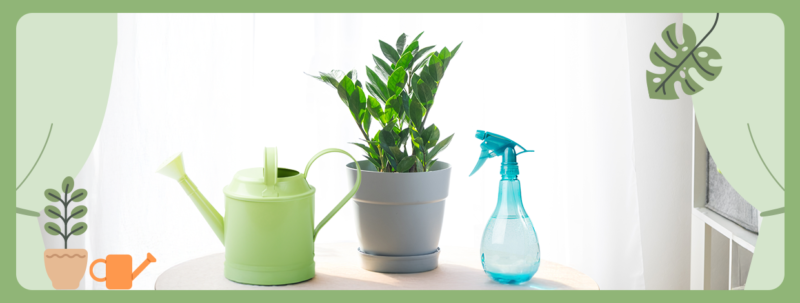
Polypropylene also helps retain soil moisture for longer periods due to its low water absorption rate. The matching saucers—usually made from the same material—catch excess water and keep it from pooling on the floor. This helps prevent indoor mold growth and reduces the worry that comes with it—another reason why PP planters are a favorite for indoor gardening.
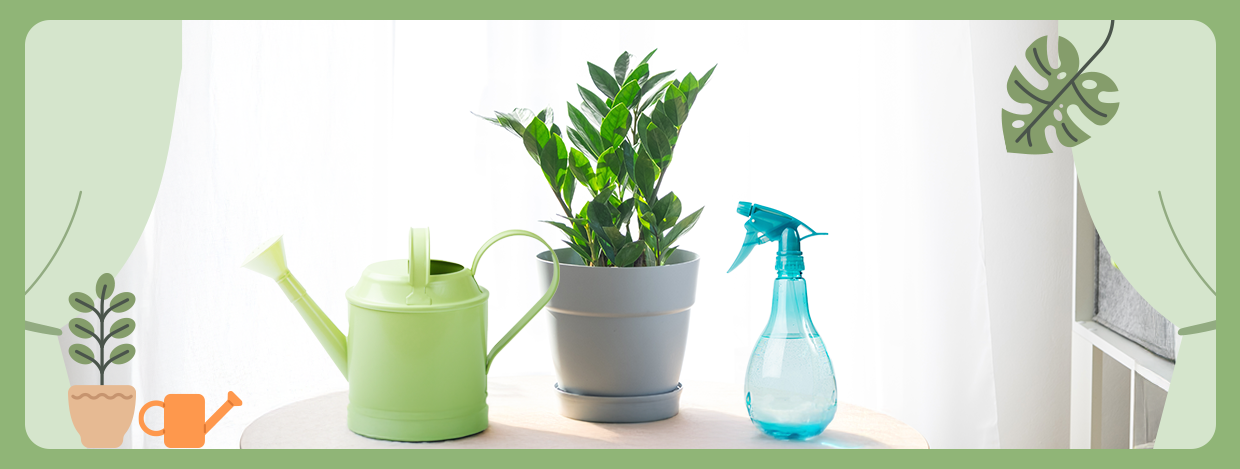
Watering cans and spray bottles are essentials for making indoor gardening easier, no indoor garden feels complete without them. Watering cans, in particular, are often crafted from polypropylene (PP), offering both lightweight convenience and lasting durability. Even when filled to the brim, they are gentle on the wrist and resistant to warping or cracking over time. Also, since PP is a thermoplastic, it can be molded into all kinds of shapes—from long, narrow spouts to wide openings for easy filling.
Spray bottles are another indoor gardening essential. In addition to polypropylene, they’re often made from materials like polyethylene (PE) and polycarbonate (PC), which are easy to clean, reusable, and resistant to deformation—even with repeated use.
Planters and spray bottles aren’t just tools anymore—they’ve found a place in interior design. Thanks to petrochemical technology, these plastic essentials now come in a variety of colors and styles, adding personality to any room and bringing your plants to life. Polypropylene, in particular, offers excellent color range and molding flexibility, making everything from bold, playful hues to sleek, modern forms possible—all while balancing function and style.
In the end, petrochemical materials have helped indoor gardening grow beyond a simple hobby—turning it into a creative part of how we live and style our everyday spaces.
? Here’s something fun! ?
Not many people realize that NASA played a key role in the rise of indoor gardening. In 1989, while researching ways to improve air quality inside spacecraft, NASA discovered that certain plants were effective at removing harmful substances—specifically benzene, formaldehyde, and similar volatile compounds—from the air. This finding brought new attention to air-purifying plants like peace lilies, snake plants, and ivy, and helped popularize the idea of growing greenery indoors—a trend that continues to thrive today.
| Backyard Tools, Reinvented—How Petrochemicals Make Gardening Easier
If there’s a community garden nearby, or even a small backyard waiting to be used, why not give outdoor gardening a try? Unlike houseplants, outdoor gardening requires working in harmony with the sun, soil, and seasons. It calls for a bit more care, but the rewards are well worth the effort.
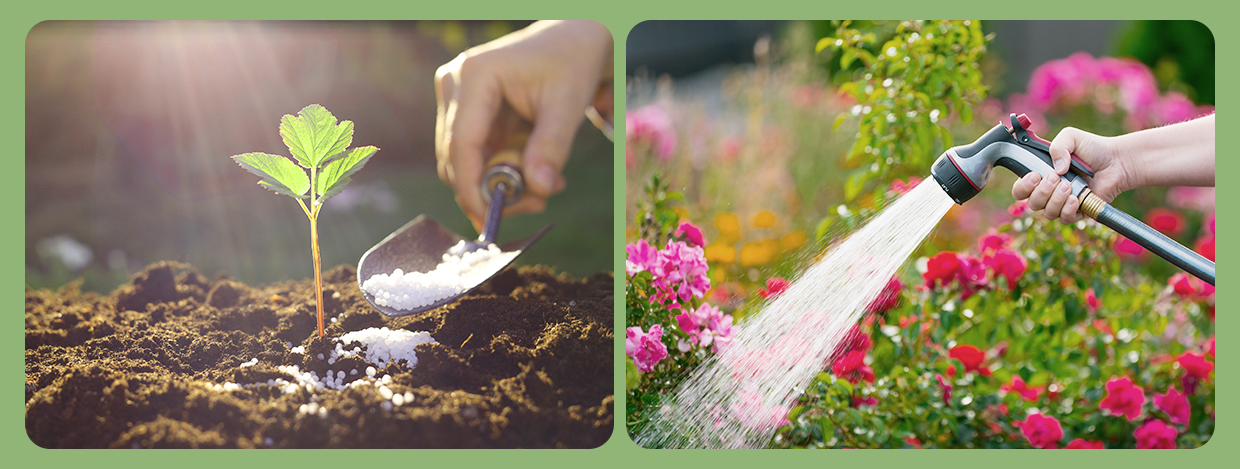
Fertilizers are essential for healthy plant growth, supplying key nutrients like nitrogen (N), phosphorus (P), and potassium (K). Nitrogen, in particular, plays a vital role in chlorophyll production and helps plants grow strong and green. One common nitrogen fertilizer is ammonium sulfate—a byproduct generated during the production of caprolactam*, a petrochemical product. By enriching the soil and providing nutrients, ammonium sulfate adds life to any garden.
(*) Caprolactam : A colorless or white organic compound used as a raw material for nylon fiber production, as well as for mechanical parts and plastics
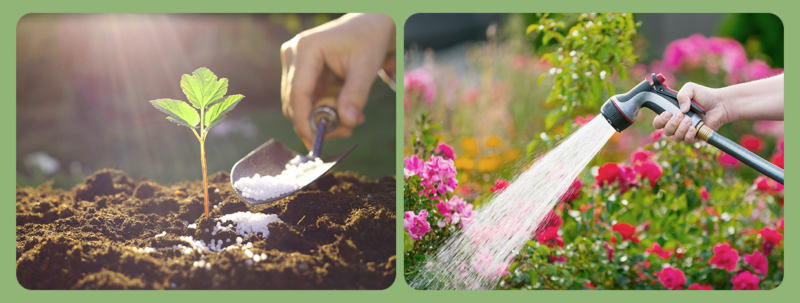
Once the soil is nourished, it’s time to water. A garden hose is a must-have tool for delivering water across the yard, and it’s most commonly made from polyvinyl chloride (PVC). With its flexibility and strength, PVC is perfect for hoses that need to wind through large garden spaces. Other materials like rubber and polyethylene are also used, valued for their heat and pressure resistance. Available in various materials and lengths, garden hoses can be matched to your garden’s size and setup, making outdoor watering a whole lot easier.
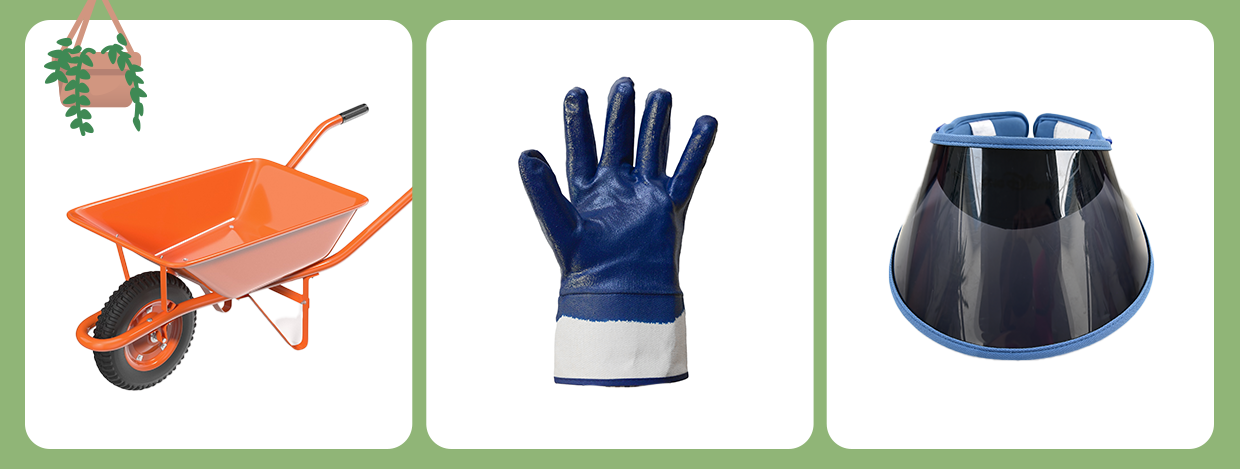
Let’s not forget the wheelbarrow—a backyard essential for hauling tools, soil, and compost from place to place. In the past, most wheelbarrows were made of wood, which made them heavy and vulnerable to moisture. They often cracked or warped, especially when used to carry wet materials like soil or fertilizer. Today’s versions are a big upgrade, with trays made from lightweight, durable materials like polypropylene or polyethylene. These improvements make them easier to move, simpler to clean, and more convenient to store.
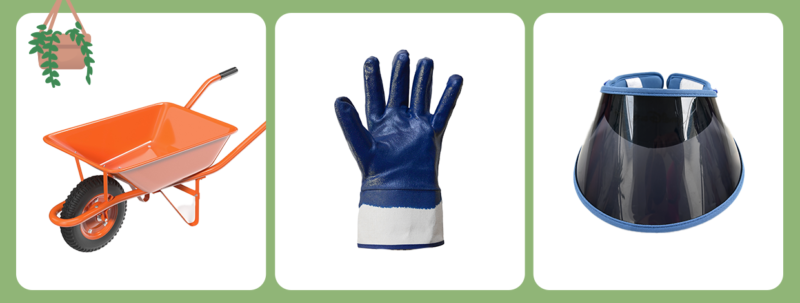
When working with soil or pulling weeds, gardening gloves are a must. Made from nitrile butadiene rubber (NBR), these gloves offer strong resistance to oils and chemicals—keeping hands safe from fertilizers, pesticides, and other harsh substances.
Outdoor gardening is a great way to connect with nature—but spending too much time under the sun can be hard on your skin. That’s where sun visors come in. Made with UV-protective materials like polyester (PES) and nylon, they help shield your face and neck from direct sunlight, making long hours in the garden a little more comfortable.
| Planting Hope, Growing Green—with a Little Help from Petrochemicals
From planters that purify the air to tools that support every step of a gardener’s journey toward a fruitful harvest, petrochemicals quietly play a role in helping plants thrive. As poet Lucy Larcom** wrote, “He who plants a tree, plants hope.” This spring, why not cultivate a green space of your own and nurture a little hope along the way?
(**) Lucy Larcom: A 19th-century American poet and educator widely known for her works that convey warm reflections on nature and life