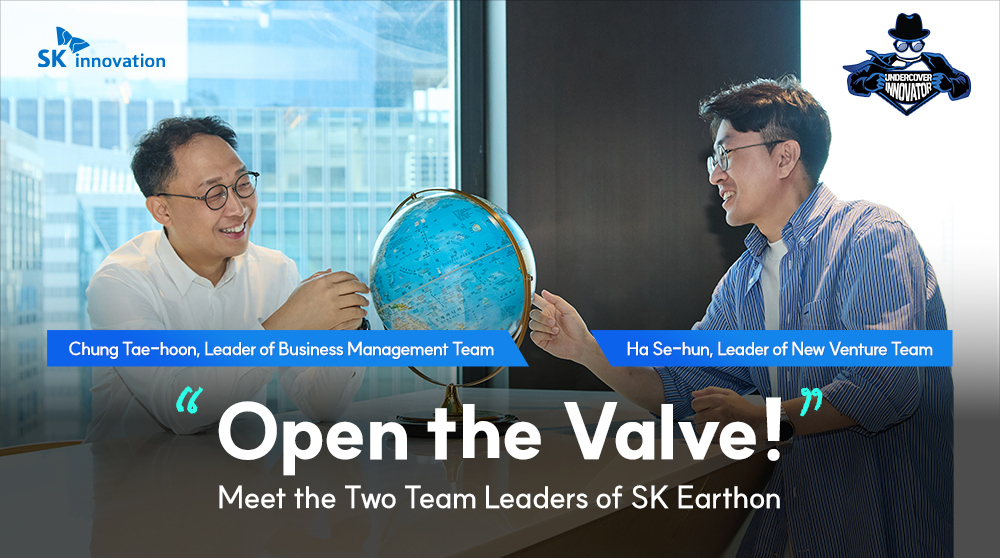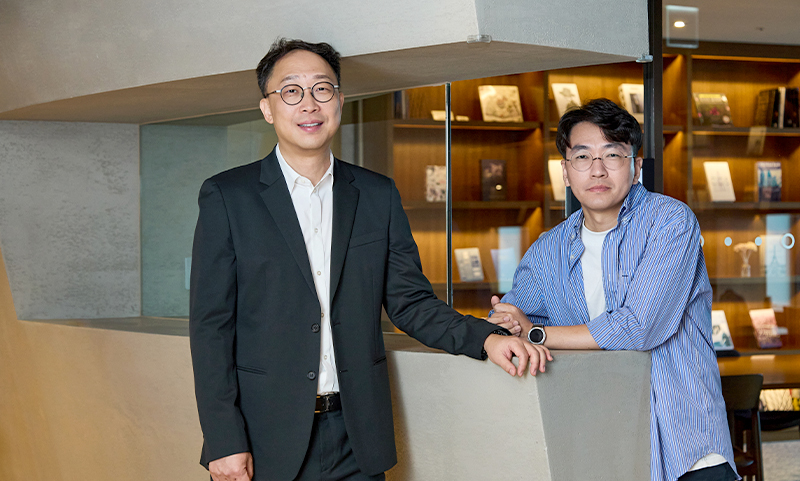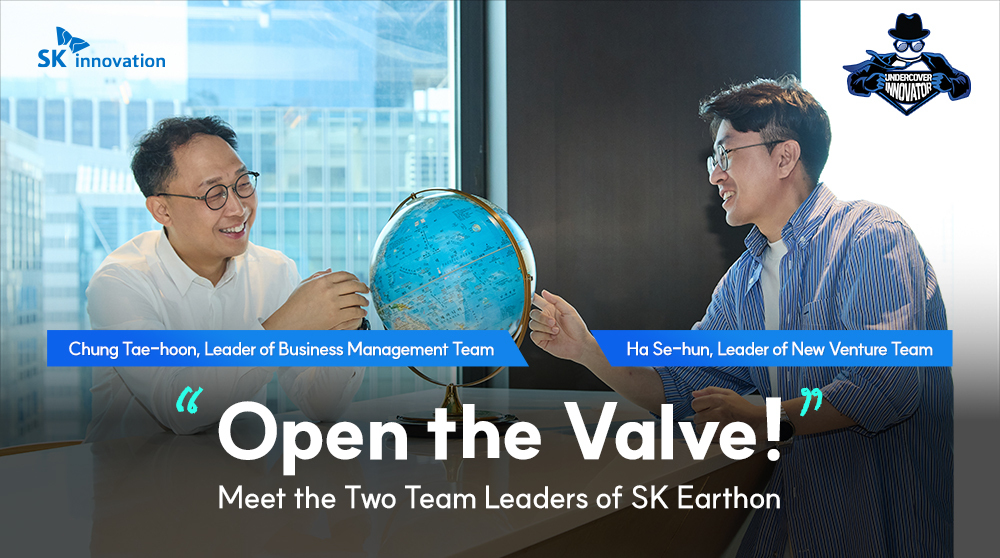
42 years ago, in 1983, when SK Earthon first got involved in the Karimun oil block in Indonesia, very few could have envisioned that the company would play a pivotal role in shaping South Korea’s oil & gas exploration and production history. Taking the country from a nation without any oil reserves to one that actually produces oil now, SK Earthon has spent over four decades honing its expertise and experience through numerous challenges and setbacks. Today, it is at the forefront of expanding Korea’s energy territory. We had the opportunity to meet with two Innovators at SK Earthon, who are courageously tackling the monumental task of developing overseas oil fields and turning the vision of a “resource-poor but oil-producing nation” into reality.
Q1. Today, we have two Innovators with us who are dedicated to expanding Korea’s energy frontier. To start, could you please introduce yourselves?
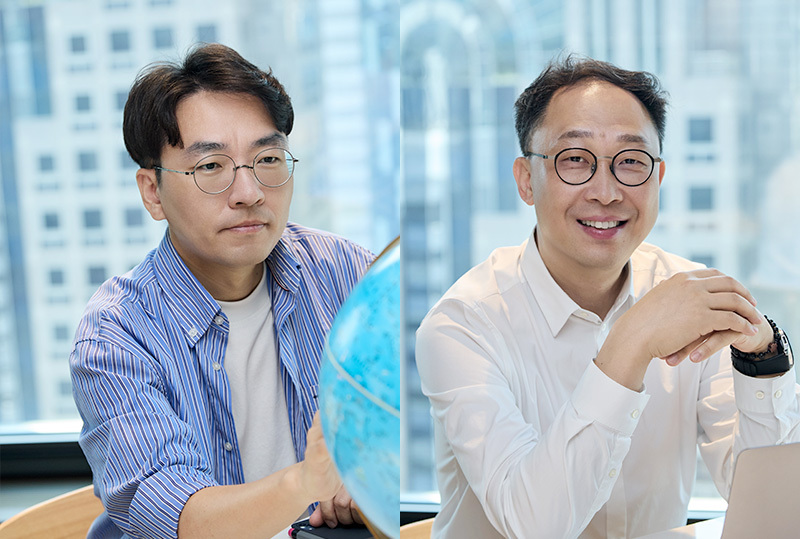
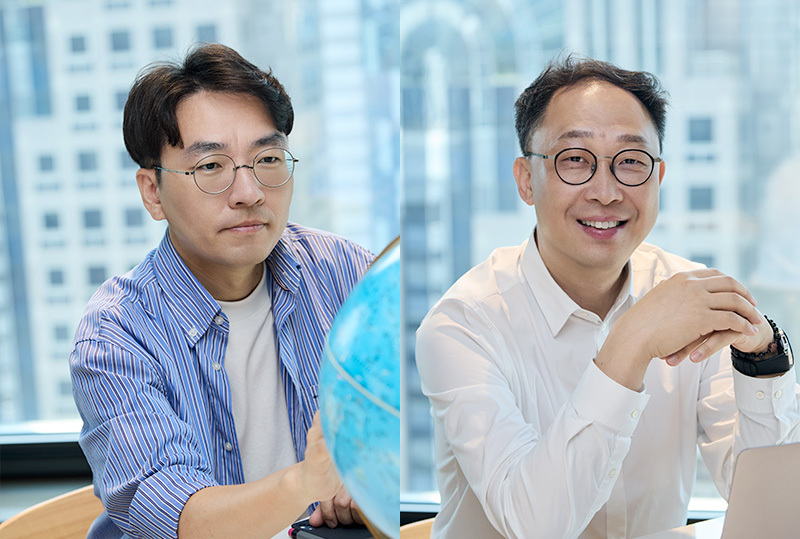
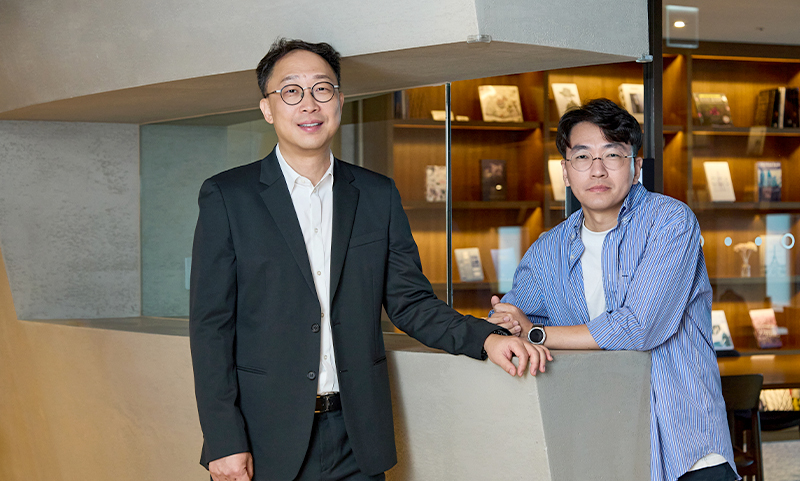
Chung Tae-hoon, Leader of Business Management Team (Chung): Hello, I’m Chung Tae-hoon from the Business Management Team at SK Earthon.
Ha Se-hun, Head of New Venture Team (Ha): Nice to meet you. I’m Ha Se-hun from the New Venture Team at SK Earthon.
Q2. As a subsidiary of SK Innovation specifically tasked with exploration & production (E&P) business, SK Earthon was, in fact, the first private E&P company in Korea. Given that Korea is a resource-poor country, oil & gas exploration, development and production often seem distant or unrelated to us. So, being part of an E&P company from a resource-poor nation, is it really feasible to produce oil despite having limited resources?
Chung: Korea’s status as a resource-poor country means we lack sufficient domestic oil resources, making overseas resource development crucial for ensuring energy security. That’s why SK Earthon leverages its technical expertise to carry out successful exploration and development activities in various international projects. Being resource-poor means we must work even harder to extract resources. It’s about changing our perspective. If we lack resources domestically, let’s find and extract them abroad. This mindset was the catalyst for Korea’s initial foray into overseas E&P business over 40 years ago, with the goal of securing our nation’s energy security.
Ha: It’s not just countries without resources that are focused on overseas E&P business. Even resource-rich nations are actively involved. Companies like ExxonMobil, Chevron, BP, and Shell have more projects abroad than at home, often yielding higher profits. In E&P business, there are no borders. For SK Earthon, being from a resource-limited country means bearing a significant responsibility. Our mission is to expand Korea’s energy territory and secure our future.
Q3. Could you tell us about where SK Earthon’s business sites are located and which ones are pivotal to your operations?
Chung: So far, SK Earthon has participated in about 100 projects across more than 30 countries. Currently, we’re actively involved in 16 projects spanning10 countries. These include Block 17/03 in China; Blocks 16-2, 15-1, 15-1/05, and 15-2/17 in Vietnam; SK427 Block and Ketapu Cluster in Malaysia; Serpang and Binaiya Blocks in Indonesia; Blocks 88 and 56 in Peru; Libya’s NC-174 Block, Australia’s G-15-AP project, and also LNG projects in Qatar, Oman, and Yemen. We’ve achieved remarkable results in several areas. One I’d especially like to highlight is Block 17/03 in China. Participation can be through partial equity investment or by holding operatorship, where we directly manage the project. The latter is particularly challenging, involving significant responsibility for technical and financial risks. Block 17/03 in China is an example, where we successfully completed the entire cycle of exploration, development, and production—our first full-cycle operation as a block operator.
Ha: In the past, we engaged in projects across various regions such as South America, Africa, and Central Asia. Based on that experience, we now strategically focus on regions we understand best and can excel in. As my colleague mentioned, we’re currently concentrating our efforts in Southeast Asia, including China, Vietnam, Malaysia, and, more recently, Indonesia.

Q4. Could you explain the different types of contracts involved in oil block participation and how host countries manage their rights? Also, how does the revenue structure work given the substantial investments required in E&P business?
Chung: Contracts for oil blocks are made between the host country’s government and the E&P companies. There are three primary types of contracts commonly used in oil development. The most prevalent is the Production Sharing Contract (PSC). In this arrangement, the oil company assumes the risks and costs associated with exploration and production. If production is successful, the produced oil or gas is shared between the government and the company according to a predetermined ratio. The second type is a Concession Agreement, or License Contract. In this case, the oil company obtains the rights to explore and develop, and for a certain period holds ownership and revenue rights. Typically, the company pays royalties and taxes to the host government. The last type is a Service Contract.In a service contract, the host government hires the oil company to find and produce the resources. The ownership of the produced resources remains fully with the government, and the company receives service fees from the government instead of revenue from the resource sales.
Ha: That’s correct. Due to the lengthy duration and substantial investment required in E&P projects, it is common for companies to form a consortium to share risks from the early exploration stages. This collaborative approach allows multiple E&P companies to participate jointly rather than individually.
Q5. E&P often occurs in remote locations like oceans, deserts, or mountains, and requires significant investment. Could you explain how companies typically engage in these projects and the challenges they face in such environments?
Chung: There are several ways to get involved in a new oil block. The most common method is to participate in a bidding process organized by the host country. In other cases, companies may identify promising areas and negotiate directly with the host country for exploration and development rights. Alternatively, a company can join an existing project by acquiring shares from current participants who hold rights to the block.
Ha: It is true that oil & gas exploration and development usually happens in areas that are challenging to access, such as inland regions, deserts, and mountainous areas for onshore blocks, or locations ranging from near the coastline to deep waters for offshore blocks. While onshore blocks typically offer better access and easier transportation of equipment, they can still present difficulties due to remote locations and environmental considerations. Offshore blocks, meanwhile, pose significant challenges related to weather, waves, and currents, with the development costs increasing significantly in deeper waters. Neither type of block presents an easy option.

Q6. Given the substantial capital investments and partnerships often required in oil & gas exploration and production, what other key capabilities are essential for success in this industry?
Ha: Many regard exploration as the heart of the E&P business. Development and production are crucial, but they hinge on successful exploration. Thus, being highly skilled in exploration is vital for success. SK Earthon is moving beyond participation as a non-operating partner primarily limited to financial risk and is also pursuing operating projects based on the technical capabilities and experience it has accumulated over time. Recently, we’ve demonstrated our strong exploration capabilities with successful operations in China and Vietnam. In China, we not only succeeded in exploration but also managed development and production, showcasing our comprehensive abilities.
Chung: Equally important are strong business management skills. It’s crucial to understand and comply with local laws and regulations, maintain good relationships with host governments, and manage geopolitical risks effectively. Given the significant investments needed, thorough budget review and execution are essential, along with adherence to domestic foreign currency regulations. Contracts are key in E&P projects, including production sharing contracts with governments and joint operating agreements among partners. A single contract clause can determine a project’s success or failure, and disputes may arise. Therefore, drafting contracts to minimize risks from the outset is vital. Managing operations based on these contracts and negotiating effectively with stakeholders is crucial during project execution.
Q7. Considering these factors, how would you assess SK Earthon’s overall capabilities?
Ha: In terms of sheer scale, it’s challenging to compare us with some global giants. However, the technical skills of our team members are on par with those of leading companies worldwide, and in certain specialized areas, we even excel. Specifically, we’ve developed unique core strengths crucial for exploration, such as advanced seismic imaging, basin modeling, and quantitative seismic interpretation (QSI). Additionally, our regional expertise is a significant asset. Our recent successful explorations in Southeast Asia clearly demonstrate SK Earthon’s robust technical capabilities and deep local knowledge.
*Seismic Imaging: An advanced technology that uses sound waves to create detailed images of underground rock layers
Chung: SK Earthon has participated in numerous projects globally, achieving considerable success.In this regard, we believe we are unmatched by any other private company in Korea. We’ve faced failures, but we view them as learning opportunities rather than setbacks. Compared to our capabilities in the exploration, there are still areas lacking in the development and production phases. However, with the success of Block 17/03 in China, as previously mentioned, we have been enhancing our development and production capabilities. While it might be ambitious to directly compare us to major global oil companies, by completing the full cycle of exploration, development, and production, we believe we’ve acquired the skills and experience necessary to operate on a global level.
Q8.You mentioned earlier that China and Southeast Asia are key regions for SK Earthon. Could you share your achievements there and your future expectations?
Chung: Since SK Earthon began its E&P journey in 1983, we’ve successfully executed projects in Vietnam, Peru, and Brazil. Initially, as a non-operator focusing on financial participation and oversight, we struggled to match the competitiveness of major oil companies. Transitioning to operator roles, where we lead project decisions and operations, became crucial. We participated several exploration blocks in Myanmar, Kazakhstan, Peru, and Colombia as an operator, but unfortunately, we didn’t find oil in those instances. Our breakthrough came in 2015 when SK Earthon made its first oil discovery as an operator at Block 17/03 in China. At this block, we advanced beyond exploration by completing feasibility studies, and basic engineering, securing Chinese government approvals, and managing the engineering, procurement, construction, and installation of production facilities. On September 21, 2023, we began producing crude oil there.
Ha: Ha: In Vietnam, we’ve recently achieved a series of successful exploration drillings across three blocks. Considering that the typical success rate for exploration drilling is less than 20 to 30 percent, this is an exceptional accomplishment. Leveraging SK Earthon’s strong exploration expertise, we’ve established partnerships with state-owned oil companies in Southeast Asia and expanded into Indonesia. We are optimistic about continued success in our exploration projects in Malaysia and Indonesia.
Q9. SK Earthon’s achievements in China and Southeast Asia are impressive. Is discovering oil as dramatic as the scene in the movie “Giant” with James Dean, and how do you feel when it happens?
Chung: Since our projects involve offshore blocks, if oil were to burst out like in the movies, it would actually be considered an accident (laughs). As our offshore operations require careful planning and setup, we started producing crude oil on September 21, 2023, after completing all necessary preparations. I remember the unique moment when we initiated production at precisely 8:08 PM, as the number 8 is considered a symbol of wealth in China. Our team gathered late in the conference room, and we all cheered, exclaiming “Open the Valve” as production officially began.
Ha: We’ve experienced our fair share of setbacks, too. My first site visit after joining the company was in Kazakhstan, where we confirmed a failure. Despite the disappointment, it taught me valuable lessons. On the other hand, when we discovered oil in Vietnam, I was present at the moment of success. It’s a memory I’ll always cherish. As the oil reached the surface and ignited, everyone celebrated with cheers and applause. I remember calling headquarters in Korea, my voice trembling with excitement, to share the fantastic news.
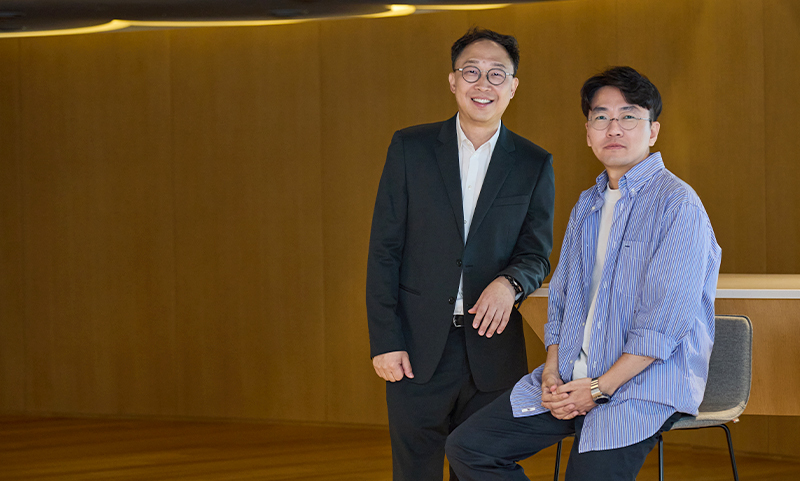
Q10. Considering Korea’s limited resources and expertise in E&P business, choosing this path likely involves significant responsibility. As an expert in the field, could you share your thoughts and goals?
Chung: E&P business is a field where specialization and expertise are crucial. Strong technical capability is essential, but equally important is expertise on the business side. Successful projects rely heavily on various contracts, such as petroleum contracts, joint operating agreements, and crude oil sales deals. Gaining insights through diverse, long-term projects is vital. Working closely with host governments and partners requires understanding different perspectives and effective communication and negotiation skills. I take pride in working in such a specialized area and feel a strong sense of mission, knowing that our small team of about a hundred people can successfully manage numerous overseas projects.
Ha: Looking back on my early days at SK Earthon, I can see how much the company has grown. Our predecessors laid the foundation with successful projects, enabling us to reach where we are today. It’s now our responsibility to continue discovering promising projects to ensure SK Earthon’s steady growth in the future.