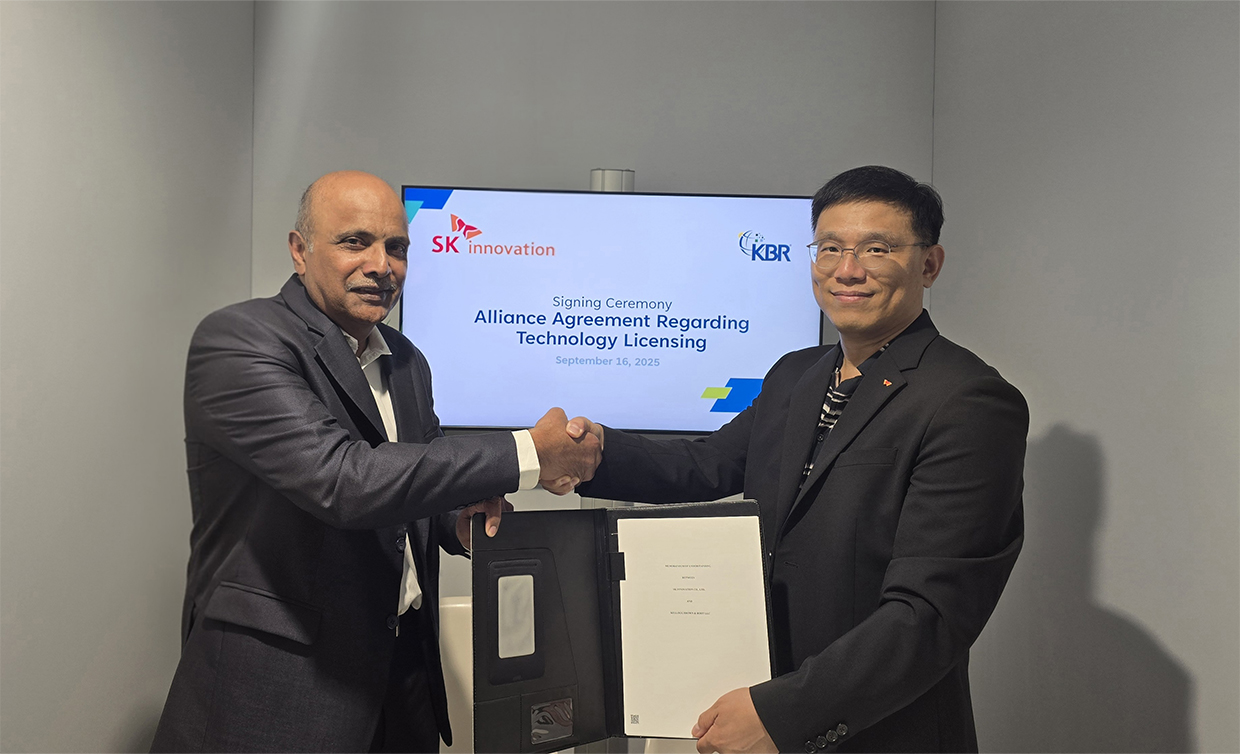
■ SK Innovation signed an MOU with U.S.-based KBR to commercialize lithium hydroxide recovery technology on September 16
■ Kim Phil-seok, CTO of SK Innovation, emphasized the importance of securing battery resources and the company’s innovative technology in a keynote speech at a conference.
SK Innovation is making a bold move to impact the global battery recycling market with its proprietary Battery Metal Recycling (BMR) technology. By signing a Memorandum of Understanding (MOU) with U.S. engineering giant KBR, SK Innovation is poised to gain a competitive edge in the rapidly growing sector.
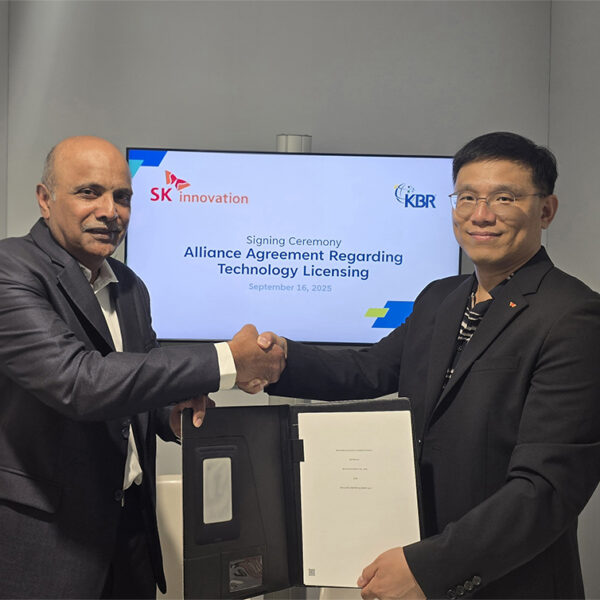
The MOU, which licenses SK’s BMR technology, was signed at the Fastmarkets European Battery Raw Materials Conference 2025 in Lisbon, Portugal, from September 16 to 18 (local time). This strategic collaboration will enable KBR to integrate SK Innovation’s BMR technology with its PureLi® high-purity crystallization technology, offering a unique solution to the global market and generating royalty revenue for SK Innovation. The signing ceremony was attended by Kim Phil-seok, CTO/Executive Director of SK Innovation’s Institute of Environmental Science and Technology, and Gautham Krishnaiah, CTO of KBR.
The BMR technology developed by SK Innovation is distinctive for its proprietary process that directly recovers lithium hydroxide from used batteries, standing out from traditional methods. Meanwhile, KBR’s PureLi® technology effectively removes impurities from lithium-containing solutions and produces battery-grade high-purity lithium hydroxide through a continuous cooling and recrystallization process.
KBR, with approximately 34,000 employees, a global network in over 80 countries, and annual revenues of around USD 7 billion, is a world leader in providing advanced technologies and engineering solutions across sectors such as energy, petrochemicals, defense, industry, and infrastructure.
Since 2017, SK Innovation has been developing its unique BRM technology by combining original research ideas with accumulated expertise in the refinery and petrochemical sectors, overcoming the limitations of existing lithium recovery technologies.
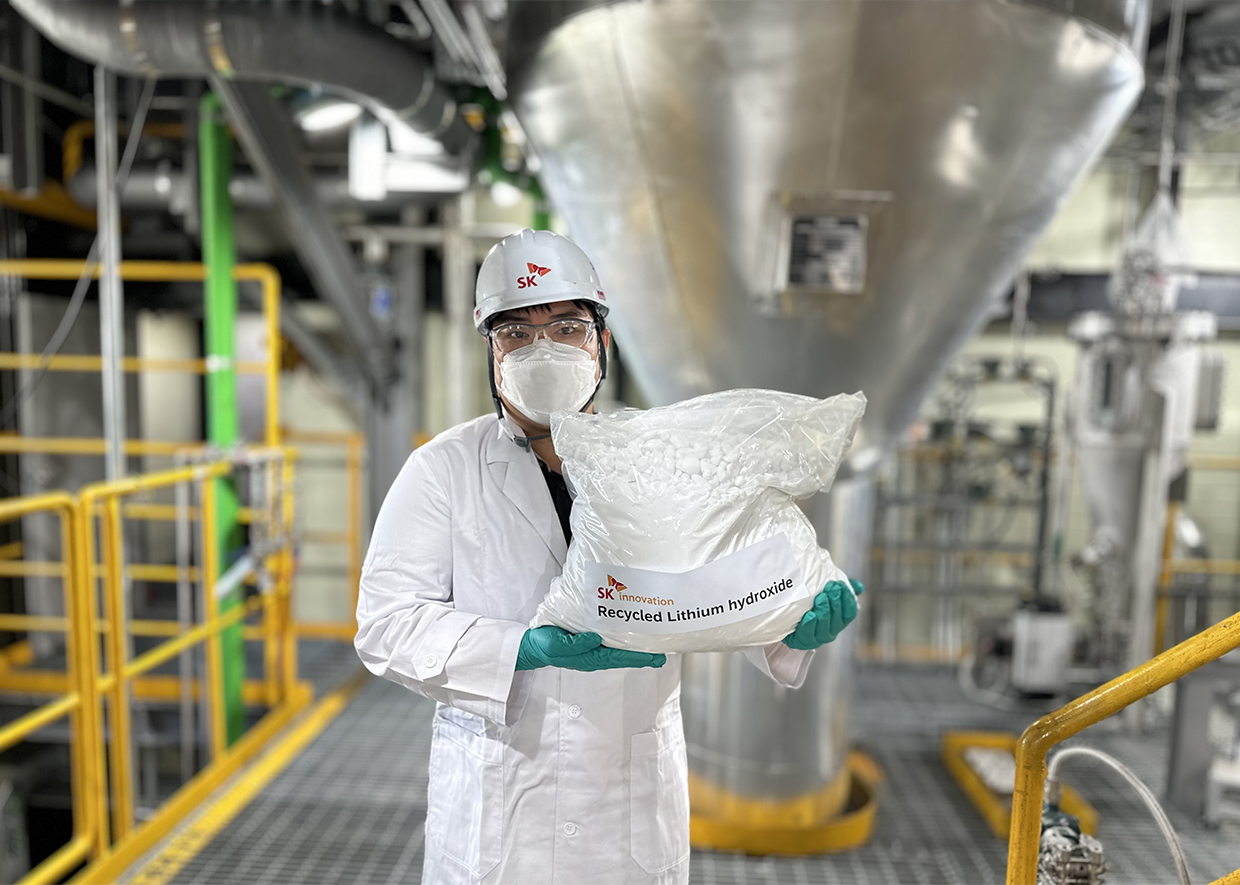
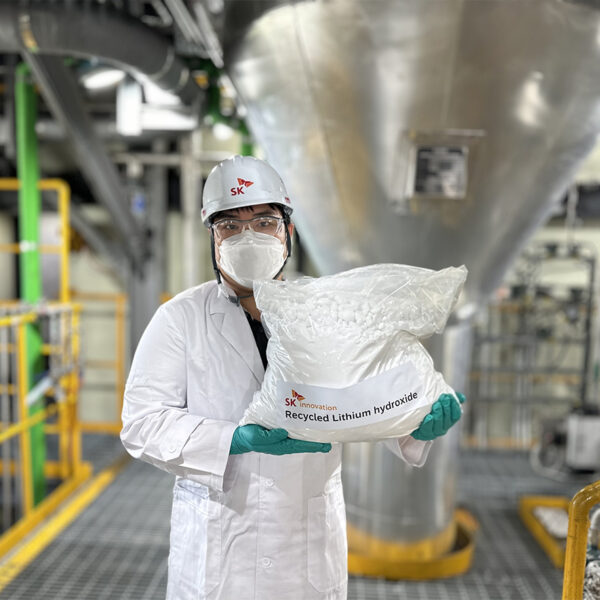
In 2021, SK Innovation built a commercial demonstration facility at its Institute for Environmental Science & Technology capable of directly recovering lithium hydroxide from used batteries equivalent to about 800 electric vehicles annually. This technological prowess has been validated with over 100 patent applications filed domestically and internationally.
At the MOU signing, CTO of SK Innovation, Kim Phil-seok stated, “With SK Innovation’s cutting-edge lithium recovery technology, we can fully meet the EU Battery Regulation’s mandatory recovery rates, and the performance of batteries produced from the recovered lithium has already been verified. We are committed to leading the global market in battery recycling technology with our eco-friendliness and ability to respond to global regulations.”
Gautham Krishnaiah, KBR’s CTO, commented, “SK Innovation’s lithium recovery technology is more cost-effective than traditional wet, dry, and carbon reduction technologies. We aim to secure business viability by creating synergy with KBR’s high-purity crystallization technology and licensing capabilities.”
Furthermore, CTO Kim of SK Innovation delivered a keynote speech on the first day of the Fastmarkets European Battery Raw Materials Conference 2025, discussing the growth of the battery market, the importance of critical minerals, and SK Innovation’s advanced technologies. He highlighted the constraints in resource acquisition and environmental regulations due to the growth of the global electric vehicle and battery industries, emphasizing that SK Innovation’s BMR technology could be a viable solution.
*About SK Innovation’s Battery Metal Recyling (BMR) Technology
SK Innovation’s BMR technology stands out due to its proprietary process that initially recovers lithium from the black mass, a mixture of cathode and anode materials from crushed used batteries, through a “fluidized hydrogen reduction reaction
This innovative reaction involves injecting hydrogen gas into the fine particle form of black mass, causing it to become fluidized and move within the reactor. As it interacts with hydrogen, lithium is selectively recovered, significantly enhancing both the efficiency and purity of lithium recovery while simplifying the process and ensuring environmental friendliness.
Traditional lithium recovery methods typically separate cobalt and nickel first, then precipitate lithium, which results in low lithium recovery rates and difficulty in obtaining high-purity lithium. In contrast, SK Innovation’s BMR technology directly recovers high-purity lithium hydroxide, ready for use as high-capacity battery material without additional refining. It can also be easily converted into lithium carbonate upon contact with air, increasing its applicability. A key advantage is the environmentally friendly nature of the solution, as it minimizes the use of chemicals other than hydrogen and water throughout the process, resulting in negligible production of pollutants.
In 2021, a Life Cycle Assessment (LCA) by Argonne National Laboratory under the U.S. Department of Energy demonstrated that SK Innovation’s method for extracting battery materials emits significantly less greenhouse gas compared to traditional lithium mining or brine extraction methods, further affirming its environmental sustainability.
[Photo 1] Kim Phil-seok (right), CTO/Executive Director of SK Innovation’s Institute of Environmental Science and Technology, and Gautham Krishnaiah (left), CTO of KBR, sign an MOU for the commercialization of lithium hydroxide recovery technology at the Fastmarkets European Battery Raw Materials Conference 2025.
[Photo 2] A researcher from SK Innovation’s Institute of Environmental Science and Technology showcases the recycled lithium hydroxide recovered using the commercial demonstration facility for direct lithium hydroxide recovery from used batteries.