As the global shift to sustainable energy accelerates, the ability to store electricity efficiently—and deliver it reliably when needed—has become increasingly important. Energy storage systems (ESS) play a growing role in stabilizing power supply, especially as more solar and wind generation comes online. Given the variability of renewable output, there is a growing need for next-generation battery technologies that can store and release energy safely and consistently.
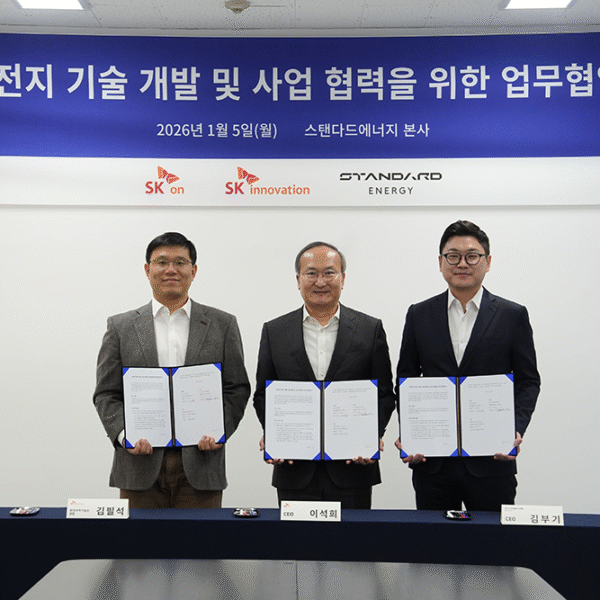
Against this backdrop, vanadium ion batteries (VIBs) are drawing increased attention. On January 5, SK Innovation and SK On announced a partnership with Standard Energy, a South Korea-based company specializing in VIB-based ESS solutions, as part of their efforts to strengthen their energy storage business.
| What Is a Vanadium Ion Battery?
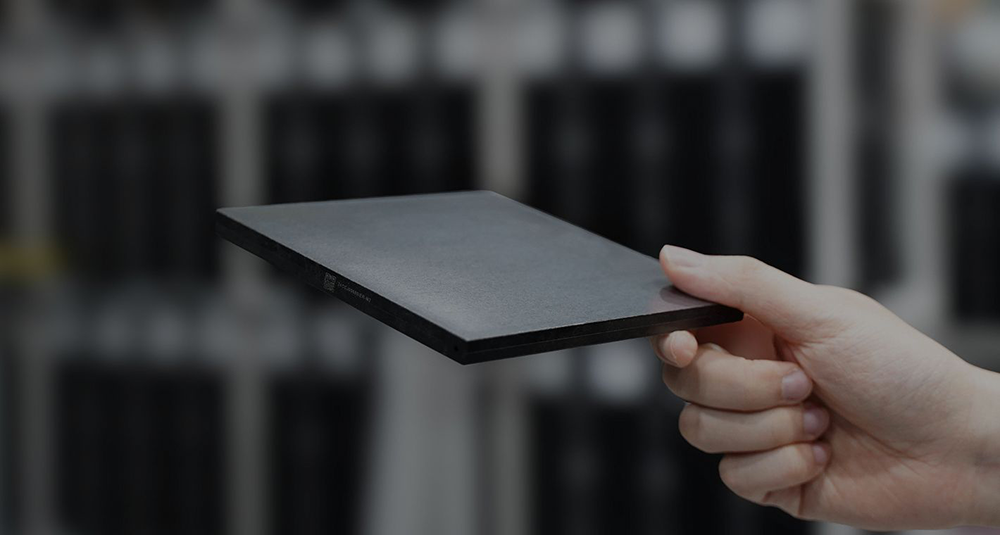
A vanadium ion battery is a vanadium-based rechargeable battery for ESS applications—commercialized for the first time globally by Standard Energy. It uses a water-based electrolyte in which vanadium ions are dissolved.
Like a lithium-ion battery, it consists of a cathode, an anode, and an electrolyte. The key difference is the mechanism of charge transport and energy storage:
- In lithium-ion batteries, lithium ions carry charge and store energy.
- In vanadium ion batteries, hydrogen ions carry charge, while vanadium ions store energy.
| Why Vanadium?
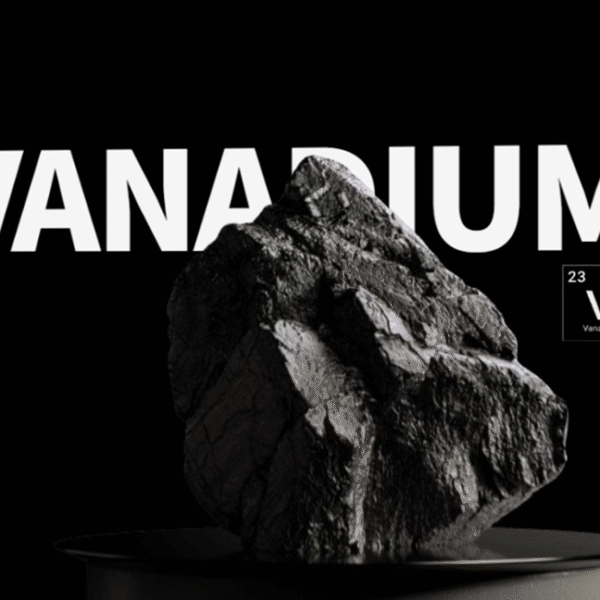
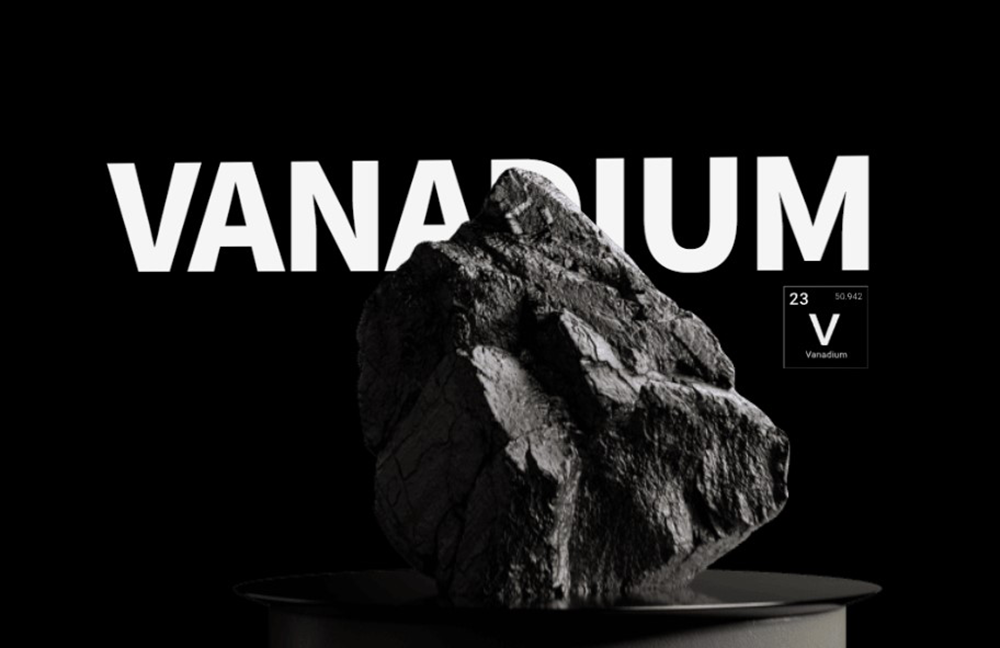
Vanadium (atomic number 23) is a silver-gray metallic element known for its ability to exist in multiple oxidation states (multivalency). This characteristic enables the use of the same active material on both the cathode and anode, which helps prevent degradation from electrolyte mixing. As a result, VIBs can offer:
- Long service life
- Lower fire risk and enhanced safety
- Resource stability, since vanadium is relatively abundant in the Earth’s crust
| How It Works: Structure and Operating Principle
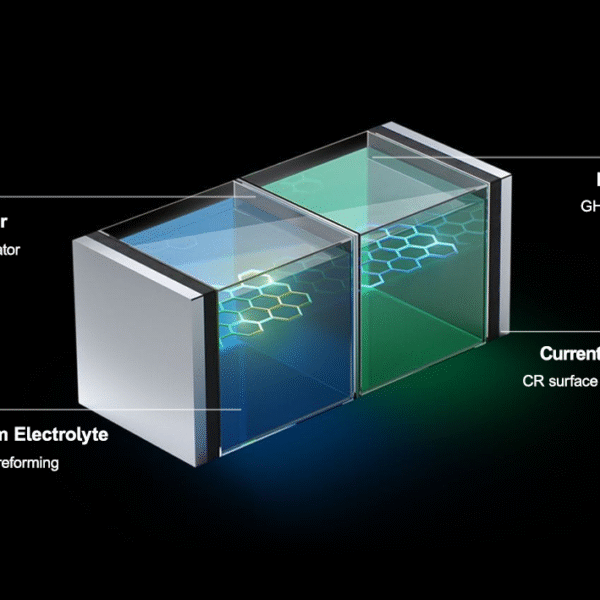
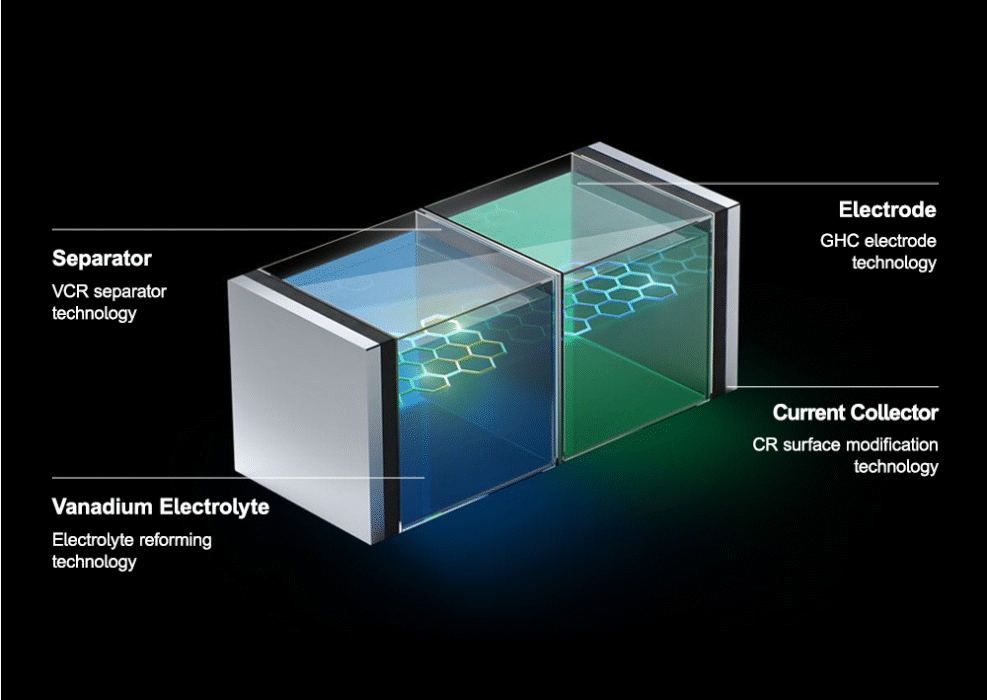
A vanadium ion battery includes:
- Positive electrolyte: Water-based electrolyte that contains vanadium ions, which undergo redox (oxidation-reduction) reactions during charge and discharge
- Negative electrolyte: The same type of vanadium-based electrolyte, with vanadium ions in a different oxidation state participating in redox reactions to generate current.
- Electrode: A carbon/graphite composite that supports electron transport and enables smooth vanadium redox reactions.
- Separator: Separates the two sides while allowing only hydrogen ions to pass through, enhancing safety.
During charging, vanadium ions shift to different oxidation states and store energy; during discharging, they return to their original states and release energy. Hydrogen ions move through the separator between the two sides during this process.
| Key Benefits
● Resource stability: Vanadium is abundant in the Earth’s crust and can be produced in large quantities as a byproduct of the steel industry. This helps mitigate resource price fluctuations and supply chain risks.
● Safety: Vanadium ion batteries use a water-based electrolyte, which lowers the risk of thermal runaway and fire.
● Long service life and durability: Vanadium ions can accommodate changes in oxidation state with minimal degradation. As a result, the battery maintains its performance even under repeated charge and discharge cycles and offers a long operational lifespan.
| Why VIBs Fit ESS Applications
ESS plays a critical role in addressing renewable intermittency and improving grid stability. In many ESS use cases, requirements include large capacity, high safety, long life, and economic viability—areas where VIBs are viewed as a strong fit.
With long cycle life and strong safety characteristics, VIBs are suitable for large-scale ESS designed for years of repeated operation. They can also operate reliably across high- and low-temperature environments, support modular scale-up, and align well with renewable-based green energy infrastructure.
| Korea’s Leading Energy Companies, SK Innovation and SK On, Partner with Standard Energy
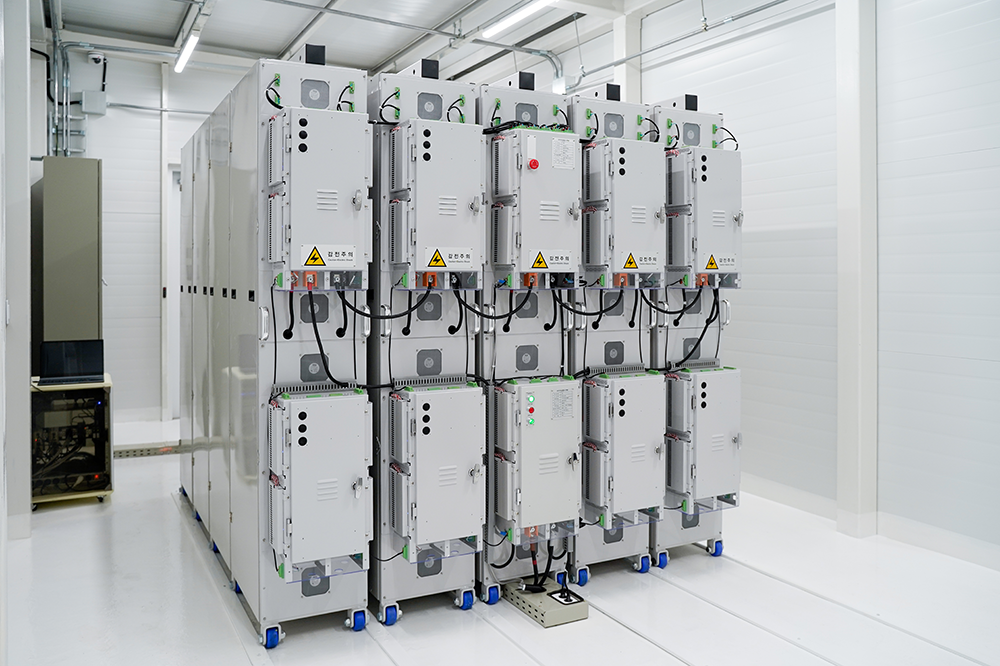
Standard Energy is a South Korea-based company leading the development and commercialization of vanadium ion batteries. The company has established the world’s first mass-production system for VIBs and is advancing the next-generation ESS market with proprietary technology.
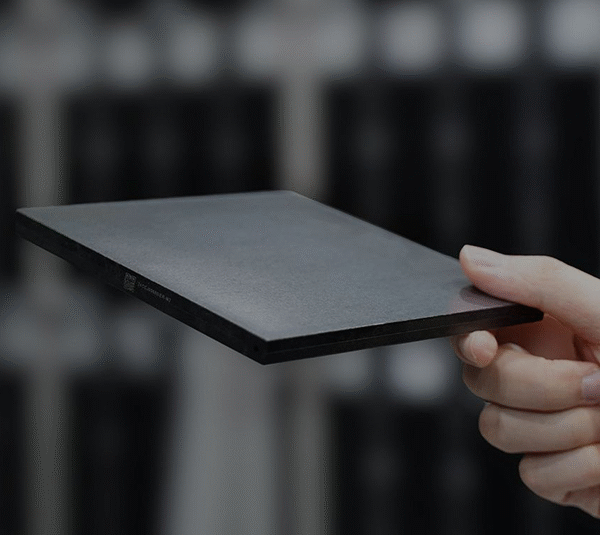
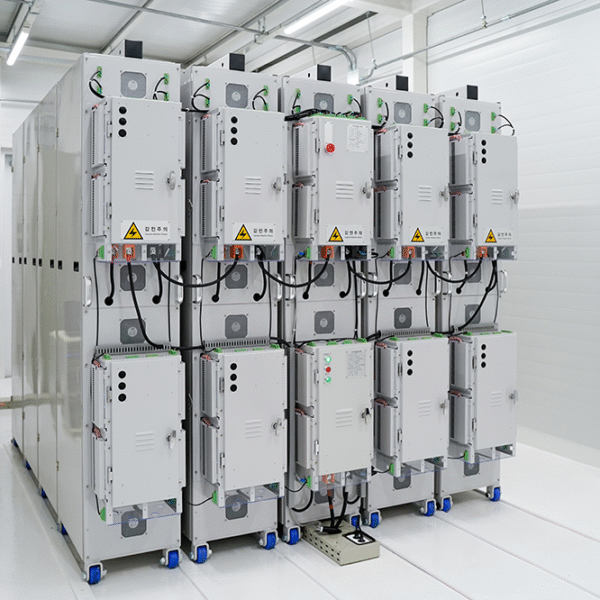
Unlike conventional vanadium redox flow batteries (VRFBs), Standard Energy has developed a sealed and integrated VIB with a structure similar to lithium-ion batteries—enabling efficient mass production through a dedicated automated manufacturing line. The technology has also been deployed at multiple demonstration sites, where it has been used in large-scale ESS operations.
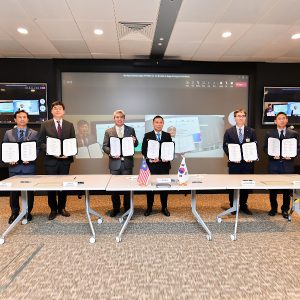
On January 5, the three companies signed a memorandum of understanding (MOU) to advance battery technology and strengthen business collaboration. They plan to accelerate ESS technology development and business cooperation using VIBs, with a focus on fire safety and high-power performance—key requirements for short-duration ESS. The collaboration will span the value chain, including raw material sourcing, materials/cell/battery management system (BMS) technology cooperation, and efforts to enhance production process reliability. The partners also plan to strengthen competitiveness in high-power ESS markets such as data centers and industrial facilities.
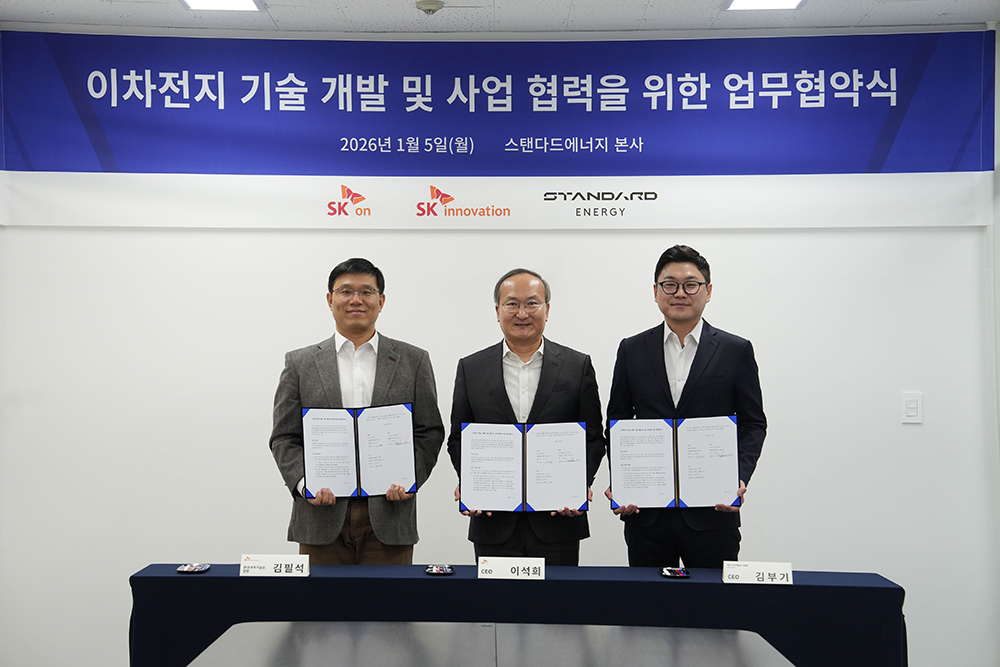
SK Innovation and SK On, together with Standard Energy, aim to drive the commercialization of vanadium ion batteries and the expansion of the ESS market. Through these efforts, the companies seek to contribute to the broader shift in the global energy landscape.
■ Related articles

- SK Innovation, SK On Partner with Standard Energy on Safer ESS

- SK On Expands into U.S. BESS Market with LFP Batteries