Driving Manufacturing Process Innovation with the Dry Electrode Process
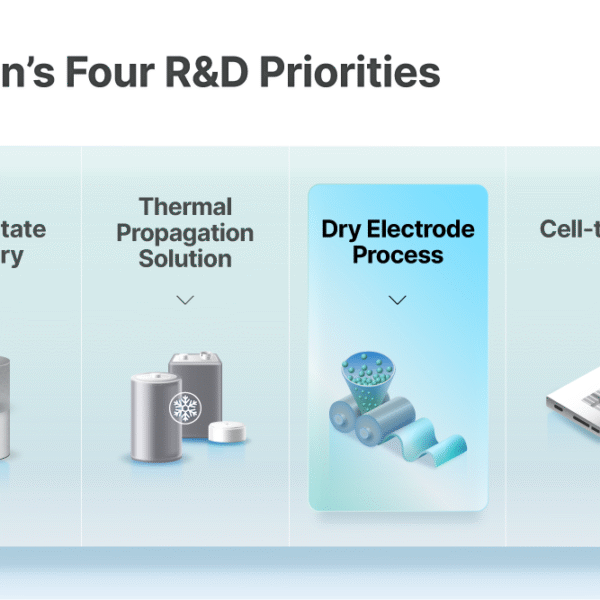
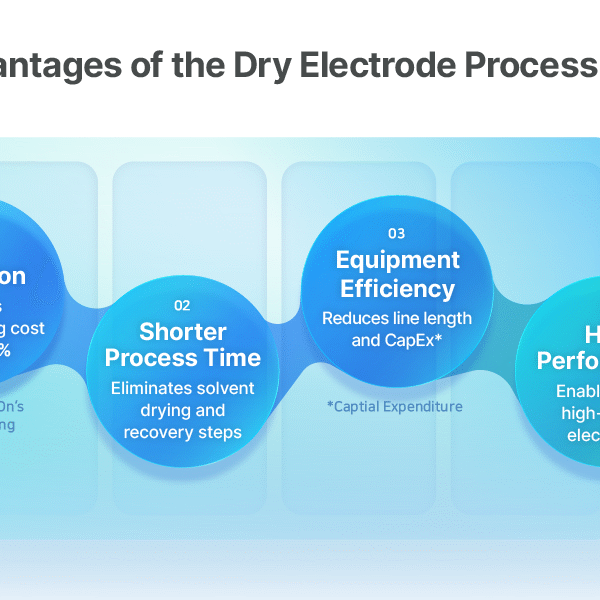
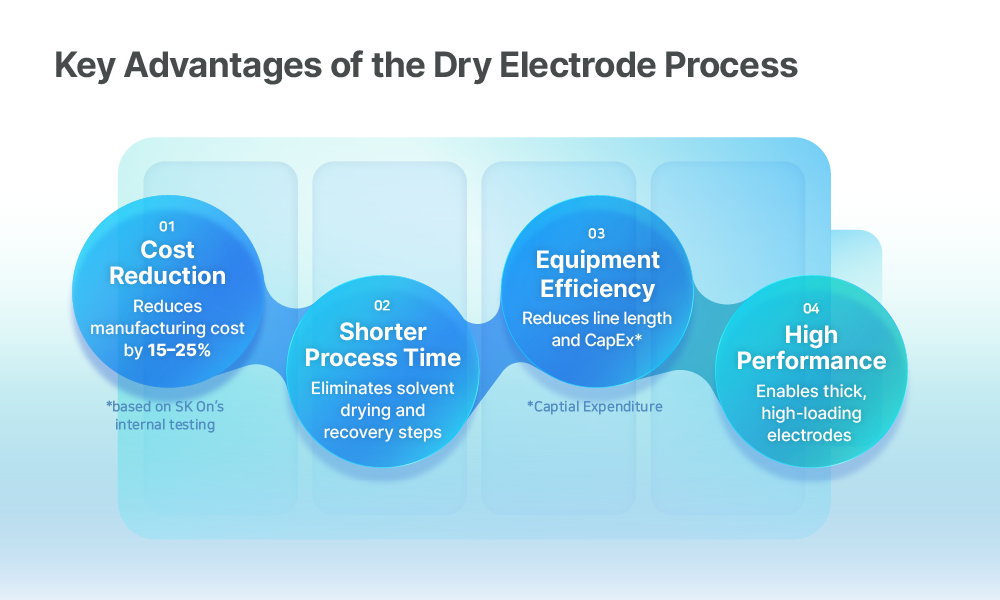
At the center of SK On’s efforts to reduce manufacturing costs is the dry electrode process. Traditionally, electrodes are produced through a wet process, which relies on liquid solvents and requires large-scale drying and solvent-recovery steps that are energy- and cost-intensive. The dry electrode process, however, eliminates the use of these solvents entirely, compressing powder-based active materials to form the electrode. According to energy research firm IDTechEx, dry electrode technology can reduce electrode manufacturing costs by more than 15%. This article focuses on the dry electrode process, the third pillar of SK On’s four core R&D priorities.
Electrodes: Where Battery Performance Begins
Because the structure and properties of electrodes enable the battery’s key electrochemical reactions, electrodes are widely regarded as the foundation of overall battery performance. How uniformly and precisely an electrode is manufactured largely determines its capacity, cycle life, and overall performance.
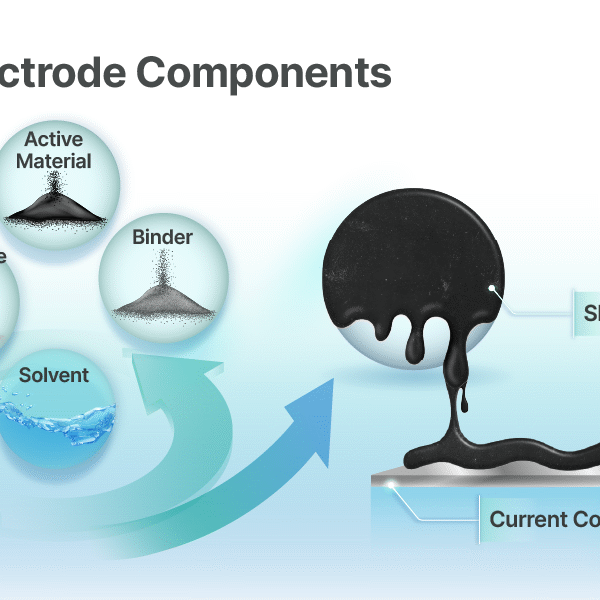
Key Electrode Components
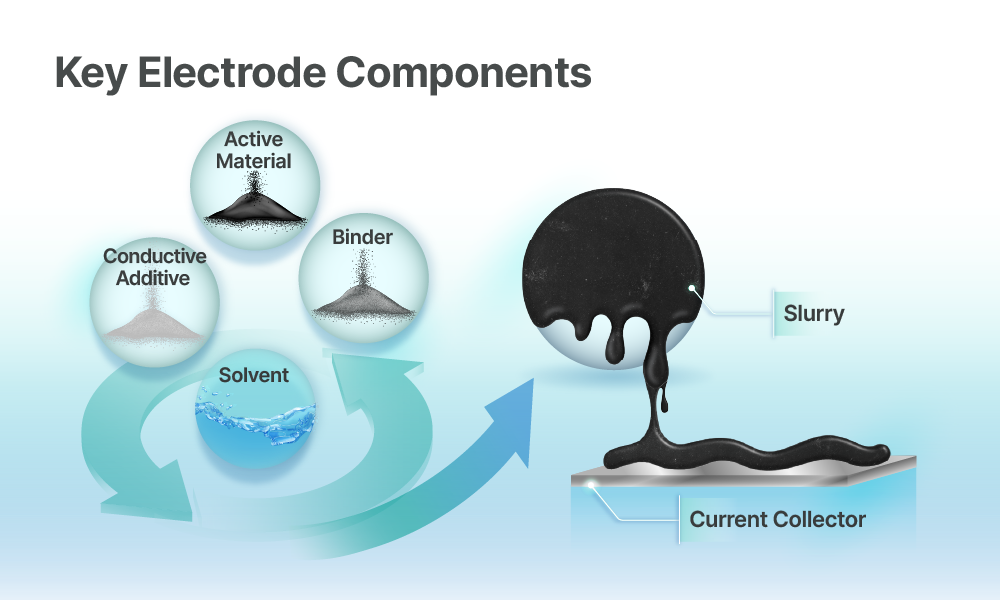
| Active Material | Component that stores and releases energy through electrochemical reactions |
| Conductive Additive | Carbon-based constituent that helps current flow evenly across the electrode |
| Binder | Polymer substance that binds active material and conductive additive to the current collector |
| Solvent | Medium used to uniformly mix electrode materials (e.g. NMP, water) |
| Slurry | Paste-like mixture of active material, conductive additive, binder, and solvent |
| Current Collector | Metal foil that carries current externally (aluminum for cathode, copper for anode) |
Why Wet Electrode Processes Require Massive Drying Ovens
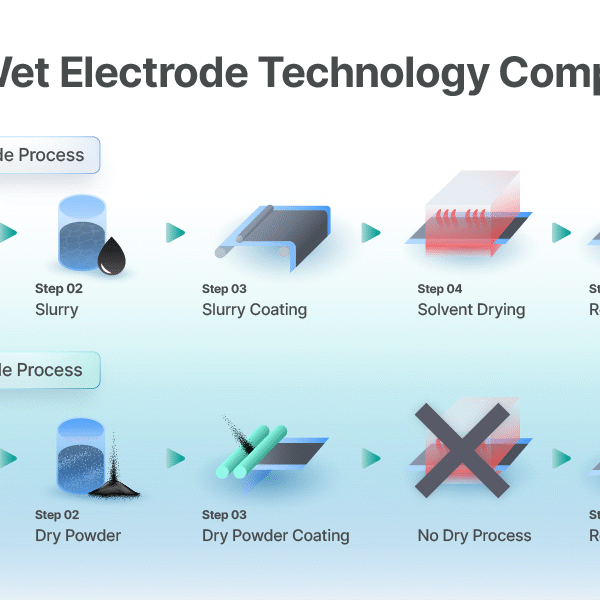
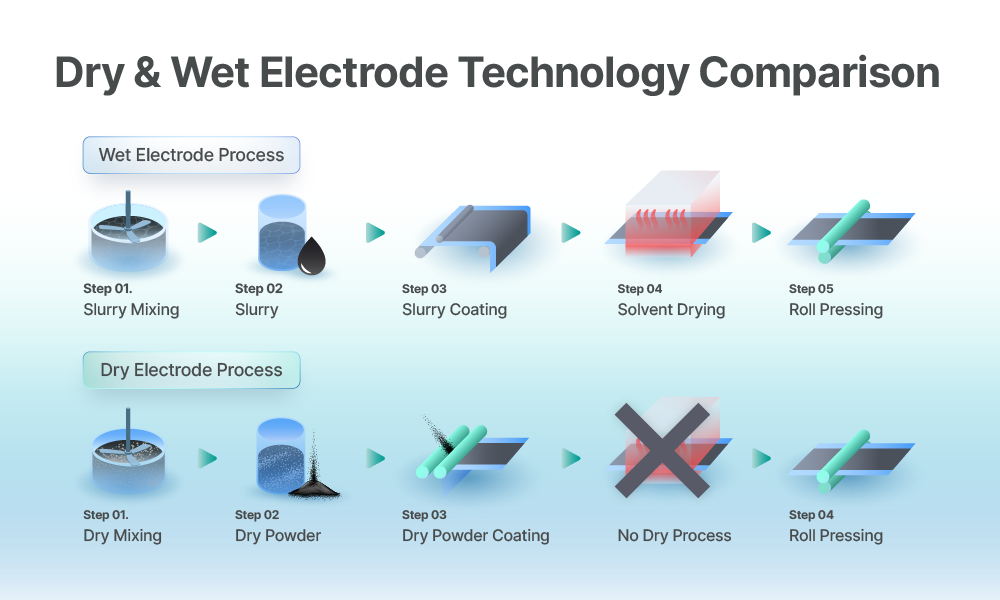
Electrodes are typically manufactured through the wet electrode process, which follows a series of steps: mixing, slurry preparation, slurry coating, solvent drying, and roll pressing. Active materials, conductive additives, binders, and solvents are mixed into a viscous slurry, which is then coated onto a metal current collector. The coated foil must then be dried at around 100°C for an extended period. After drying, the electrode passes through roll pressing to achieve a uniform surface and density. The wet electrode process is energy-intensive and time-consuming, primarily due to the drying step, which extends the overall process time and requires large-scale equipment for solvent drying and recovery.
The Innovation behind Dry Electrode Technology
SK On’s dry electrode process removes the energy- and cost-intensive step of solvent drying. In the dry process, active materials, conductive additives, and binders are mixed without solvents to form a dry powder mixture, which is then coated and compressed onto a metal current collector. Because no solvents are used, the process requires neither drying nor solvent-recovery equipment, significantly reducing energy consumption, overall process time, and the need for large-scale production facilities. This streamlined approach enables easier manufacturing of high-loading electrodes, which stack thicker layers of active material to increase energy density, an area in which the wet process faces technical limitations. However, uniformly compressing a dry powder mixture presents a considerable technical challenge; achieving consistent thickness and density depends on advanced calendering capabilities, so scaling up dry electrode production is increasingly reliant on improvements to this stage.
Dry Coating Methods
Dry electrodes can be produced using different coating methods, and SK On is developing a range of these technologies to improve process efficiency and quality consistency:
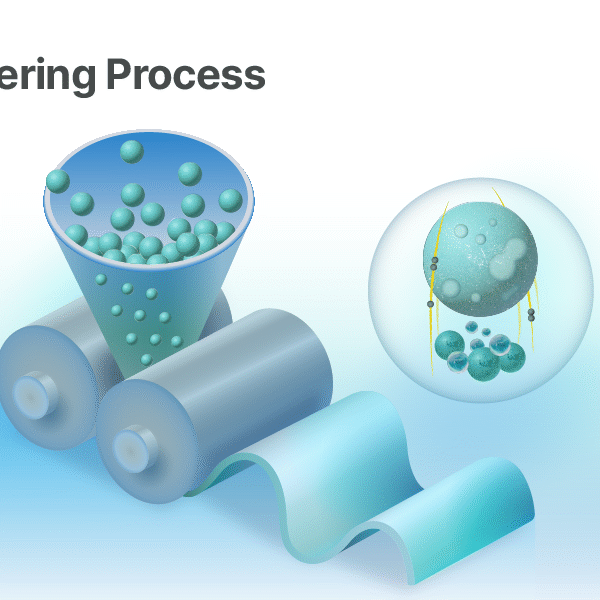
1) Fraunhofer Method continuously feeds dry powder through multiple rolls to form a coating, allowing precise control of electrode thickness and density. This makes it well suited for mass production.
2) Spray Method sprays fine dry powder onto the current collector and then compresses it. While this method enables fast and uniform coating over large areas, it is still considered a next-generation process and remains in the research stage for the most part, as achieving consistent thickness with finely dispersed particles poses significant technical challenges.
Calendering: The Critical Step Defining Dry Electrode Performance
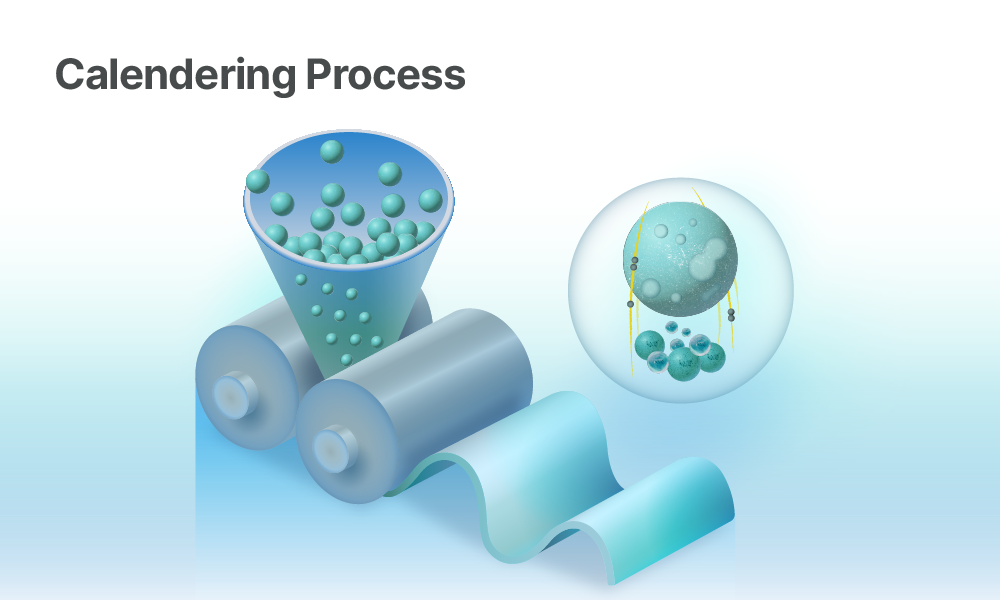
In the dry electrode process, calendering is the stage that ultimately determines electrode quality. In this step, the powder-coated foil passes continuously between cylindrical calender rolls, which compress the material to achieve uniform thickness and density. Because numerous variables — such as roller speed, pressure, and temperature — must be precisely controlled, calendering is considered one of the most technically demanding steps in the process. Its complexity also makes it the key quality-control stage that determines whether dry electrode technology can be successfully scaled for mass production.
SK On Takes on the Calendering Challenge with AI
To address the complexities of calendering, SK On has introduced AI-driven process control in which an AI system analyzes extensive process data in real time, identifies correlations among variables, and automatically determines optimal input values as conditions change. By quickly responding to subtle variations that are difficult for humans to adjust manually, the AI system helps improve electrode quality while enhancing overall production efficiency.
SK On’s Journey of Innovation toward the Future
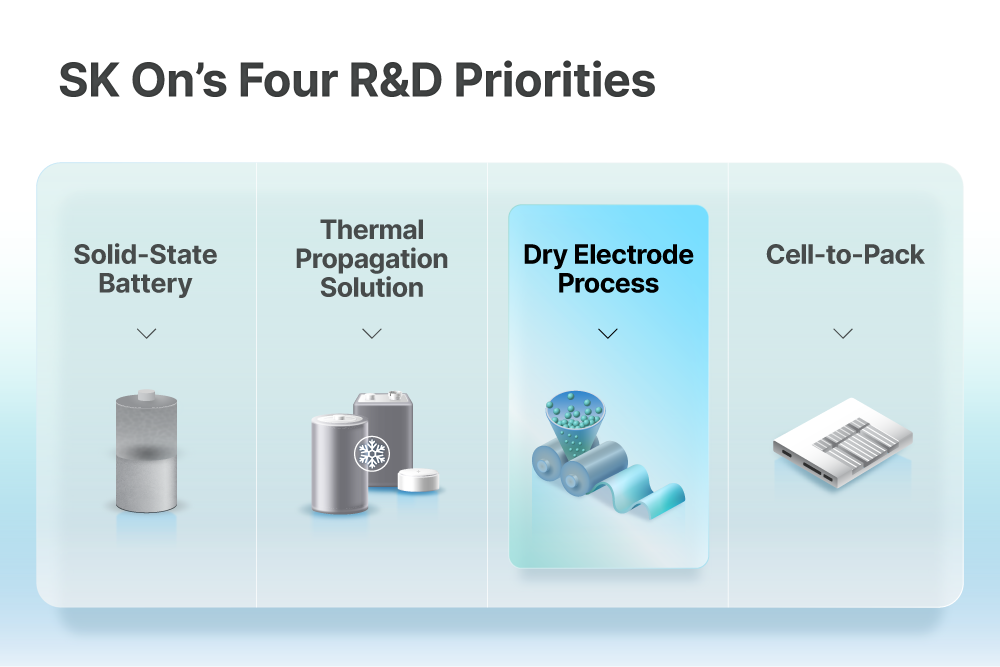
The dry electrode process is more than a streamlined manufacturing step — it’s a next-generation technology that reduces production costs and boosts productivity. Through its four strategic R&D priorities — dry electrodes, solid-state batteries, thermal propagation (TP) prevention, and cell-to-pack (CTP) technology — SK On is advancing safer and more cost-competitive battery manufacturing capabilities. In the next article, SK On will examine CTP technology, the final topic in the series.
■ Related articles

- [Battery Deep Dive] Part 1: Solid-State Batteries

- [Battery Deep Dive] Part 2: Thermal Propagation Prevention