On-vent Prismatic Cell Wins Award at InterBattery 2026
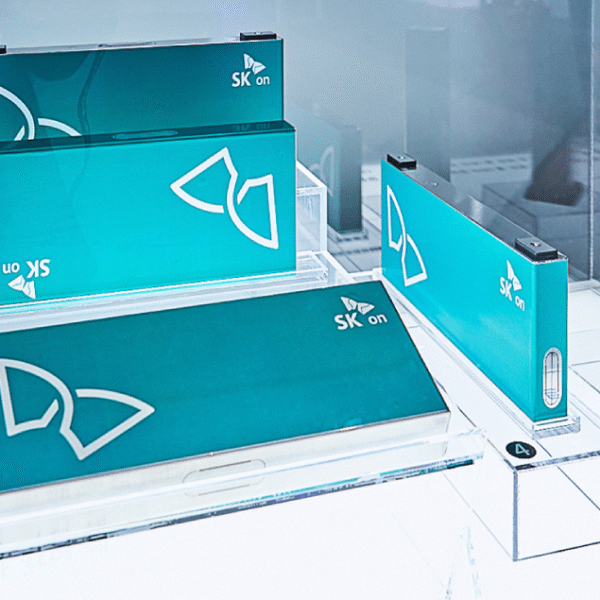
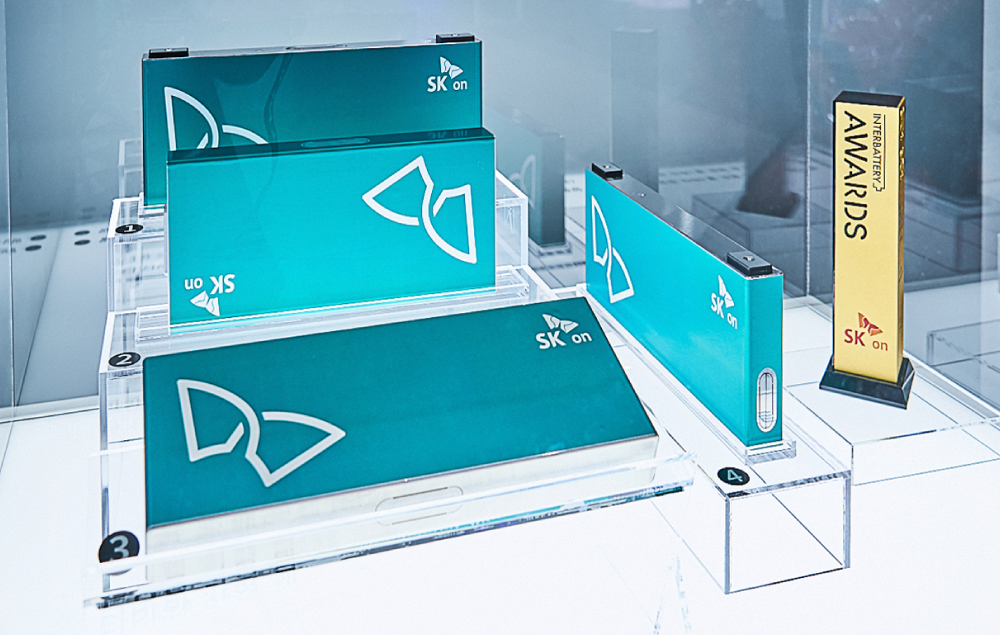
At InterBattery 2026, the largest battery industry exhibition in Korea, SK On’s On-vent Prismatic Cell won an award. This technology allows vents to be created at various locations on a prismatic can and has been praised for enhancing both the safety and design flexibility of prismatic batteries. So, what is a vent? And what technological differentiators led this innovation to win the award?
The Shift Toward Prismatic Batteries
The electric vehicle (EV) market is rapidly restructuring around prismatic batteries. According to SNE Research’s EV Tracker, the share of prismatic batteries increased from approximately 59% in 2021 to 77% in 2025. Their aluminum can structure provides strong resistance to external impact and high durability, driving adoption among global automakers (OEMs).
Against this backdrop, SK On’s On-vent Prismatic Cell features a structural design that enhances thermal propagation control, reflecting the growing importance of thermal management in battery systems. Along these lines, market research firm Grand View Research projects that the EV battery thermal management system market will grow from approximately USD 5.4 billion in 2024 to USD 29 billion by 2030.
Vent: A Key Element of Prismatic Battery Safety
A vent is a gas release outlet that opens once internal pressure reaches a defined threshold due to gas generation inside the cell under abnormal conditions such as overcharging or overcurrent. While vents are also used in cylindrical batteries, prismatic batteries differ in that their aluminum can structure allows vent shape and location to be adjusted during the design stage.
Key parameters — such as vent rupture pressure*, opening location, and discharge direction — directly affect thermal propagation control performance. As a result, vents serve not only as pressure relief devices but also as design elements that help control thermal propagation.
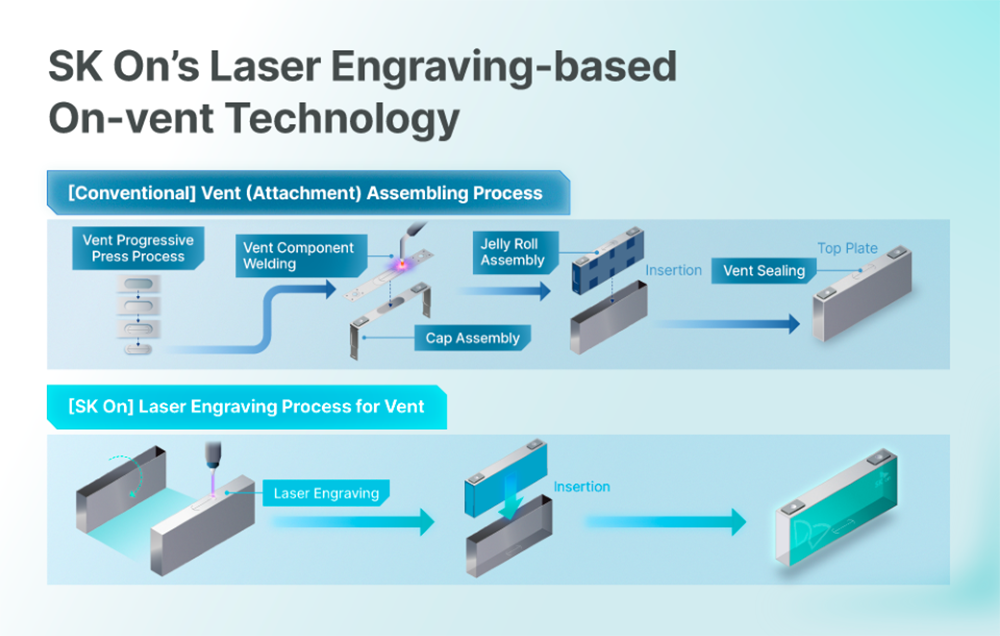
SK On’s On-vent Prismatic Cell: From Joining to Laser Engraving
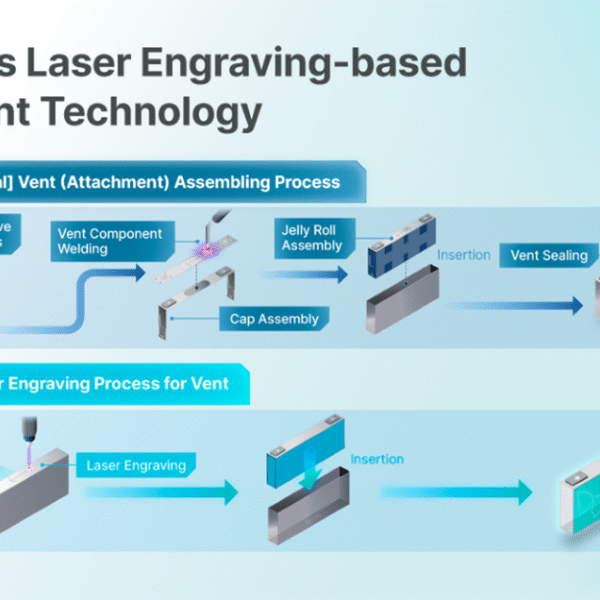
Traditionally, vents are manufactured as separate components and joined or welded onto the prismatic battery can. This conventional method involves welding pressed vents onto the cap to form a Cap Assembly. After completing the Jelly Roll Assembly and inserting it into the prismatic aluminum can, the process concludes with Vent Sealing. This structure limits the vent placement to the Top Plate, and changing the location requires mold modification. SK On’s On-vent Prismatic Cell overcomes this limitation by using laser engraving to form vents directly on the aluminum can at any desired location. The key distinction is the integration of the vent into the cell structure, rather than treating it as a separate component.
This enables the following benefits:
1) Simplified process: Vent assembly and welding steps are eliminated. This reduces component development costs and process lead time, while enabling flexibility to meet different vehicle and platform requirements.
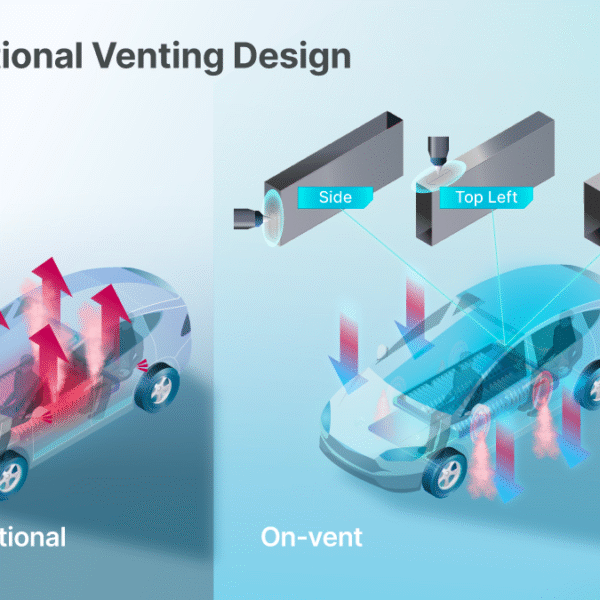
2) Flexibility in vent placement: Laser engraving allows vents to be placed not only on the top but also on the sides or bottom of the can. This expands design options at the pack level, particularly for thermal propagation control.
3) Precise control of vent rupture pressure: Laser control enables precise adjustment of notch depth, a key factor in determining vent rupture pressure. Unlike conventional methods that apply heat treatment to the entire prismatic can, this approach uses a localized laser process to apply heat only where needed, helping maintain ductility while minimizing degradation of the can’s mechanical properties.
Controlling Gas Release Direction Through Design
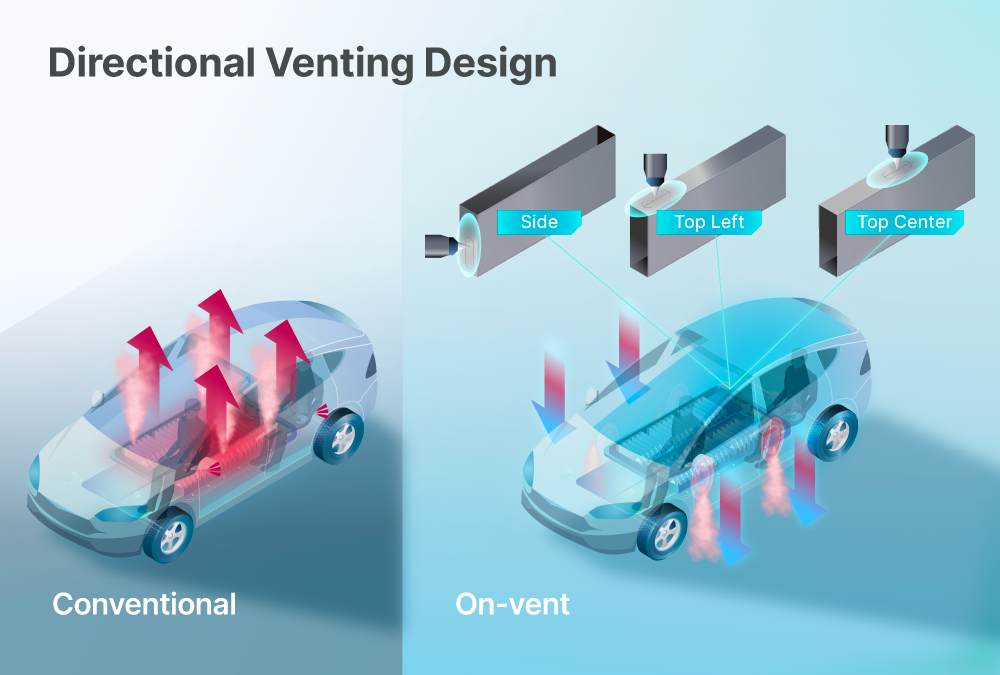
A key advantage of the On-vent Prismatic Cell is that vent location can be used as a design variable. By forming vents at specific positions with laser engraving, both internal pressure and the direction of gas release — known as directional venting — can be controlled.
In the event of thermal runaway, high-temperature gases can be rapidly discharged outward before spreading to adjacent cells, reducing secondary risks. In addition, the position of the vent hole can be aligned with the cell assembly direction, while at the pack level, vent paths can be designed to guide gas toward the underside or side of the vehicle. This allows heat and gas to be directed away from occupants and toward the exterior of the vehicle.
6,000-Cycle Durability Test Completed
The technology also demonstrated strong durability performance.Conventional vent components, typically made from thin Al1000-series aluminum sheets about 0.5 mm thick, have lower strength than the approximately 1 mm-thick aluminum can. This makes them more vulnerable to external impact and more prone to scratches or plastic deformation during handling.
By contrast, since the On-vent Prismatic Cell is machined directly into the aluminum can through laser engraving, it ensures structural strength while also improving durability. In repeated cycle testing under pressure conditions ranging from 1 to 4.5 kgf/cm² and a pressurization rate of 0.1 kgf/cm²/s (at room temperature), unlike conventional vents, the cell showed no deformation and met its target rupture pressure over 6,000 cycles. These results suggest a reduced likelihood of vent damage or defects occurring over the cell’s lifespan.
SK On is working to improve processing reliability by combining laser control technology and precision measurement technology, with the goal of securing uniform and stable vent quality. In addition, the company plans to conduct cell-level durability and thermal propagation performance evaluations this year to verify the technology for mass production.
From Component to Structural Design
The On-vent Prismatic Cell is more than a change in manufacturing method. It transforms the vent from an attached component into a design variable, directly integrating thermal propagation control into the cell structure. As thermal propagation mitigation becomes a key validation requirement in global safety standards, the ability to address it at the design stage is emerging as a critical factor in battery competitiveness. Built on laser engraving technology, the On-vent Prismatic Cell represents the culmination of SK On’s proprietary capabilities and is seen as a turning point in shifting safety design from a component-focused approach to a structural design strategy.
The next article will introduce the Pouch-integrated Prismatic Cell, highlighting SK On’s next-generation hybrid battery strategy.
■ Related articles

- [Battery Deep Dive] Part 1: Solid-State Batteries

- [Battery Deep Dive] Part 2: Thermal Propagation Prevention

- [Battery Deep Dive] Part 3: The Dry Electrode Process

- [Battery Deep Dive] Part 4: Cell-to-Pack Technology

- [Battery Deep Dive] Part 5: Seven-Minute Fast Charging