| Battery Development: No Longer Made Solely by Humans
The standard for a good battery is simple: it should be quick to charge, cost-effective, and safe. But as the electric vehicle market continues to expand, the range of performance requirements for each vehicle is growing wider. Charging speed, driving range, safety, and cost now must be addressed simultaneously — making battery cell design more complex. This has increased the need for the systematic use of accumulated data, as well as a streamlined development process. In this context, independent research firm IDTechEx notes that AI has become essential across the entire battery lifecycle, from development and manufacturing to operations.
| What If Battery Cells Are Developed with AI?
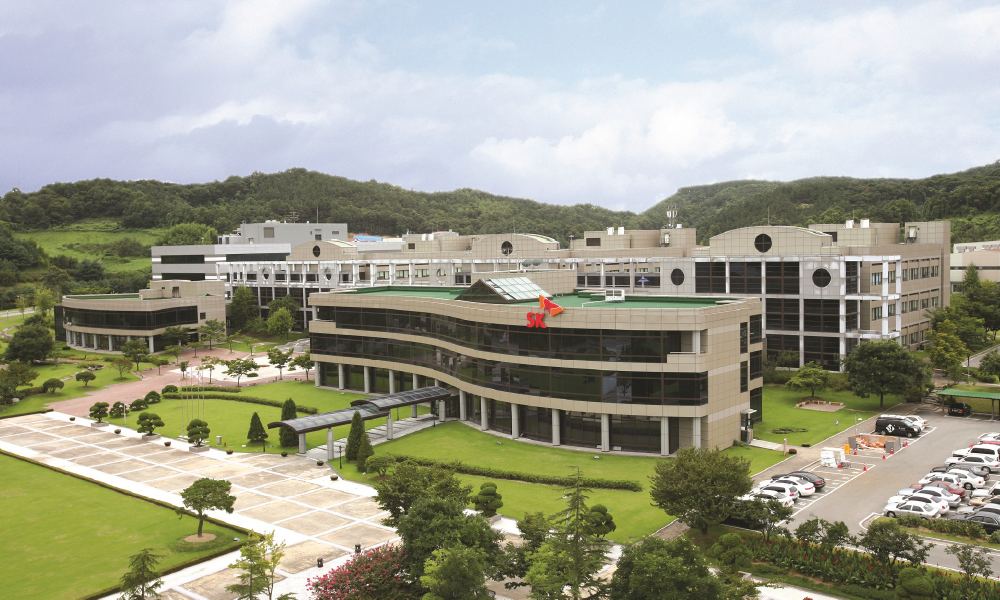
Designing a battery cell is a complex task influenced by a wide range of conditions and variables. The most basic unit of a battery is the cell, which is made up of four key components: cathode, anode, electrolyte, and separator. The way these components are designed has a significant impact on overall battery performance, and at the design stage, multiple factors — such as the material properties of each component — must be considered at the same time. Even when looking at cathode materials in isolation, engineers must account for particle characteristics; crystal structure; electrochemical, thermal, and mechanical properties; and surface features. These properties interact with one another, ultimately determining core performance indicators such as driving range, charging speed, safety, and lifespan. Under traditional development approaches in which researchers manually review and combine these variables, developing a single battery can take several years. When customer requirements change or unexpected variables arise, designs often need to be revisited — inevitably increasing both time and cost. To overcome these limitations, SK On’s Institute of Future Technology built AI Researcher, an AI-based R&D platform.
| AI Researcher: From Data Analysis to Prediction
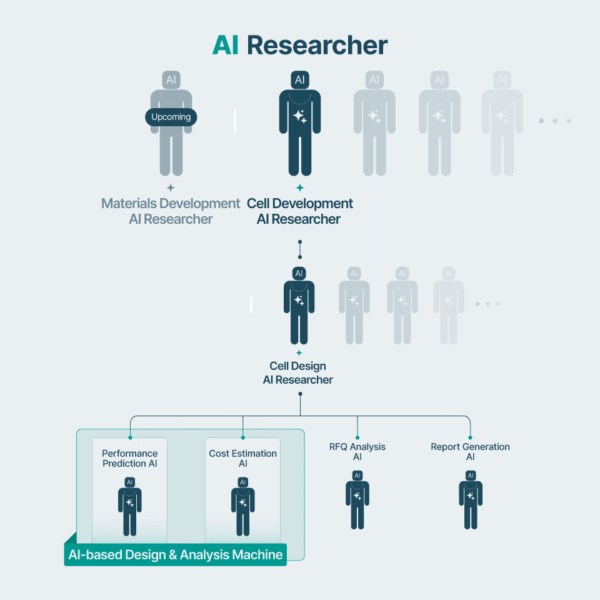
As an AI-based R&D platform, AI Researcher has one primary goal: reducing development time. It learns from large volumes of data spanning experiments, processes, and designs to support a broad range of battery development functions. As of the publication of this article, SK On has established a Cell Development AI Researcher and is currently building a Materials Development AI Researcher, and these development platforms are organized by function, with each functional unit consisting of multiple AI systems operating in parallel. For example, the Cell Development AI Researcher includes a Cell Design AI Researcher equipped with AI such as a request for quotation (RFQ) analysis AI, AI that predicts cell performance and calculates cost, and a report-generation AI.
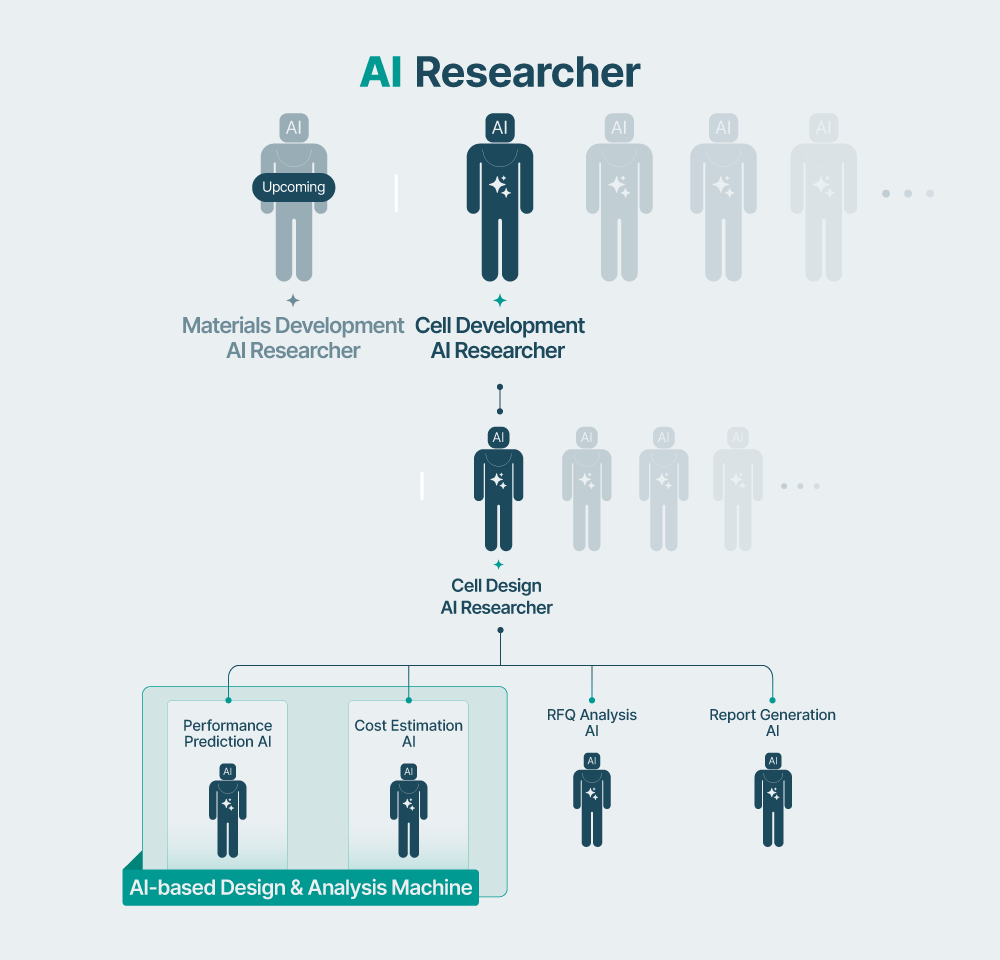
By coordinating multiple AI systems, AI Researcher reduces battery cell design timelines to roughly one-third of conventional timelines, with the Materials Development AI Researcher now in the works and expected to cut materials development timelines by approximately 50%. At the center of these advancements is SK On’s AI-based Design & Analysis Machine, which serves as the core engine of the Cell Design AI Researcher. The AI-based Design & Analysis Machine generates cell design proposals based on design and experimental data, predicts the performance of each design, and calculates cost. For its technical maturity, it has won top awards at internal AI competitions such as SK Innovation AI Day in 2025 and SK On’s AIDT Awards.
| Meet the AI-Based Design & Analysis Machine
* This interview is a fictional conversation created to help readers better understand the technology behind the AI-based Design & Analysis Machine.
Q. Could you briefly introduce yourself?
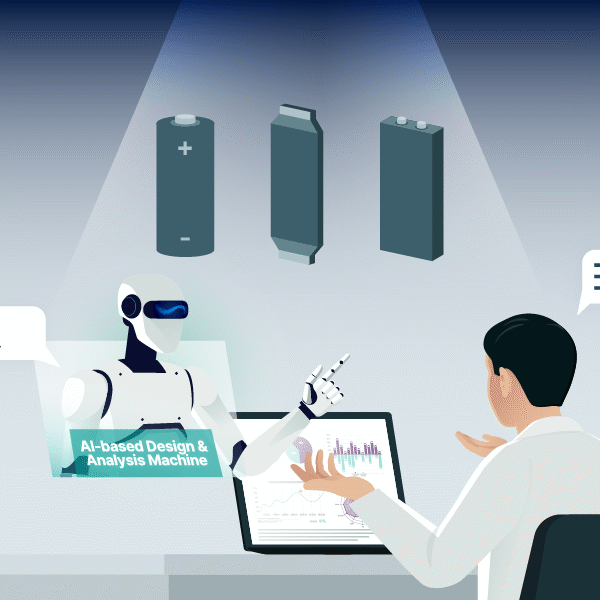
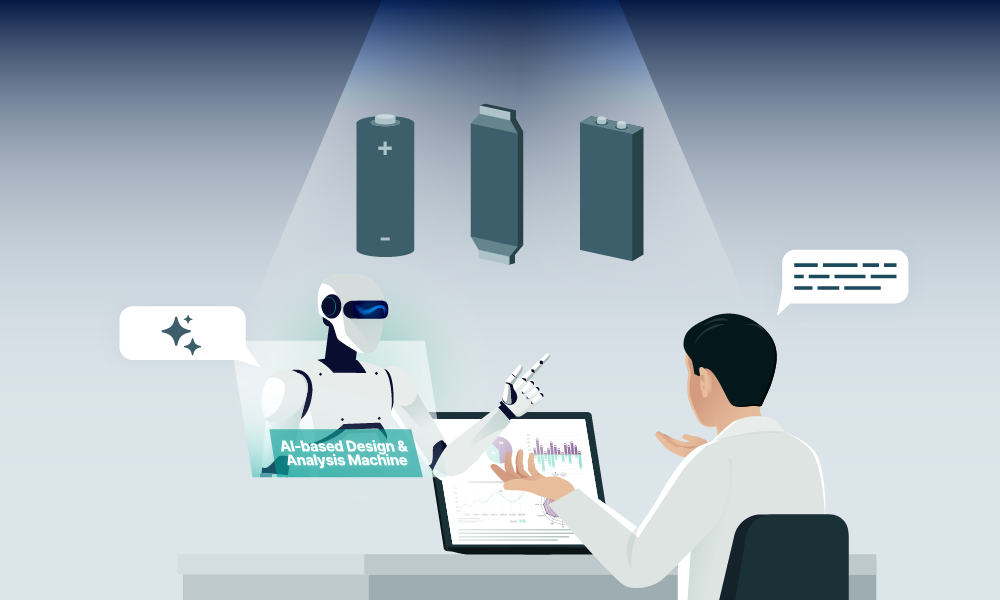
Hello. I am the AI-based Design & Analysis Machine, the core AI engine within the Cell Design AI Researcher. By learning from SK On’s extensive accumulated data, I can generate design proposals that reflect customer requirements and analyze their performance and cost.
Q. How do you collaborate with researchers in practice?
When a customer submits an RFQ, an SK On researcher forwards it to the Cell Design AI Researcher. Within the Cell Design AI Researcher, the RFQ analysis AI organizes the required performance conditions and delivers them to me. Based on these inputs, I develop multiple design options. Using historical cell design records, test results, and other battery-related data, I predict the performance of each option and calculate cost. Then, I deliver the completed design options to SK On researchers.
After they’ve received the design options, researchers apply their professional judgment. They review manufacturability, scalability for mass production, and compliance with safety standards before selecting a final design. In short, I generate design options that reflect customer requirements and pre-evaluate their performance and cost, while SK On researchers determine the optimal design based on those results. That’s how we work together to complete battery cell designs.
Q. Can you immediately respond to changing customer requirements?
Absolutely. When new requirements come up — such as the need for higher output or longer lifespan — I run the performance predictions again, based on those updated requirements. In the past, researchers often had to redesign the battery cell and repeat experiments from the beginning. Today, that process takes significantly less time. And speed and accuracy will only continue to improve across domains as SK On develops additional AI Researchers, like the Materials Development AI Researcher.
| The Transformative Impact of AI Researcher
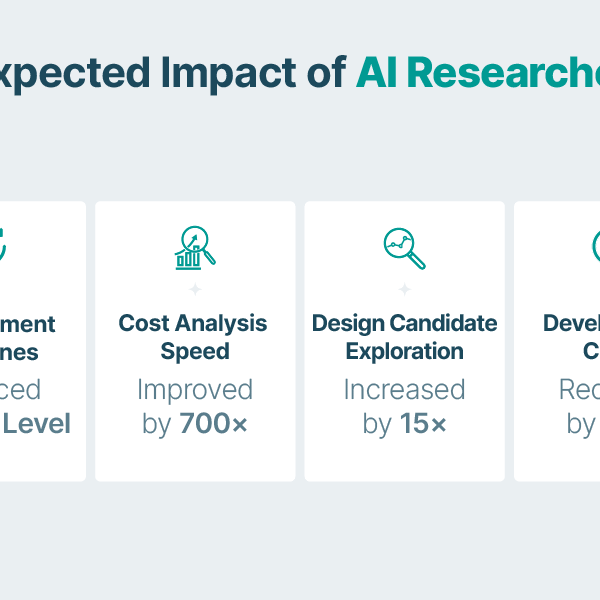
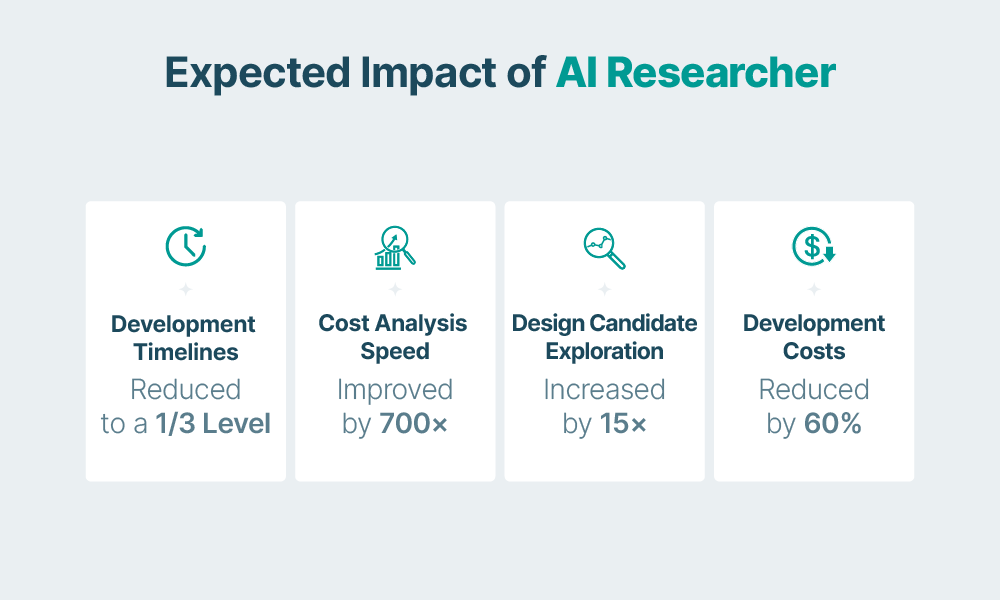
The introduction of AI Researcher marks a clear turning point in battery development at SK On. While the process has shifted from an experiment-driven approach to one centered on prediction that reduces development time by roughly two-thirds, it is also projected to accelerate the speed of cost analysis by approximately 700 times. In the same amount of time, the number of design candidates that can be reviewed is expected to increase by more than 15 times, enabling a much broader range of exploration. Overall, AI Researcher is expected to bring down development costs by about 60%.
| AI Researcher: Evolving Together with Human Researchers
As researchers accumulate experience and expertise, AI Researcher’s predictive capabilities continue to improve. In turn, the analyses and insights generated by AI Researcher help refine researchers’ decision-making. This virtuous cycle enhances overall R&D efficiency and creates a foundation for AI and researchers to grow together. Looking ahead, AI Researcher is expected to expand across SK On’s R&D organization, establishing a new benchmark for next-generation battery development.
■ Related articles

- [Battery Deep Dive] Part 1: Solid-State Batteries

- [Battery Deep Dive] Part 2: Thermal Propagation Prevention

- [Battery Deep Dive] Part 3: The Dry Electrode Process

- [Battery Deep Dive] Part 4: Cell-to-Pack Technology