Ulsan never sleeps.
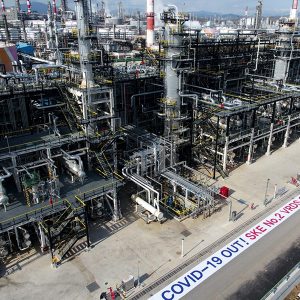
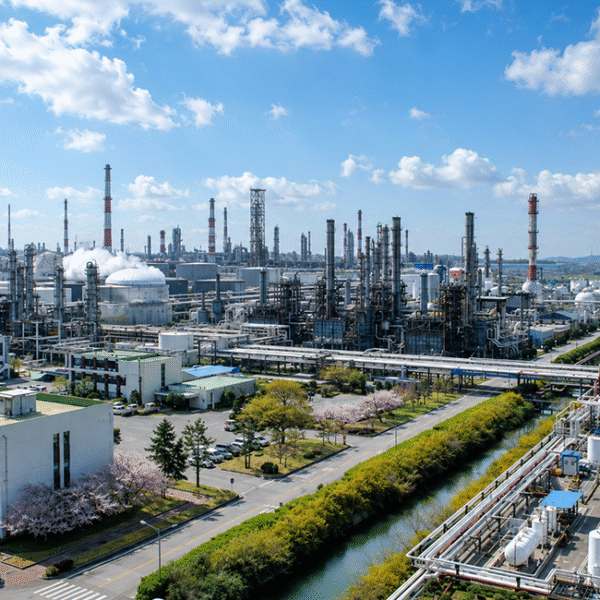
After dark, tens of thousands of lights flicker on across the towers, flare stacks and pipe racks of Korea’s largest petrochemical complex, and the skyline turns into a glowing city of steel. Stand in front of it and you understand, physically, that this is the front line of the heavy and chemical industries that built modern Korea.
Yet just over six decades ago, this place looked nothing like it does today. Until the early 1960s, Jangsaengpo in Ulsan was a quiet coastal village on Korea’s southeastern shore — a whaling port where, according to old residents, you could hear whales at night. How did a sleepy fishing town become the industrial engine of a nation?
| Korea’s Very First Industrial District
The turning point came in 1962.
At the time, South Korea was one of the poorest countries in the world, less than a decade removed from the Korean War, with almost no natural resources and virtually no heavy industry. On January 27, 1962, the government designated Ulsan as the nation’s first Specific Industrial District — the opening move of Korea’s state-led industrialization drive.
One week later, on February 3, a groundbreaking ceremony was held in Maeam-dong, in Ulsan’s Nam-gu district. Ulsan was then a small town of about 85,000 people. More than 30,000 of them showed up to watch. It is hard to overstate what that scene meant: a country with no oil of its own was betting its future on becoming an industrial exporter.
Geography made Ulsan the obvious choice. It had a deep natural harbor where large crude tankers could berth close to shore, and the Taehwa River could reliably supply the enormous volumes of industrial water that large-scale plants require. Those two conditions turned Ulsan into the stage on which a resource-poor nation reinvented itself as an exporter of energy and petrochemical products.
| From Korea Oil Corporation to SK Innovation
At the center of that transformation was the company that wrote the first chapter of Korea’s oil industry — Korea Oil Corporation (Yukong), the direct ancestor of today’s SK Innovation.
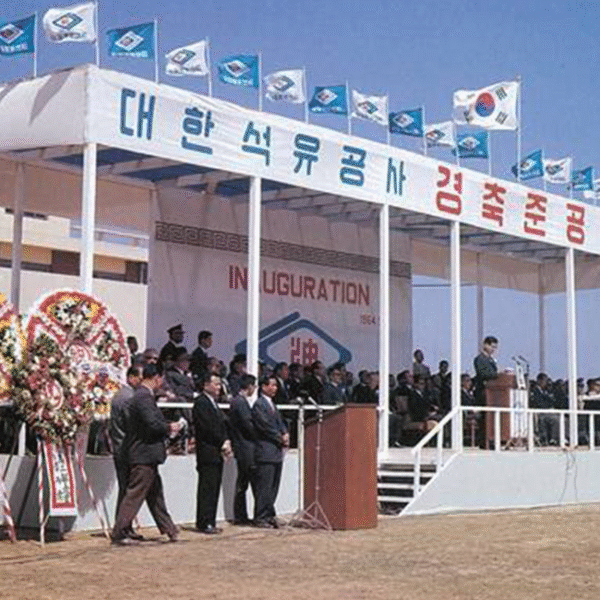
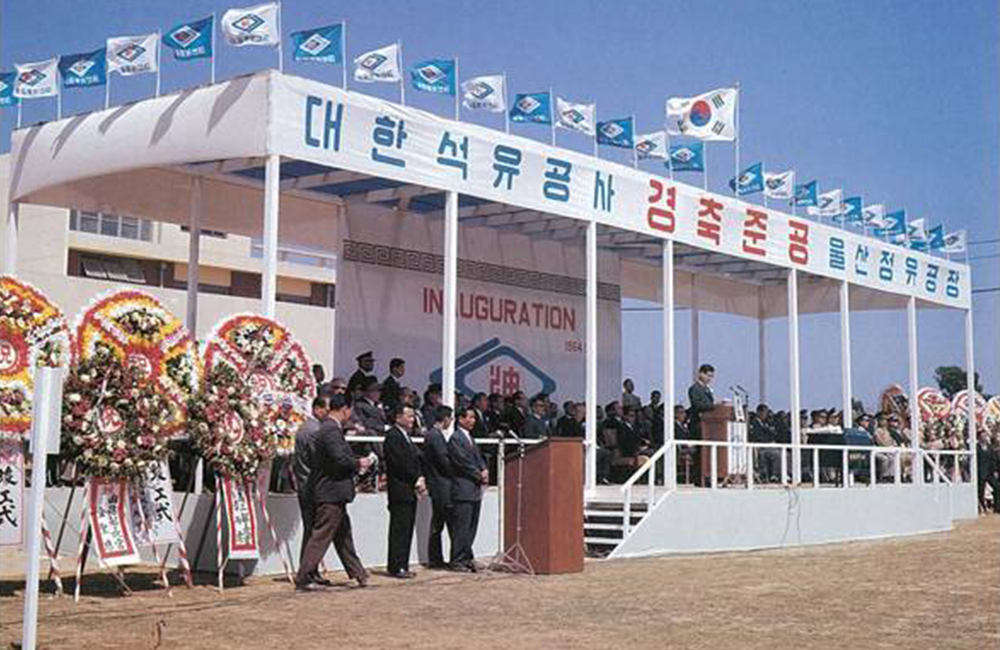
Launched in October 1962 as Korea’s first state-run refiner alongside the country’s First Five-Year Economic Development Plan, the company broke ground the following year on the nation’s first oil refinery, in the open fields of Gosa-dong, Ulsan. Korea had neither the technology nor the capital to do this alone, so the project moved forward through a joint venture with the U.S. energy company Gulf Oil.
In 1964, the No. 1 Crude Distillation Unit — capacity 35,000 barrels per day — was completed and began commercial operation. That modest plant on an empty field marked the beginning of energy self-sufficiency for Korea.
In 1980, Sunkyong (today’s SK Group) acquired the company, completing an integrated business chain running from crude oil all the way to textiles. Six decades later, that first refinery has grown into SK Innovation Ulsan Complex (Ulsan CLX), a global petrochemical hub processing roughly 840,000 barrels of crude per day.
| 600,000 Kilometers of Pipeline on a Site Larger Than Central Park
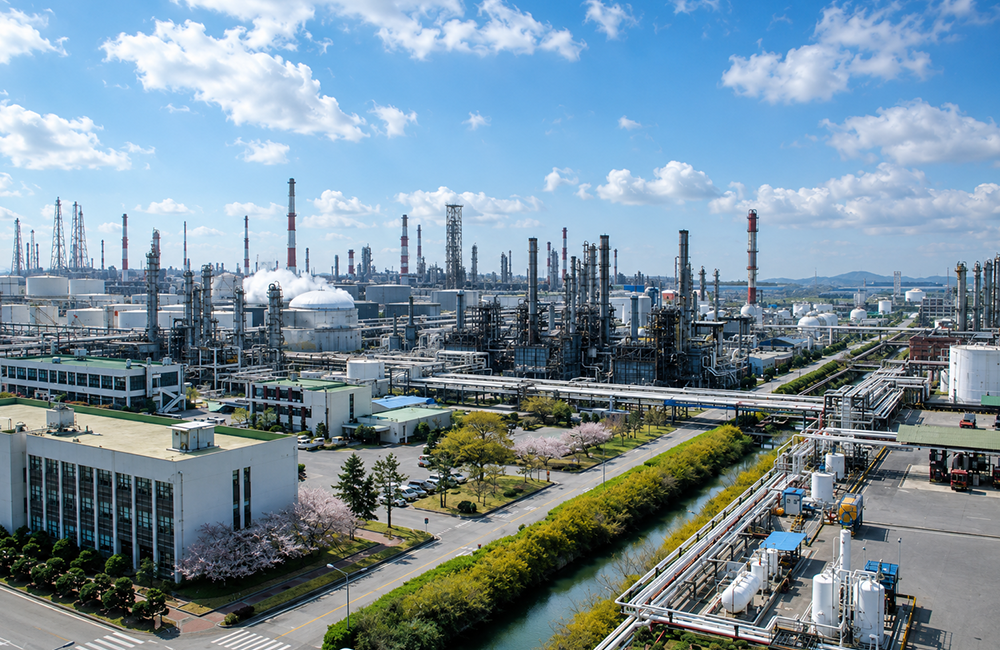
Approach the Yongyeon and Gosa-dong area of southern Ulsan and an industrial landscape opens up in front of you on a scale that is difficult to process. Ulsan CLX covers about 8.26 million square meters — roughly 2.4 times the size of New York’s Central Park, or the equivalent of some 1,100 football pitches. As a single integrated petrochemical complex, it is the largest of its kind in the world.
Inside, SK’s core energy and chemical affiliates — SK Energy, SK Geo Centric and SK Enmove — operate side by side as a single interconnected ecosystem. Crude oil arriving at the terminal travels through subsea pipelines to be refined at a rate of about 840,000 barrels a day, and the resulting streams are converted into roughly 7.7 million tons of petrochemical products and high-performance lubricants each year.
The most striking number, though, is the piping. The total length of pipeline running through Ulsan CLX is approximately 600,000 kilometers — longer than the distance from the Earth to the Moon (about 380,000 km), and enough to circle the planet fifteen times. Through those silver capillaries, the fuels and materials that keep Korea’s economy running flow without pause, 24 hours a day.
| An Industrial Frontline That Grew a Forest — and a Rose Garden
Ulsan is a city where you can hear people working.
At lunchtime, engineers in hard hats and coveralls fill the restaurants around the industrial complex, cooling off and eating together before heading back in. It is a very particular kind of energy, and it says a lot about how this city sees itself.
But life in the shadow of a non-stop industrial zone came at a cost. For decades, Ulsan residents lived with air pollution and a serious shortage of green space — the familiar trade-off of rapid industrialization.
In 1995, Chey Jong-hyon, the late chairman of SK Group, made a promise: “SK grew thanks to the support of the people of Ulsan, and we want to return the fruits of that growth to them.” He committed the company to building a large public park.
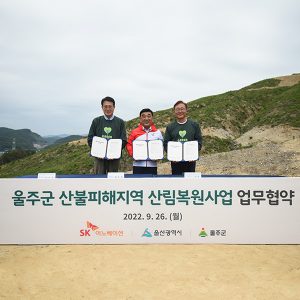
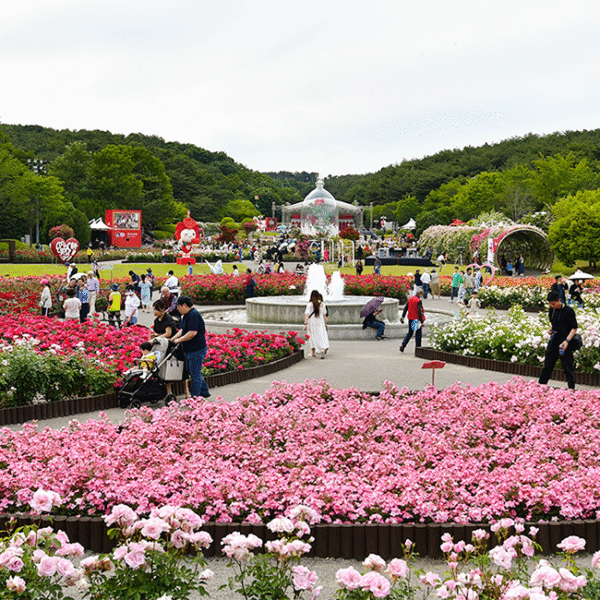
Construction continued even through the 1997 Asian Financial Crisis, when Korean companies were cutting everything they could. Over ten years, SK invested more than 100 billion Korean won to complete Ulsan Grand Park — 3.64 million square meters, slightly larger than Central Park — and in 2006 donated the entire park to the city of Ulsan free of charge.
The partnership did not end there. Every May, the park’s rose garden hosts the Ulsan Grand Park Rose Festival, co-organized by SK and the city. With more than three million roses in bloom, it has become one of Ulsan’s signature cultural events, drawing hundreds of thousands of visitors from across the country.
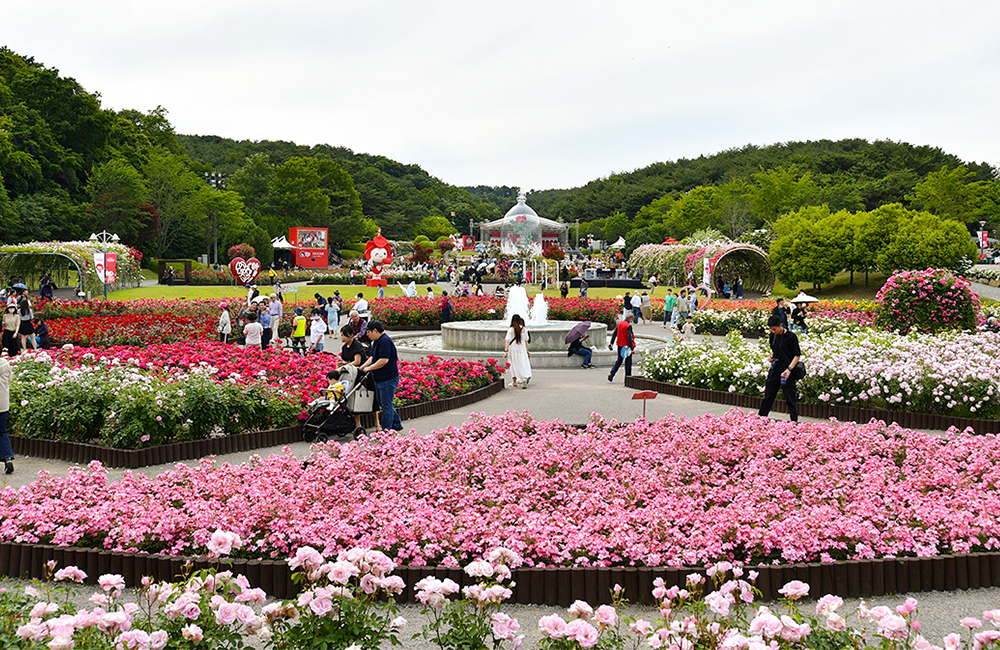
A forest, a rose garden and a lake in the middle of what was once a gray industrial city: today they are where Ulsan’s residents go to rest. It is also one of Korea’s most frequently cited examples of a company and a community growing together.
| Ulsan’s Next Chapter: Clean Energy and AI
Just as that green space changed daily life in Ulsan, the city is now changing something deeper — the makeup of its industry itself. After six decades of supplying the energy that powered Korea’s growth, Ulsan is attempting a far more ambitious pivot.
Ulsan CLX sits at the center of it, and the transformation has two axes: clean energy and AI.
Moving beyond conventional petroleum fuels, Ulsan CLX has begun Korea’s first commercial production of Sustainable Aviation Fuel (SAF), produced from feedstocks such as used cooking oil and capable of dramatically reducing lifecycle carbon emissions in aviation. The complex is also building out a clean hydrogen ecosystem spanning production, storage and distribution.
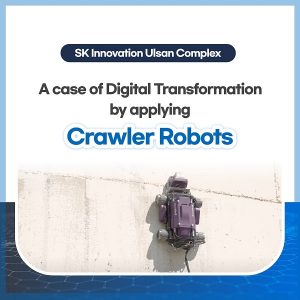
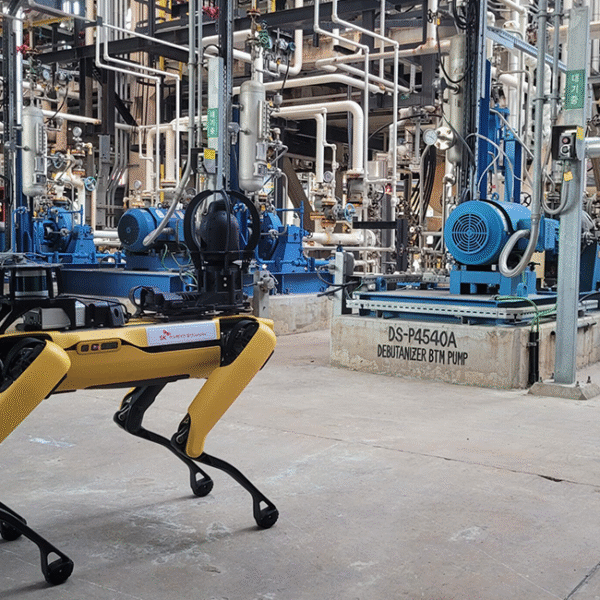
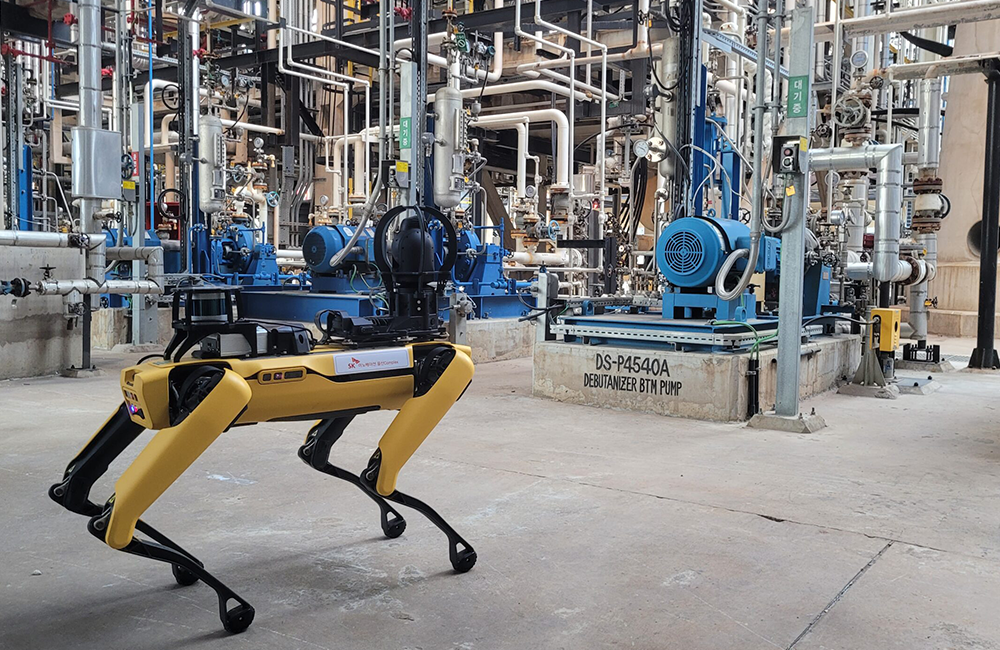
Inside the plant, digital transformation is reshaping day-to-day operations. Rather than buying an off-the-shelf solution, SK Innovation developed Smart Plant 2.0 in-house, encoding sixty years of accumulated field know-how. More than 40 Smart Plant 2.0 projects — applying AI and digital technology across process operations, equipment management and SHE (Safety, Health, Environment) — are now deployed on site. AI systems control processes while robot dogs and drones patrol for safety hazards. Behind them is a workforce of roughly 90 Citizen Data Scientists and 10 AI/DT specialists solving problems directly on the shop floor.
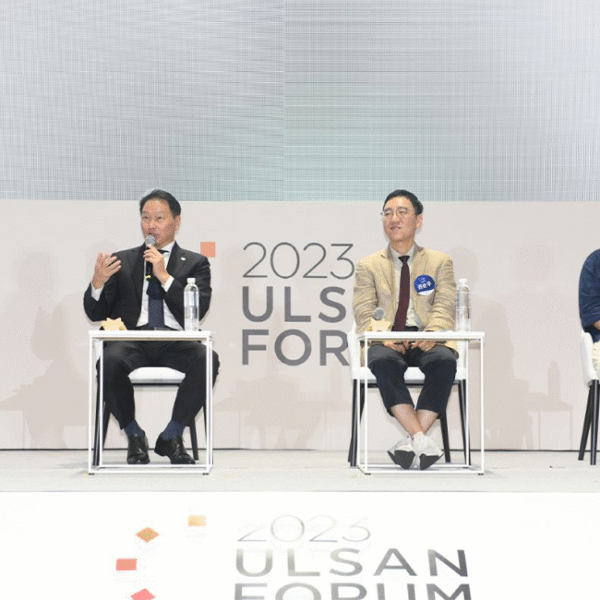
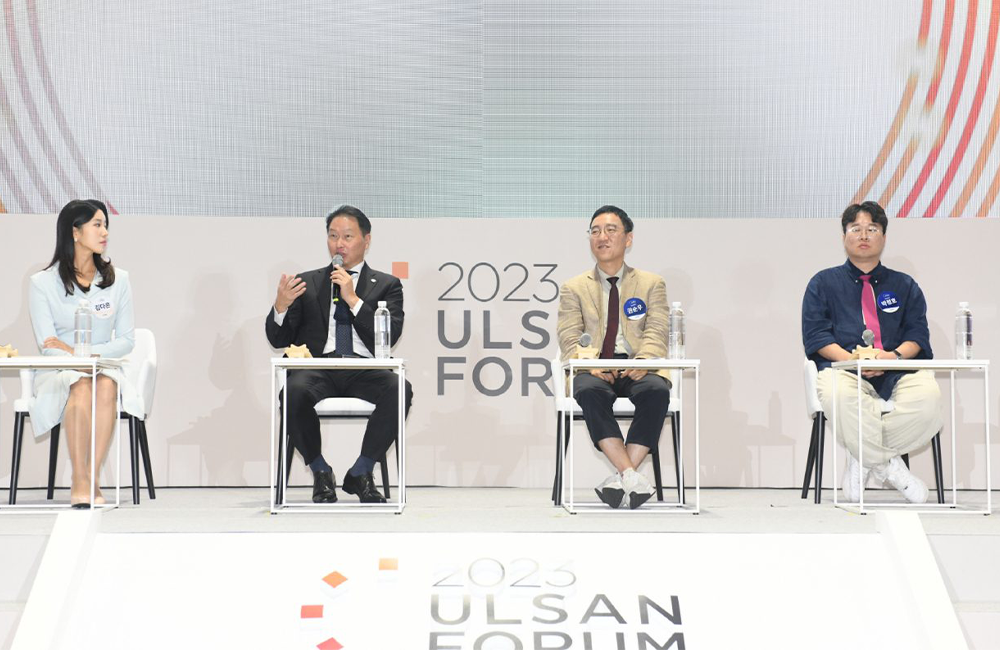
The ambition extends beyond the fence line. The Ulsan Forum, first proposed by SK Group Chairman Chey Tae-won in 2022 and co-hosted by SK and the Ulsan Chamber of Commerce and Industry with support from the Ulsan Metropolitan Government, brings local small and mid-sized manufacturers into the conversation about AI Transformation (AX) in manufacturing — spreading the benefits of technological change across the whole city.
Now in its fifth edition, the 2026 Ulsan Forum runs under the slogan “Leading AX, Smart Life Ulsan,” organized around two themes: the workplace and the living space. It takes place on Friday, September 11 at the Ulsan Exhibition & Convention Center (UECO), held jointly with the Ulsan World Advanced Industry Expo (WAVE) to give visitors a hands-on look at manufacturing AX and smart city strategy.
From a quiet harbor where whales once swam, to the industrial heart that drove a nation’s economic rise. Now, with AI as its new engine, Ulsan is preparing for one more leap — this time as a global hub for advanced industry.
■ Related articles

- SK Ulsan Complex, home to Korea’s largest refinery and chemical plants, transforms with AI and digital transformation

- SK Innovation Ulsan CLX recycles 100% waste materials via Solid Bed Merox (SBM) process