Can you imagine your day without music?
Take a look around—whether you’re in a bustling city, a quiet neighborhood, or even a remote park. One thing remains the same: nearly everyone has a pair of earphones or headphones, immersed in their own personal soundtrack.
Today, we can stream or download music instantly with just a tap on a smartphone or a few clicks on computer. But not too long ago, physical formats like vinyl records, cassette tapes, and CDs were essential for enjoying music. Without these innovations, people would still have to attend live performances just to hear their favorite songs. Thanks to technological advancements, we now live in an era where music is always within reach, no matter where we are.
But what truly made music accessible to the masses? Petrochemicals. Without the petrochemical industry, we wouldn’t have the materials needed to store, share, and preserve music over generations. So, how exactly has petrochemistry shaped the evolution of music? Let’s dive into this fascinating journey.
| Recording Sound: From the Birth of the Phonograph to Digital Music
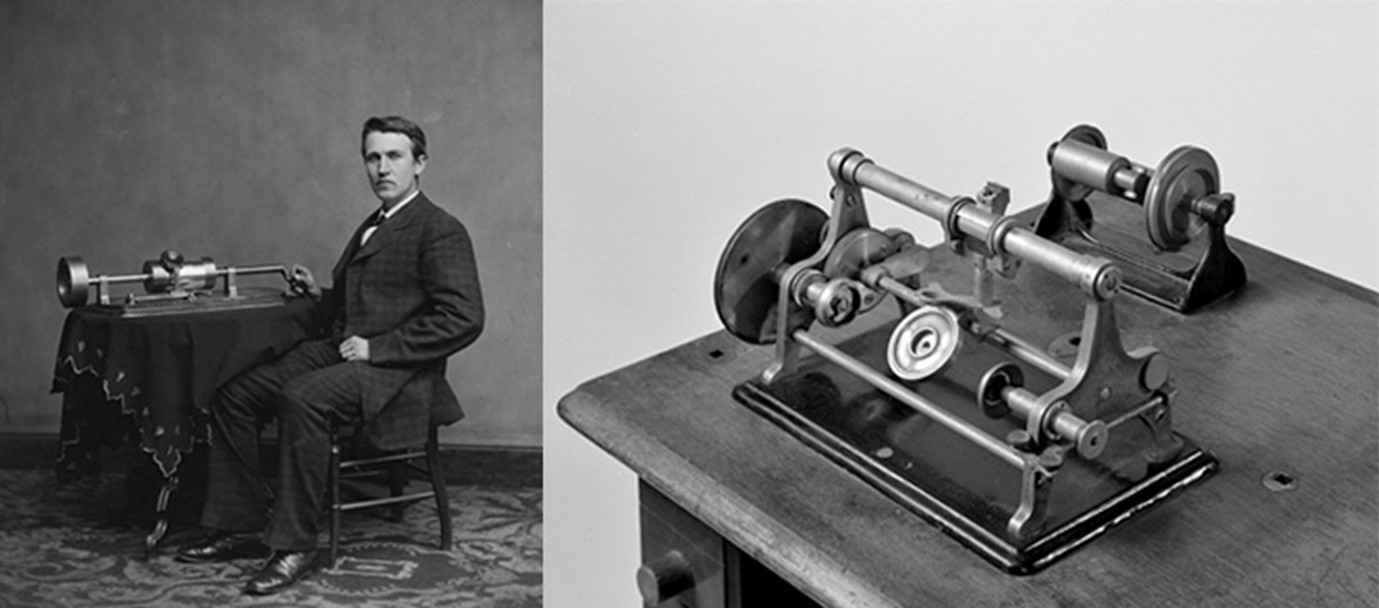
In 1877, while researching telegraph and telephone technology, Thomas Edison invented the world’s first “phonograph.” The name comes from the Greek words phōnē (meaning “voice”) and graphē (meaning “to write”). This early phonograph worked by engraving grooves onto a tin foil-wrapped cylinder*—a thin sheet of processed tin—allowing sound to be recorded and played back. While groundbreaking, the device had a major flaw: the tin foil was too fragile for repeated playback.
* Cylinder: The early form of what we now recognize as records. Though modern records differ in structure and function, the phonograph’s cylindrical format laid the foundation for today’s flat vinyl records.
In 1886, Alexander Graham Bell improved Edison’s phonograph by developing the Graphophone. This version used a cylinder coated with ozokerite wax—a petroleum and coal byproduct—to engrave sound groves. Playback worked by tracing these grooves with a stylus, which vibrated to reproduce the recorded sound. Playback worked by tracing the recorded grooves with a stylus, which vibrated to reproduce the sound. Although this wax cylinder was more reusable than its tin-foil predecessor, it lacked durability for long-term storage.
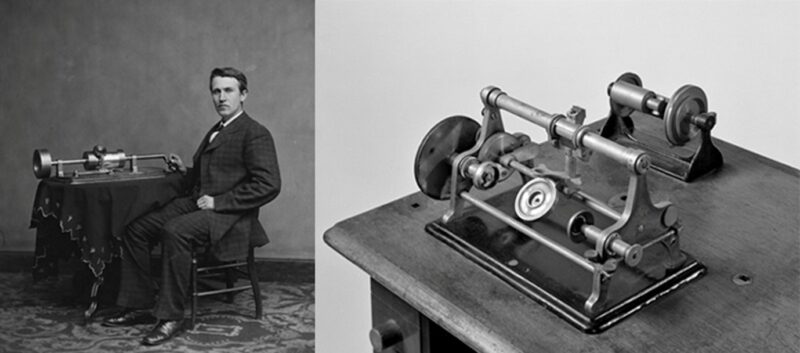
▲ (Left) Edison and his phonograph (Source: Wikipedia) / (Right) Bell’s Graphophone (Source: Smithsonian)
Decades of research and innovation led to the launch of the first vinyl record in the early 1930s, developed by RCA Victor in the U.S. Made from petrochemical-based materials, vinyl records delivered superior sound quality compared to earlier formats. However, they struggled commercially due to the lasting impact of the Great Depression.
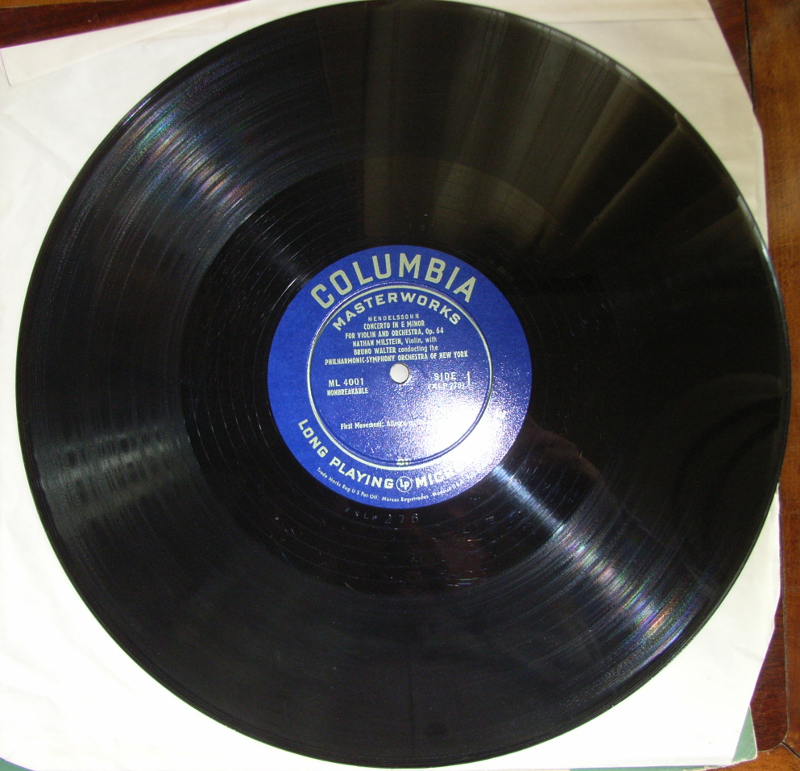
Then, in 1948, a new chapter in music history began. Columbia Records introduced the Long Play (LP) record—a 12-inch disc made from polyvinyl chloride (PVC) that could store up to 23 minutes of music per side. While that may seem short by today’s standards, it was considered “long” at that time, as most records could only play for five to ten minutes. LPs quickly became the industry standard, allowing high-quality music playback at home and fueling the growth of the record market. This shift did not just change how people listened to music—it gave rise to a new culture of collecting and preserving music.
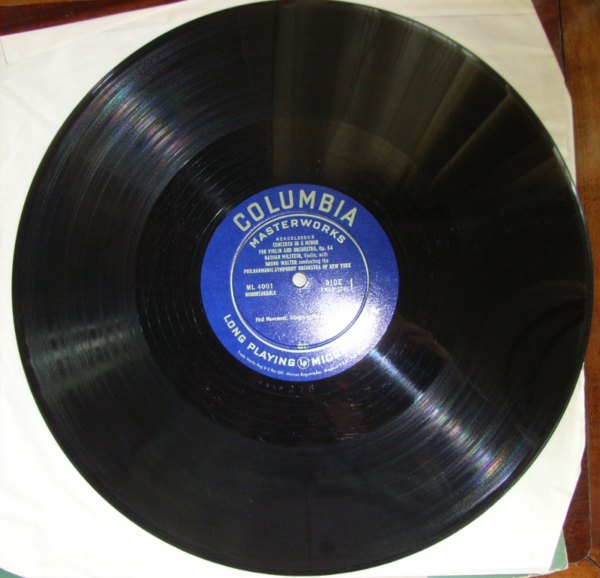
▲ LP record released by Columbia Records in 1948 (Source: Wikipedia)
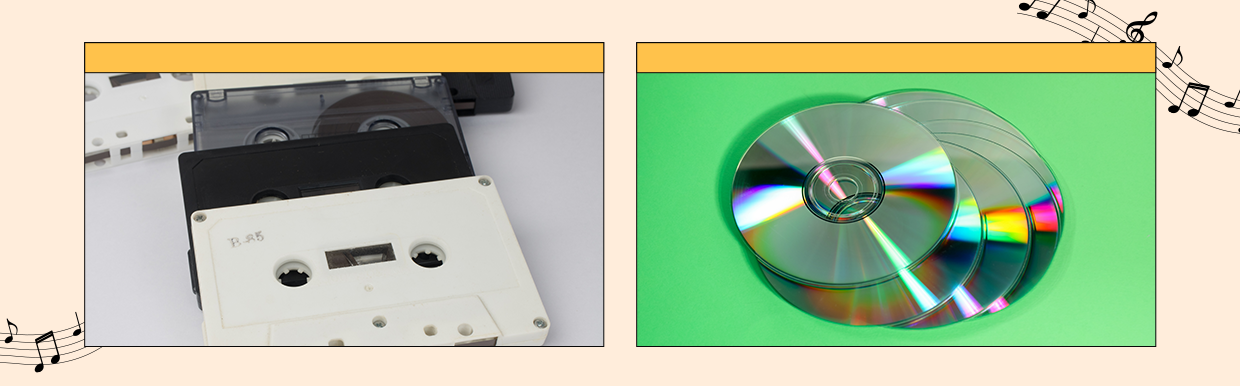
The arrival of cassette tapes further transformed the music industry, offering greater portability and convenience than LPs. The key component of cassette tapes—the magnetic film—was made from polyester (PE) and polyethylene naphthalate (PEN). The cassette shell, which housed and protected the tape, was made from polystyrene (PS) for durability or polypropylene (PP) for cost-effective mass production.
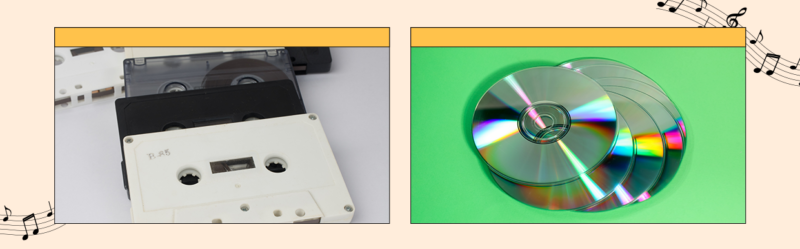
▲ Cassette tapes (left) and CDs (right)
Next came the era of the Compact Disc (CD), which revolutionized music consumption once again. Made from polycarbonate (PC), CDs were small, lightweight, and allowed users to instantly select and play specific tracks. Their convenience and superior sound quality drove massive popularity. However, as digital technology advanced, MP3 downloads and music streaming became widespread, leading many to predict the end of physical albums. Yet, rather than fading away, albums evolved into collectible merchandise, experiencing an unexpected resurgence. Today, the industry continues to innovate, introducing digital albums embedded with QR codes and NFC (Near Field Communication)** technology, offering a fresh take on music ownership.
** NFC (Near Field Communication): A short-range wireless communication technology that enables data exchange within a 10cm radius, commonly used for payments, authentication, and data transfer.
| The Popularization of Musical Instruments: A New Paradigm Shaped by Petrochemicals
Petrochemicals have also played a key role in making musical instruments more accessible. Traditionally, piano keys were predominantly crafted from natural materials, such as wood and ivory. However, growing concerns over elephant endangerment and resource depletion led to a gradual shift toward petrochemical-based alternatives. Today, most piano keys are made from materials such as polycarbonate (PC), acrylic, and acrylonitrile butadiene styrene (ABS), which are more cost-effective and easier to produce.

▲ Musical instruments made with synthetic materials, from left: piano, recorder, and trombone
The use of petrochemical materials in pianos and other musical instruments has enabled mass manufacturing, significantly fostering their widespread adoption. A prime example is the recorder, which is often introduced to children as a beginner instrument. ABS recorders are notable for their durability, low maintenance, and sound quality akin to wooden models. Additionally, ABS trombones offer a cost-effective alternative to traditional metal versions, making them an attractive choice for novice players.
Recently 3D printing technology has transformed the manufacturing process of musical instruments. By utilizing materials like ABS or thermoplastic polyurethane (TPU) as filaments, 3D-printed allow for customized designs and flexible production, ushering in a new era of musical innovation.
| Immersive Live Music—Right from Your Living Room
Thanks to state-of-the-art speakers and sound equipment, we can now enjoy powerful, crystal-clear sound at home, just as being at a live concert. Modern technology allows any space to be transformed into a personal concert hall, delivering an immersive musical experience.
At live music venues, high-performance speakers and precision sound equipment play a crucial role in captivating audiences. Speaker enclosures and covers require exceptional durability, often made from petrochemical-based materials. Polypropylene stands out for its lightweight yet sturdy properties, making it a popular choice for speaker casings and cone speakers. This minimizes sound distortion while delivering richer, more defined audio.
Moreover, sound equipment relies on safe wiring, as most audio devices are electronic. Cables coated with polyvinyl chloride (PVC) ensure long-term durability and safety, with PVC offering flexibility and insulation to protect against wear and impact.

▲ The image in the top right was generated by AI
Music reflects the times, while technology shapes the future. From instrument manufacturing to sound equipment and the way we experience music, petrochemical innovations have transformed every aspect of music culture. Today, music is no longer just something we listen to—it is a participatory art form that we can create, share, and enjoy together.
So, what is next for music? How far will advanced materials and cutting-edge technology take us in shaping new sounds and experiences? One thing is certain—the limitless stage of possibilities, powered by petrochemicals and music, has only just begun. After all, “Music is my life!”