“Sounds like this thing could use some oil.”
Whether it’s a creaky door, grinding gears, or strange engine noises—what comes to mind? Lubricants, of course!
Ancient Egyptians used olive oil to move giant stones, and early wheels rolled more smoothly thanks to animal fat, which reduced friction where wheels met the axle. Fast forward to 1866, when John Ellis introduced the first petroleum-based lubricant, opening the era of modern lubrication. Since then, lubricants have evolved rapidly—especially with the explosive growth of the automotive industry.
From guarding your engine and saving fuel to making your car last longer, lubricants are the quiet MVPs under the hood. So, how exactly does it all work? Let’s slide into the slick science of lubrication!
Q1. When is the best time to give your car’s lubricant a refresh?
● Internal Combustion Engine (ICE) Vehicles
Changing your engine oil every 5,000 kilometers used to be the rule of thumb. However, with advancements in both automotive technologies and oil formulations, many now consider 10,000 kilometers to be safe. Both recommendations can be correct since it really depends on how and where you drive. If you’re often stuck in heavy traffic, make frequent short trips, or accelerate and brake suddenly—those are tough conditions for your engine, and you might need more frequent oil changes. It’s also important to remember that engine oil breaks down over time, so even if you rarely drive, it’s a good idea to change it at least once a year to keep everything running smoothly.
● Electric Vehicles (EVs)
You might think EVs don’t need lubricants since they don’t have an engine like those in ICE vehicles that run on oil. But that’s not the case. EVs do require lubricants, although their role is slightly different.
While EVs don’t need traditional engine oil, they do use specially formulated lubricants for components like the motor and gearbox. Typically, these lubricants last over 100,000 kilometers, though some models might recommend a change around 40,000 kilometers. To ensure accuracy, always check your vehicle’s manual for the right maintenance schedule.
Quick Trivia! From Combustion to Electric—SK Enmove Has It All!
SK Enmove has introduced Urban Protect Technology, a feature of SK ZIC, designed to efficiently protect engines in dynamic urban driving environments characterized by fluctuations between low and high temperatures, frequent stops, and sudden accelerations. SK ZIC is based on YUBASE, SK Enmove’s independently developed high-quality base oil brand, providing the optimal engine protection solution for urban driving conditions. It effectively keeps engines clean and reduces oil consumption.
Additionally, SK Enmove is making its mark in the EV lubricant market with ZIC e-FLO, a product born from leading technological development and differentiated expertise. ZIC e-FLO is supplied to various global electric vehicle manufacturers, showcasing SK Enmove’s presence in the industry.
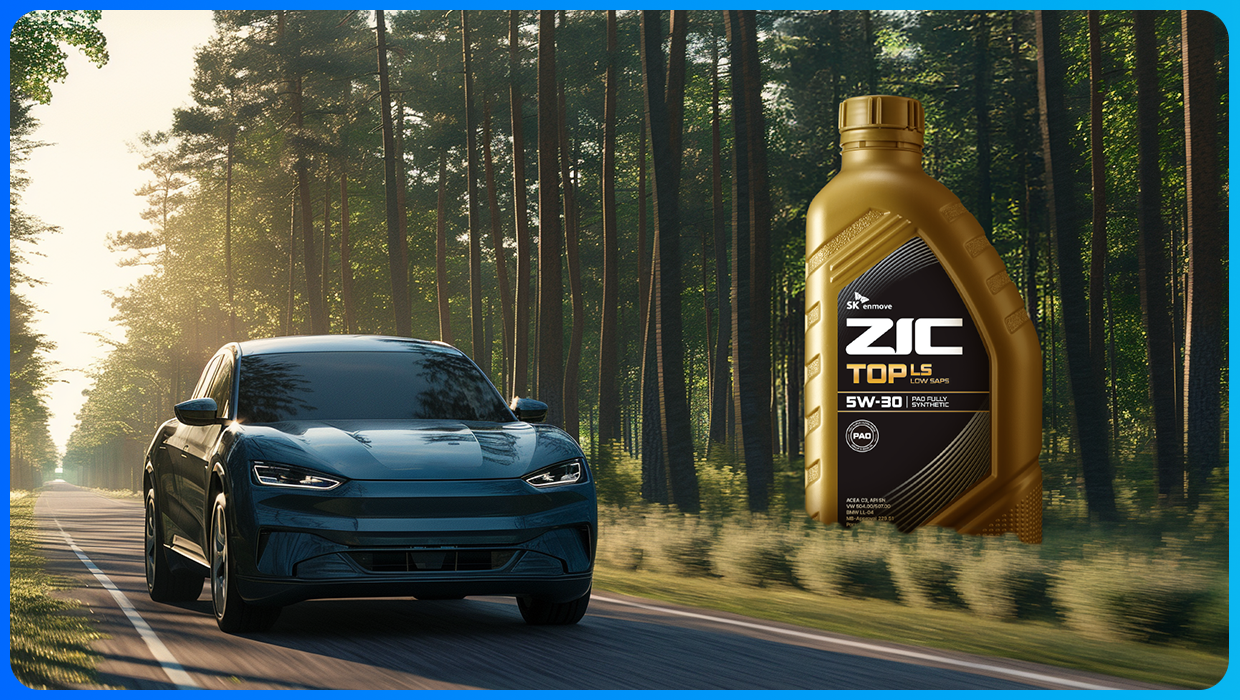
Q2. Why do electric vehicles need lubricants if they don’t have an engine?

In ICE vehicles, lubricants are primarily used to reduce friction within the engine and assist with cooling. But in EVs, the priorities shift—cooling and electrical insulation are what matter more. EV motors operate at high speeds and generate significant torque, producing a substantial amount of heat. If that heat isn’t effectively managed, it can lead to performance loss or even failure of key components. That’s why some EVs are designed to circulate lubricants within the motor, maximizing cooling efficiency precisely where it’s needed.
EV lubricants also need to provide strong electrical insulation because they can come into direct contact with motors and other electrical components—making safety a critical concern. These lubricants must also remain stable under extreme temperatures, whether in freezing cold or sweltering heat, to effectively protect vital systems like the battery and other core components. Additionally, EV lubricants help protect the reduction gear that operates alongside the motor. Protecting the reduction gear imposes higher performance requirements on EV lubricants, especially under mechanical load and thermal extremes.
In short, EV lubricants play a crucial behind-the-scenes role in supporting vehicle performance and stability while enhancing overall efficiency and durability.
Q3. What do the letters on an engine oil bottle mean?
When buying engine oil, you’ve probably seen a label like “5W-30” printed on the container. This combination of numbers and letters indicates the viscosity of the oil, which is an important indicator that shows how the oil performs under varying temperatures.
So, what exactly does this labeling mean?
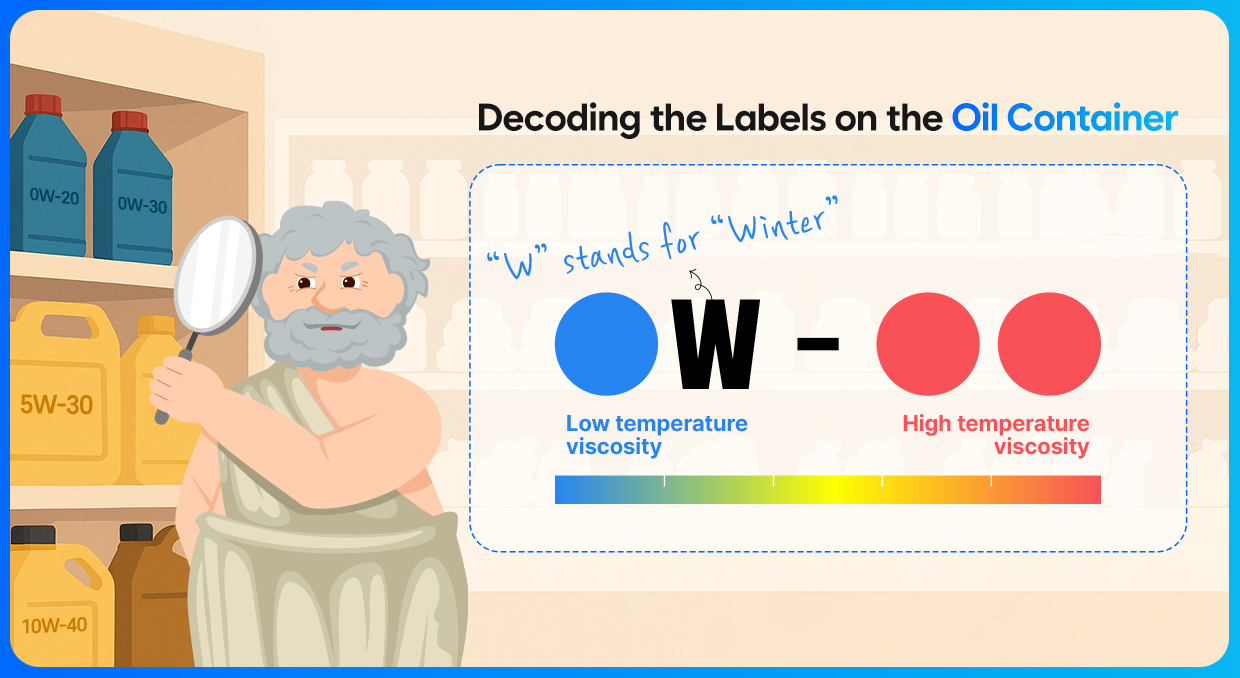
▪️ First number + W (Winter): This indicates how well the oil flows in cold temperatures. The lower the number, the better the oil performs in winter—helping it stay fluid in freezing conditions and making cold starts easier. For example, “5W” flows better in low temperatures than “10W,” making it more suitable for winter driving.
▪️ Second number: This shows the oil’s viscosity at high temperatures. The higher the number, the better it maintains its thickness when the engine is hot—ensuring strong lubrication performance even under high thermal stress. Back in the day, drivers had to switch between winter and summer oils—low-viscosity for cold months, high-viscosity for hot months. But, with the advent of multigrade oils, one formulation can now adapt to all seasons. It flows smoothly in winter and stays stable in summer, protecting your engine year-round.
So, the next time you change your oil, take a closer look at those numbers and letters. Understanding what they mean can help you choose the right oil for your car, ensuring it runs smoother and lasts longer.
Quick Guide: Choose the Right Engine Oil for Your Climate
In regions where summer heat and winter frost reach extreme levels, selecting engine oil isn’t a simple set-it-and-forget-it task. The climate significantly influences which oil performs best, especially when temperature variations push your engine’s performance to its limits.
Take South Korea, for instance. With its hot summers and sub-zero winters, it’s an ideal example of why multigrade oils are essential. For passenger cars, 5W-30 is commonly used, while 10W-40 is recommended for heavy-duty diesel vehicles due to its superior performance at high temperatures.
ZIC’s website (https://www.skzic.com/eng/productmanage/info/product/list.do?menu_idx=170) provides a wide range of products tailored for different temperature conditions, allowing you to check the recommended viscosity grade and select the oil that best suits your driving environment.
Got a clearer picture of engine oil now?
Engine oil might seem like a simple consumable, but it plays a crucial role in keeping engines running smoothly, efficiently, and reliably. With a better understanding of how to choose the right oil, when to change it, and how to interpret the label, maintaining your vehicle in top condition becomes much more manageable.
After all, a car is more than just a machine: it’s part of the journey we take every day. With a bit of care, a well-maintained engine can last longer and make every drive more enjoyable. Remember, smart maintenance starts with the right oil. Fuel-reka!
– [Fuel-reka!] Secrets Beneath the Gas Station: What Happens When You Grab the Nozzle?