Batteries as the Center of the EV Era
Electric vehicles (EVs) are entering a true mass-market phase, with adoption accelerating all over the world. The International Energy Agency (IEA) projects that by 2030, more than 40% of all new cars sold globally will be electric. At the center of this shift is the battery, the “heart” that determines an EV’s performance, safety, and cost. However, there is some trepidation around EVs, as consumers participating in a Deloitte study cited battery safety — including potential thermal issues — along with driving range and charging time as key concerns when considering the purchase of an EV. Global consulting firm PwC also notes that more than half of prospective EV buyers prefer affordable and mid-priced models, a trend closely tied to battery cost competitiveness, as batteries can account for about 40% of a vehicle’s total cost. Ultimately, there are two core considerations in the battery industry: safety and cost.
SK On Bets on the Future of Batteries with Four Key R&D Priorities
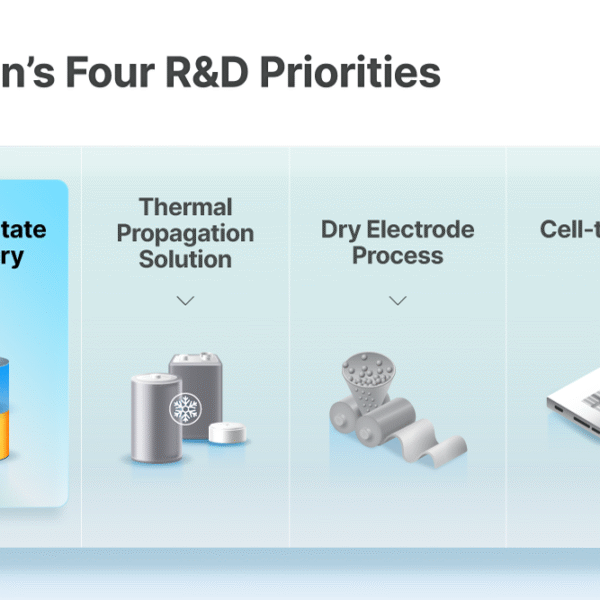
Responding to these shifts, SK On has identified strategic R&D priorities. To improve safety, it is focusing on solid-state batteries and thermal propagation (TP) prevention solutions, and to strengthen cost competitiveness, it is prioritizing the dry electrode process and cell-to-pack (CTP) design. Together, these priorities outline a technology innovation roadmap that spans the entire battery system, from cell to pack. Through a four-part deep dive series, SK Innovation Newsroom is exploring each of these technologies, with this edition focusing on solid-state batteries.
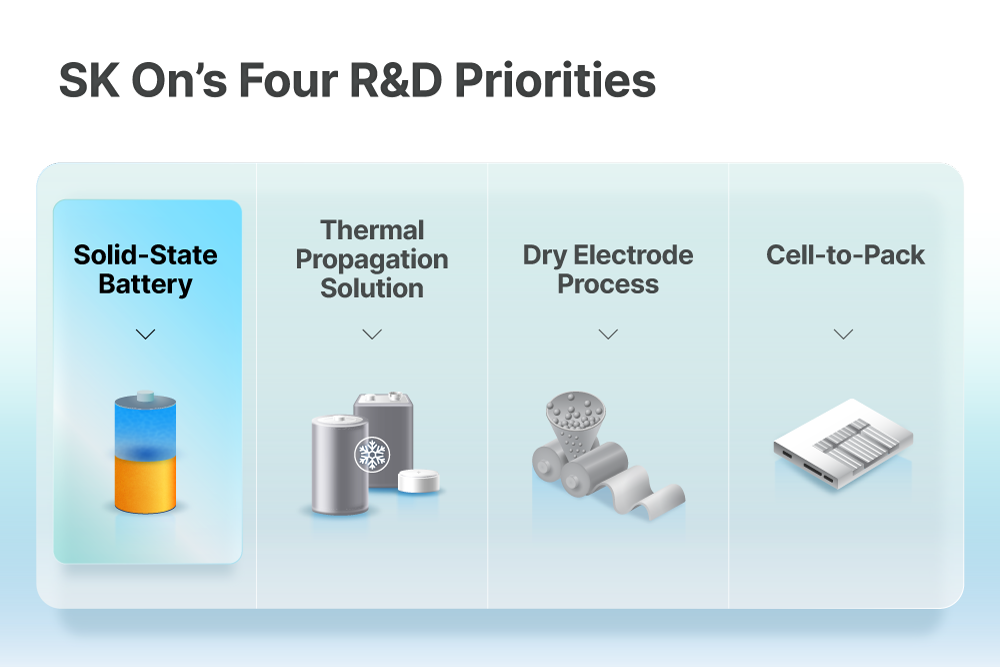
SK On’s safety-first strategy centers on next-generation solid-state batteries — which aim to improve cell-level safety and performance — and TP prevention technologies that reinforce safety at the pack level.
Why Battery Safety Matters
A battery consists of dozens — or even hundreds — of individual cells. Each cell stores and releases energy, and when combined, they generate the immense power required to move an electric vehicle. So, what factors can undermine battery safety
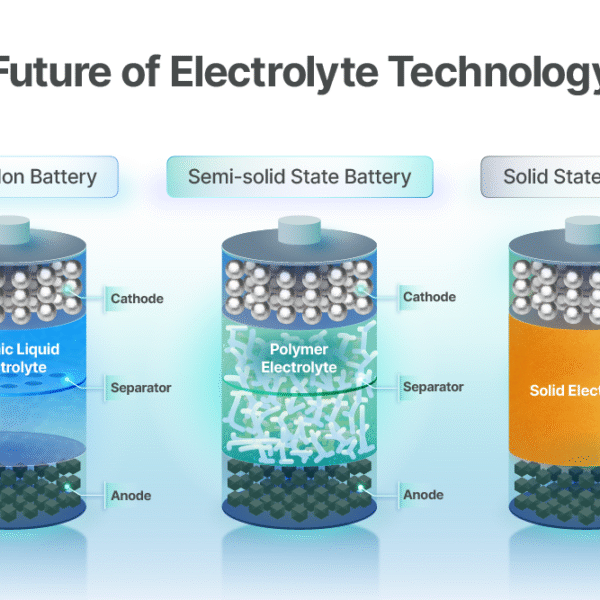
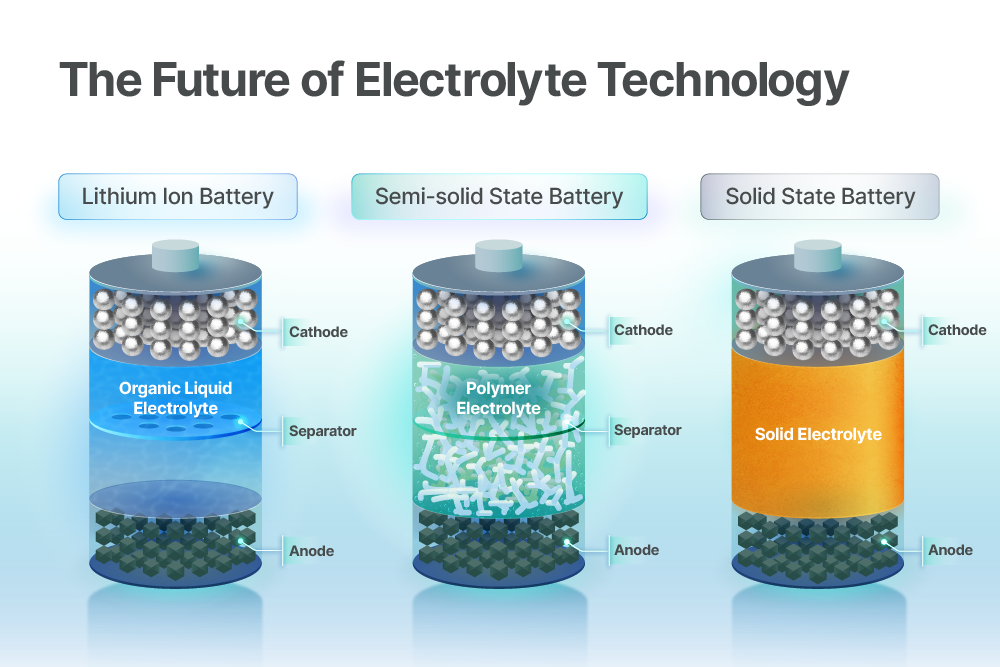
1) When the cathode and anode make contact – Lithium-ion batteries used in EVs consist of a cathode, anode, separator, and electrolyte. During charging, lithium ions move from the cathode to the anode, traveling through the electrolyte — the “highway” for ion movement. The separator prevents the two electrodes from touching. If the separator is damaged, a short circuit can occur.
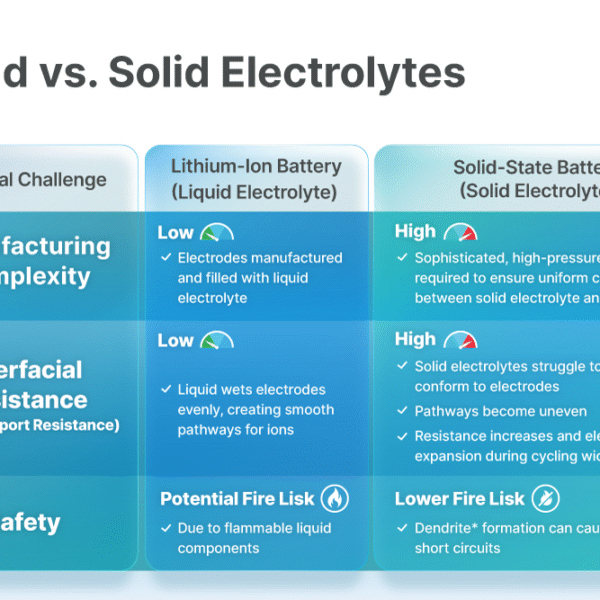
2) The flammability of liquid electrolytes – Liquid electrolytes enable fast ion transport and high output, and are easy to use in mass production. However, they contain inherently flammable components.
Solid Electrolytes: A New Alternative
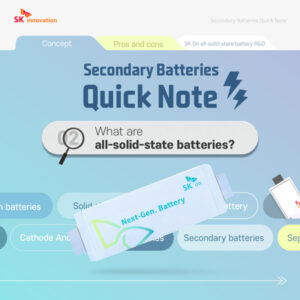
What if, instead of liquid, a solid electrolyte is used? Solid electrolytes offer improved structural stability, significantly reducing the risk of leakage or gas buildup, and can support higher energy density. For these reasons, all-solid-state batteries are often referred to as the “dream battery.”
According to SNE Research, the global solid-state battery market is projected to reach 493GWh by 2035, accounting for 6.1% of the total battery market. However, because manufacturing solid-state batteries is highly complex, it presents major technical hurdles. As a result, most companies are aiming for commercialization by around 2030.
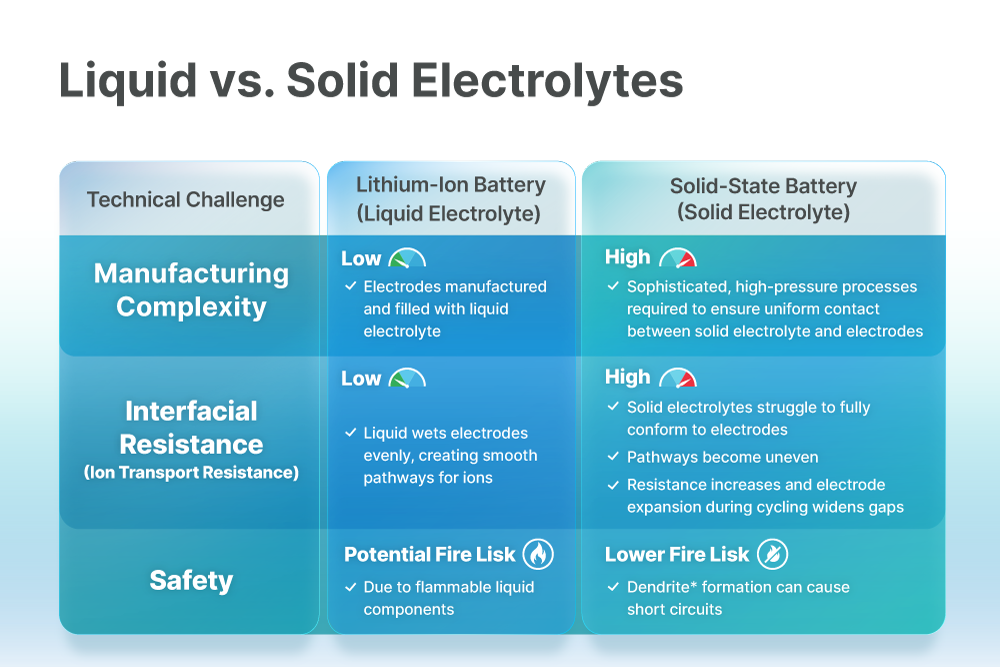
* Dendrite: Tree-like lithium deposits that can form during repeated charging cycles. If they grow long enough to pierce the electrolyte and reach the opposite electrode, a short circuit may occur.
A Bridge to Solid-State: Polymer–Oxide Composite Batteries
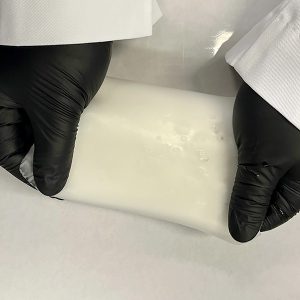
To accelerate progress toward solid-state batteries, SK On is developing batteries that utilize a polymer–oxide compositeelectrolyte. Combining polymer and oxide electrolytes, this technology is viewed as a practical step on the roadmap toward all-solid-state systems, and is sometimes categorized as a semi-solid-state battery. The polymer electrolyte — more flexible than conventional solid electrolytes — helps lithium ions move more smoothly, while the oxide electrolyte adds strong thermal and chemical stability. Together, this structure increases the solidity of the electrolyte to enhance cell safety and reduce the likelihood of thermal propagation, while also maintaining high compatibility with existing lithium-ion manufacturing processes. With this type of battery as its bridge, SK On is advancing toward its ultimate goal: sulfide-based all-solid-state batteries.
The Final Step in the Electrolyte Technology Roadmap: Sulfide-Based Solid-State Battery
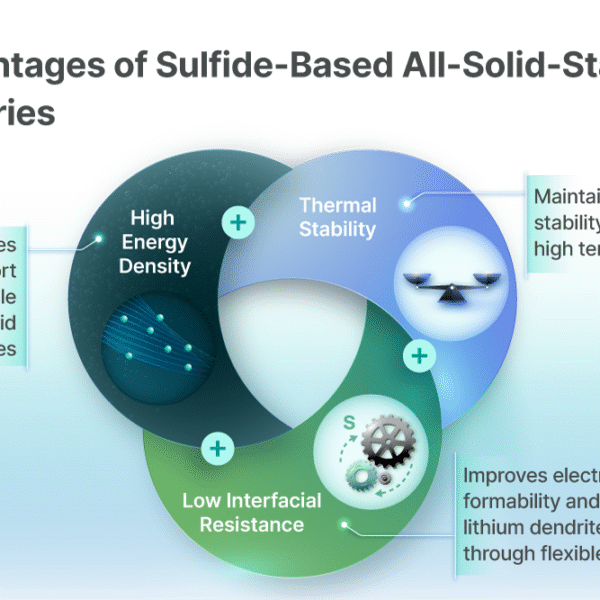
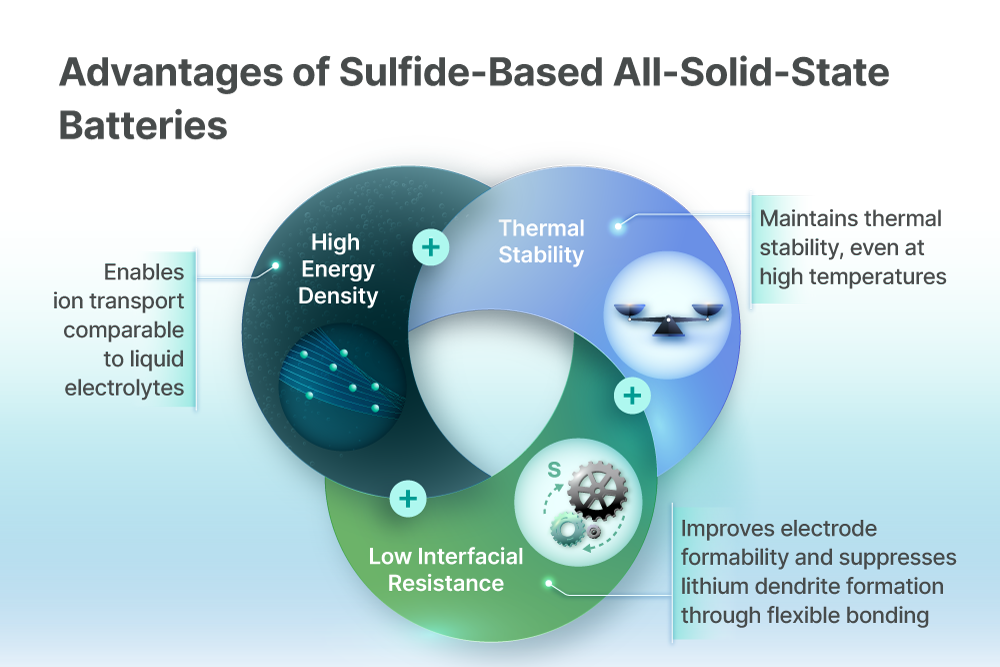
Using a solid electrolyte composed of sulfur compounds, sulfide-based batteries represent the next generation of battery technology. Because they rely on an electrolyte that is 100% solid, they are classified as all-solid-state batteries, and they offer several key advantages. Sulfide ions feature a soft lattice structure and flexible bonding characteristics, allowing the system to address two key limitations at once: the flammability of liquid electrolytes and the relatively low- ionic conductivity seen in conventional solid-state electrolyte systems. Despite being fully solid, sulfide-based electrolytes enable fast lithium-ion transport and smooth interfacial contact with electrodes. These characteristics help reduce interfacial resistance and support high energy density. SK On is actively developing sulfide-based all-solid-state batteries. The initial commercialization target is to achieve 800 Wh/L energy density, with the longer-term goal being an increase in energy density to 1,000 Wh/L.
As part of its preparation for future large-scale production of all-solid-state batteries, SK On is developing the necessary technologies while gradually building out the facilities needed for manufacturing. With 2029 as its target for commercialization, the company established an all-solid-state battery pilot plant spanning approximately 4,628 m² at its Institute of Future Technology in Daejeon, Korea in the second half of 2025.
Simultaneously, SK On is actively engaged in collaborative research with leading academic institutions, such as its work evaluating the applicability of manganese-rich (LMRO) cathode materials for sulfide-based all-solid-state batteries with Professor Kyu Tae Lee’s team at Seoul National University. The study was selected for the cover of Advanced Energy Materials, a leading international journal in the energy materials field, in 2025.
SK On Sets a New Safety Benchmark with Solid-State Technology
SK On is driving safety innovation across every layer of the battery, from cell to pack. At the cell level, the company is strengthening safety as its core through solid-state battery technology. At the pack level, it continues to advance its TP prevention solution, designed to stop heat generated during battery operation from spreading. In the next article in the series, SK On will take a closer look at this TP prevention technology and explore how it further strengthens battery safety.
■ Related articles

- [Expert Lens] How Energy Security Presents a New Opportunity for the Korean Battery Industry

- All-Solid-State Batteries: A Game Changer Shaping the Future of the Electric Vehicle Era

- Vanadium Ion Batteries: A Potential Cornerstone of Future Energy Storage

- SK On Unveils Breakthrough in Next-Generation Cathode Research