In 2016, the historic Go match between AlphaGo and Lee Sedol gave many people in South Korea a vivid sense of how quickly artificial intelligence was advancing. AlphaGo’s victory challenged the long-held belief that, no matter how far AI progressed, defeating a human master in Go would remain extraordinarily difficult.
At the same time, the match highlighted another important reality: energy use. Lee Sedol, as a human player, consumed only a tiny amount of energy—roughly equivalent to several tens of watts (W) at any given moment. AlphaGo, by contrast, is estimated to have required electricity on the order of tens of kilowatts (kW), and at peak moments possibly close to a megawatt (MW). In other words, AI systems such as AlphaGo can surpass human capabilities in computation and reasoning, but doing so can require thousands to tens of thousands of times more energy.
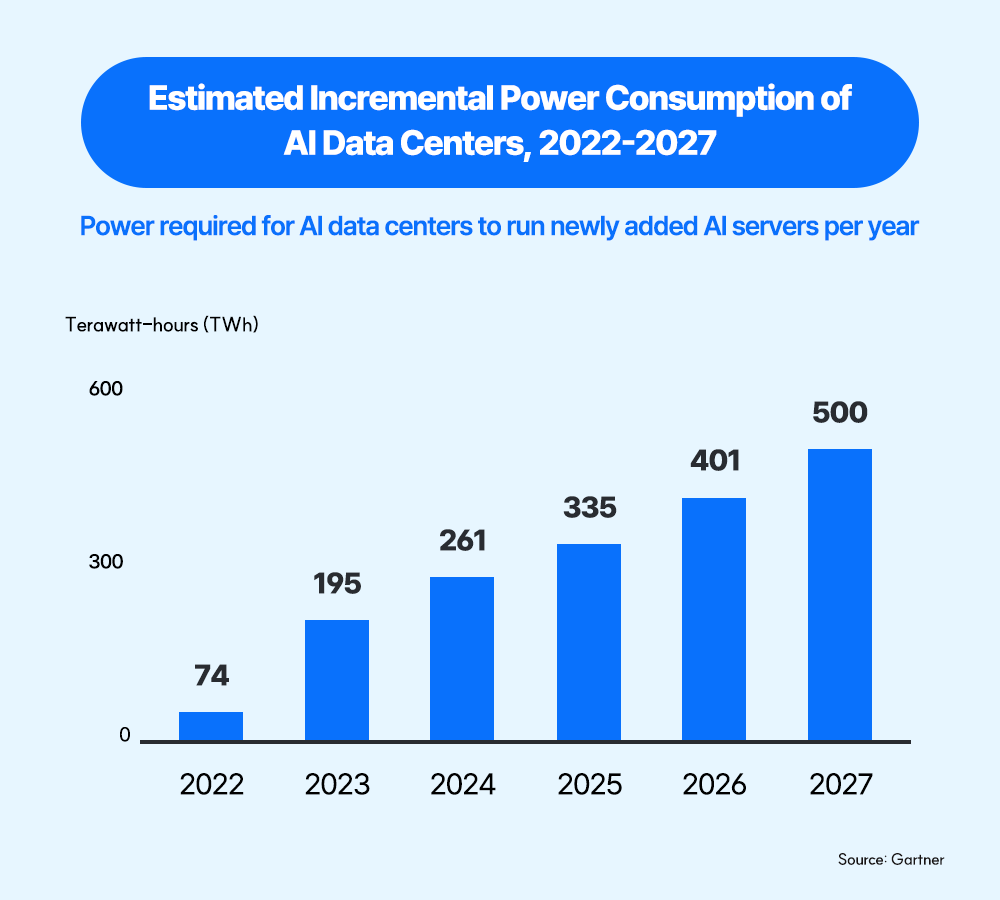
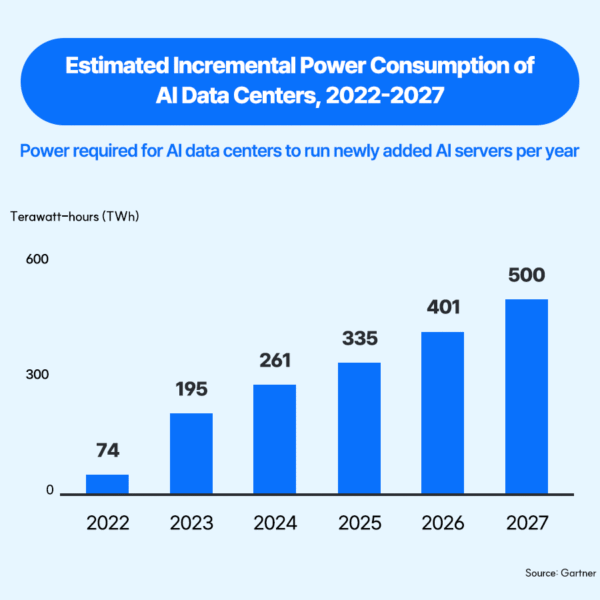
Nearly a decade later, AI has become part of everyday life, with millions of people now using AI-powered services through mobile apps and other digital platforms. Although AI systems have become far more efficient than in the past, total energy consumption is still expected to rise as the number of users grows rapidly and service quality continues to improve. As the AI era advances, energy demand from the computing infrastructure behind these services, especially data centers, is widely expected to increase. Yet the most effective way to meet that demand remains an open question, particularly at a time when carbon neutrality has become a global priority.
One energy option that has recently drawn renewed attention is nuclear power. This renewed interest is partly driven by a shift in perception, much like the one AI itself created. Just as advances in AI challenged assumptions about what machines could and could not do, nuclear energy is also being reconsidered in light of a major technological development: the emergence of small modular reactors, or SMRs.
One of the most common perceptions of nuclear power is that it is a “dangerous technology.” This view is rooted in history. Some nuclear power plants built in the 1970s experienced severe accidents involving core meltdowns, resulting in the release of radioactive materials into the environment and, in some cases, harm to nearby communities. For this reason, nuclear power plants cannot simply be built anywhere, no matter how strongly their safety is emphasized. Even if the probability is extremely low, authorities must still prepare for the possibility of a severe accident that could cause an uncontrolled release of radioactive material and ensure that nearby residents can evacuate safely.
The designated area around a nuclear power plant for such evacuation planning is known as the Emergency Planning Zone (EPZ). The EPZ is one of the key factors in determining where a nuclear power plant can be located. In South Korea, it is typically defined as a circular area with a radius of 20 to 30 kilometers around the plant.
SMRs began drawing serious attention in 2023, when the U.S. Nuclear Regulatory Commission determined that, for certain SMR designs, the Emergency Planning Zone would not need to extend more than 10 kilometers, and that an area limited to the plant site itself—roughly a few hundred meters—could be sufficient. In practical terms, this meant U.S. regulators recognized that these SMR designs could, even in the event of a serious accident, limit any radioactive release to a level that would not require the evacuation of nearby residents.
This was a significant milestone for nuclear technology. For the first time, a new class of reactors gained formal regulatory recognition for a level of safety that could substantially reduce concerns among surrounding communities.
This level of safety is possible because, unlike conventional large nuclear power plants, SMRs contain a smaller inventory of radioactive material in each reactor due to their lower power output. At the same time, their smaller reactor size provides a larger heat-removal surface area relative to output, making cooling significantly easier. These inherent design characteristics greatly reduce the risk of a loss-of-cooling event that could lead to core damage or meltdown. If SMRs can demonstrate these safety advantages not only in regulatory reviews but also through actual construction and operation—and also prove their ability to meet real-world power needs in areas such as load following and economic competitiveness—they are likely to emerge as one of the leading carbon-free energy technologies in the AI era.
Comparison of Large Nuclear Power Plants and SMRs
| Large Nuclear Power Plants | SMRs | |
| Electric output | 1,000–1,700 MWe | 10–300 MWe |
| Construction period | 5–10 years | 3 years or less |
| Construction cost | KRW 5–10 trillion | KRW 1–3 trillion |
| Operational flexibility | Fixed at high output levels | Scalable, with load-following capability (Can be used as distributed power sources and as backup for renewable energy) |
| Construction risk | A high share of on-site work leads to higher construction cost risk | A higher share of factory-based work reduces construction cost risk |
| Site area | 573 m²/MWe | Requires about half the area per unit of output compared with large nuclear power plants |
| Applications | Power generation | Power generation, hydrogen production, oil refining, ship propulsion, and more |
▲ Source: Korea Energy Economics Institute, PwC, Hana Securities
Nuclear innovation, however, has not stopped there. A notable example is the demonstration project now under way in Wyoming by TerraPower. The project could become a landmark for the future of nuclear energy because it addresses a major question in the energy transition: can nuclear power realistically replace existing coal-fired power plants?
What makes this effort especially significant is that it does not rely on conventional reactor technology. Instead, it is based on a next-generation Generation IV design: the sodium-cooled fast reactor (SFR). The participation of Korean companies such as SK Innovation and Korea Hydro & Nuclear Power in such a high-profile project reflects the global competitiveness of South Korea’s nuclear industry. It also suggests that similar R&D and commercial initiatives could emerge in South Korea in the future.
SFR technology is widely regarded as one of the most commercially promising Generation IV reactor technologies among next-generation non-light-water reactors, which do not use ordinary water as a coolant. It has drawn sustained attention since the early 2000s. The sodium-cooled fast reactor was originally envisioned by Enrico Fermi, who led the successful Chicago Pile-1 experiment, widely recognized as the world’s first nuclear reactor. One of the most distinctive features of SFR technology is its ability not only to generate electricity but also to produce or recycle usable nuclear fuel through its fuel cycle. Few other energy technologies invite comparison in this respect. In a historical sense, the technology is both old and new: early fast-reactor concepts are linked to some of the earliest milestones in nuclear engineering, while related technologies were also applied in naval propulsion. Although SFR technology is highly complex and has required decades of research and development, it reached an important milestone when U.S. regulators approved a construction permit for an SMR project based on this technology. It is now being tested for its potential to become a practical replacement for coal-fired power generation.
▲ Source: TerraPower
The SFR currently under construction is called the Natrium® reactor. True to its Generation IV design, it incorporates several innovative features. The most significant of these is the application of thermal energy storage to nuclear power generation, allowing reactor output and electricity output to be separated. In practical terms, this means the reactor itself does not need to ramp up and down in response to changes in electricity demand. Instead, it can continue operating at a steady output, while the integrated energy storage system adjusts electricity generation to match demand. This offers a major operational advantage. Another notable feature is its use of sodium as a coolant. Although sodium is flammable, the system is designed so that the sodium coolant and the molten-salt energy storage system remain separate, which helps enhance both operability and safety. Through this integration with energy storage, the Natrium reactor is designed to achieve very rapid load-following capability, with the ability to change output by 10% per minute. That makes it particularly well suited to supplying power in applications where demand can shift quickly, including AI-era data centers.
South Korea’s innovative SMR (i-SMR), which is currently under development, is also scheduled for domestic deployment, with plans to begin supplying electricity by 2035. As this process moves forward, the country’s regulatory framework for SMRs is expected to undergo significant refinement so that it can properly address the distinctive features of SMR technology. At the same time, there is a strong possibility that Generation IV reactors could also be introduced in South Korea in the not-too-distant future, alongside continued domestic development.
Accordingly, the government is also leading efforts to develop a regulatory system capable of conducting appropriate safety assessments for these innovative technologies. Encouragingly, local governments and regional communities in South Korea have recently shown a growing willingness to participate in SMR demonstration projects.
This may also be a sign that public concerns about the local acceptance of nuclear power are gradually easing. If SMRs are successfully demonstrated, one of the central challenges of the AI era—securing reliable carbon-free electricity—could be significantly reduced. In short, just as AI has become a widely accessible technology, nuclear energy may also evolve into a more broadly adopted energy solution, capable of delivering affordable, low-carbon power to more people. That future could be made possible by the continued evolution of SMR technology. Ultimately, this may lead to a broader shift in how nuclear energy is perceived.
■ Related articles

- SK Innovation, TerraPower, and Korea Hydro & Nuclear Power Form Alliance to Lead the Global SMR Market

- All-Solid-State Batteries: A Game Changer Shaping the Future of the Electric Vehicle Era