1. The New Epicenter Shaking the Power Grid: AI Data Centers
The center of gravity in the U.S. power market is shifting — quietly, but decisively. After averaging roughly 0% annual growth for two decades, U.S. electricity demand has entered a new high-growth phase of around 4% per year, driven by the explosive expansion of AI data centers (AIDC). Goldman Sachs projects that data centers’ share of U.S. summer peak power demand will more than double, from 4.1% in 2025 to 8.5% in 2027. The Electric Power Research Institute (EPRI) estimates that data centers could account for 9–17% of total U.S. electricity consumption by 2030. The U.S. Department of Energy (DOE) warns that by 2028, data center power consumption could reach as much as 12% of total U.S. electricity use.
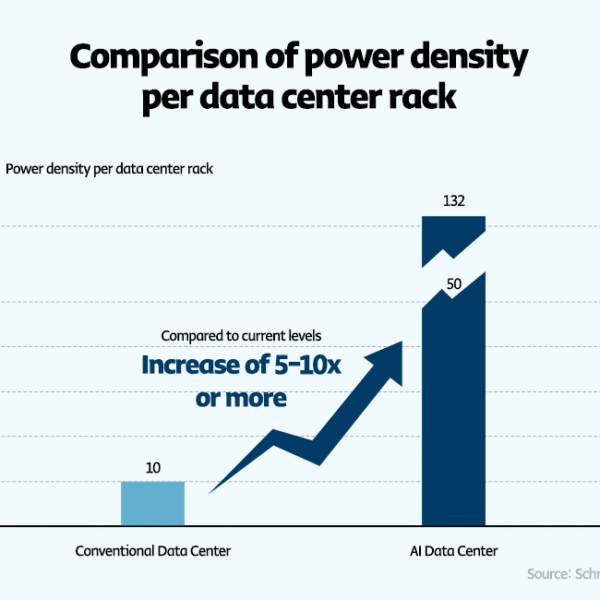
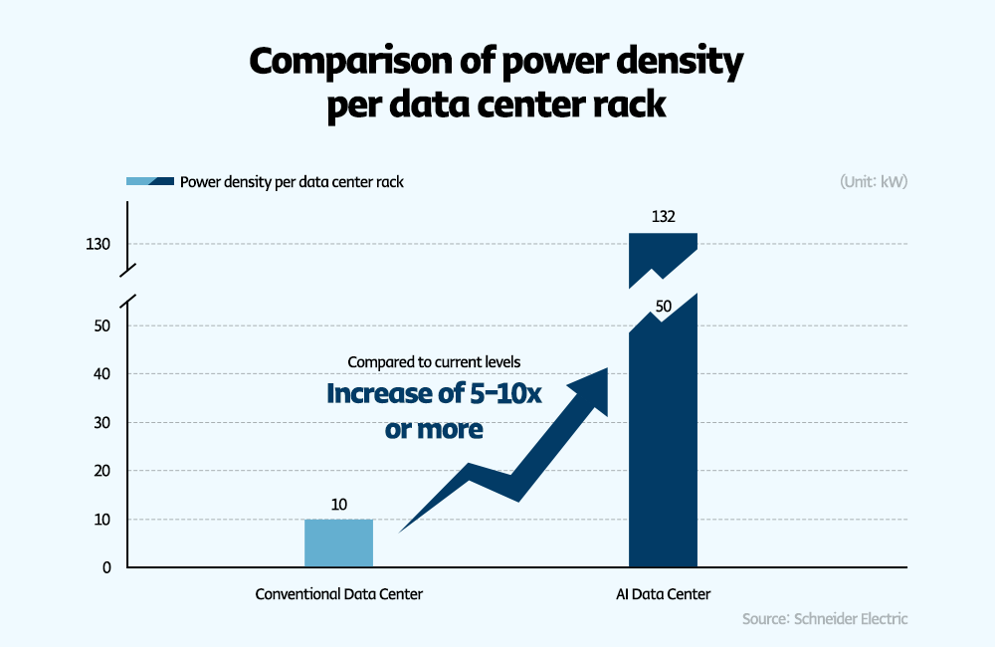
The core of the problem, however, is not simply the increase in total volume. Power density per rack in AI data centers now runs 5 to 10 times higher than in conventional facilities — 50 to 132 kW per rack — and GPU training and inference loads fluctuate dramatically within seconds. Unlike the gentle, predictable base load that traditional grids were built to serve, AI workloads generate “pulse loads” that can spike by hundreds of megawatts in an instant.
Compounding this, the lead time for new gas turbines is 5–7 years, for nuclear power (including small modular reactors, SMRs) more than 10 years, and for transmission line permitting typically 7–10 years. In short, there is a stark “time gap” between how fast AIDC power demand is rising (2–3 years) and how fast supply infrastructure can be built out (7–10 years).
2. An Overview of U.S. Power Supply Options — Why ESS Is the “Only Bridge”
The U.S. is deploying four major levers to address the AIDC power crunch: (1) building new natural gas combined-cycle plants, (2) restarting or building SMRs and conventional nuclear plants, (3) large-scale expansion of solar and wind, and (4) Battery Energy Storage Systems (BESS). The first three options are all constrained by the same wall: time. BESS, by contrast, can go from contract signing to commercial operation in just 12–18 months, faces fewer siting constraints, and is comparatively easier to permit.
The functional value BESS brings to AIDC power supply can be summarized in three layers. First, peak shaving, which reduces excess demand above contracted capacity. Second, ancillary services — frequency and voltage regulation — which absorb grid instability caused by volatile GPU loads. Third, backup power, replacing conventional diesel-based uninterruptible power supply (UPS) systems. Notably, as U.S. industrial electricity rates have risen 30–35% since 2020 to reach 8.8 cents per kWh in 2026, BESS is also evolving into an energy arbitrage asset — charging during low-price hours and discharging during peak-price hours.
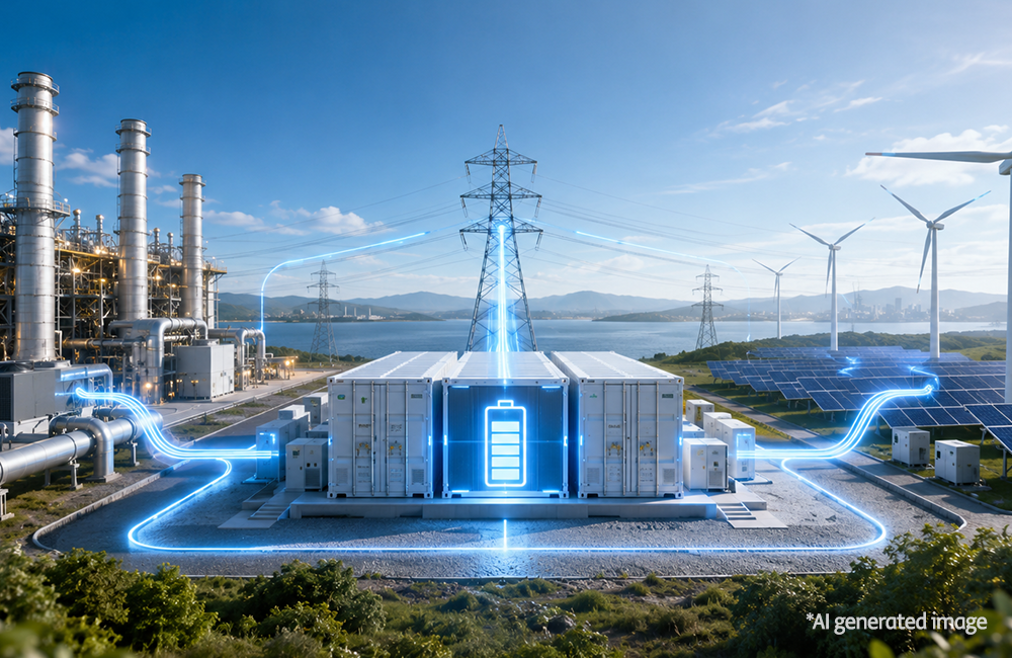
Ultimately, the realistic solution for AIDC power supply is converging on a hybrid model of “gas + renewables + ESS.” Within this combination, ESS functions as the glue asset — binding together generation resources that operate on entirely different time horizons into a single, stable supply curve.
3. Real-World Cases — How Hyperscalers Are Moving
Big Tech’s moves in the U.S. are already concrete. Google signed a contract to deploy the world’s largest iron-air battery — 300 MW / 30 GWh — dedicated to its data center in Pine Island, Minnesota. Unlike lithium-ion batteries, which typically store 4 hours of power, this system provides more than 100 hours of storage. It is the first commercial case of pairing Long Duration Energy Storage (LDES) directly with a data center.
Microsoft has deployed a 16 MWh-class BESS at one of its data centers, designed to replace diesel generators and provide full backup power for 80 minutes. Meta and Amazon (AWS) have likewise adopted utility-scale batteries in the 50–200 MWh range for grid interaction and AI workload management. The geographic epicenter of this trend is Texas, specifically the ERCOT grid region (Electric Reliability Council of Texas). ERCOT projects that 22 GW of new data center load will connect to its grid by 2030, and the region has already become the fastest-growing battery storage market in the world.
What stands out is the changing structure of these deals. Batteries at data centers used to be a mere “equipment add-on.” Now, hyperscalers are entering directly into long-term off-take agreements with battery suppliers, or signing 20-year power purchase agreements (PPAs) with independent power producers (IPPs) for combined solar-plus-storage assets. S&P Global has characterized this shift as follows: “The alignment between hyperscalers and battery suppliers is itself lifting the outlook for the entire energy storage market.”
4. Supply Trends and Future Targets — The Market in Numbers
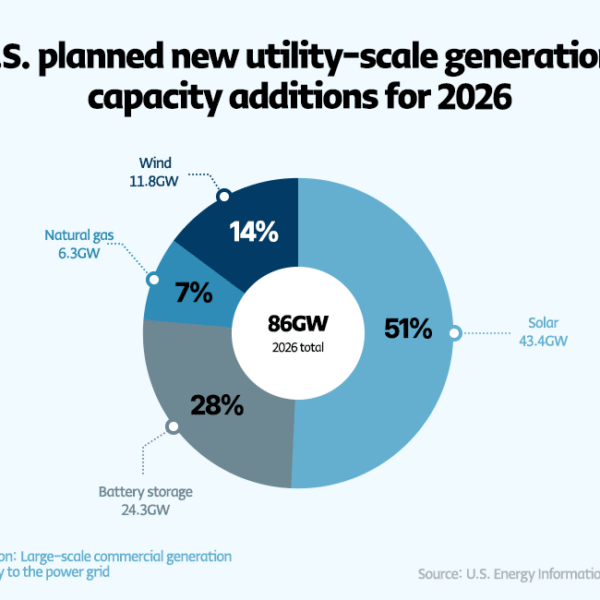
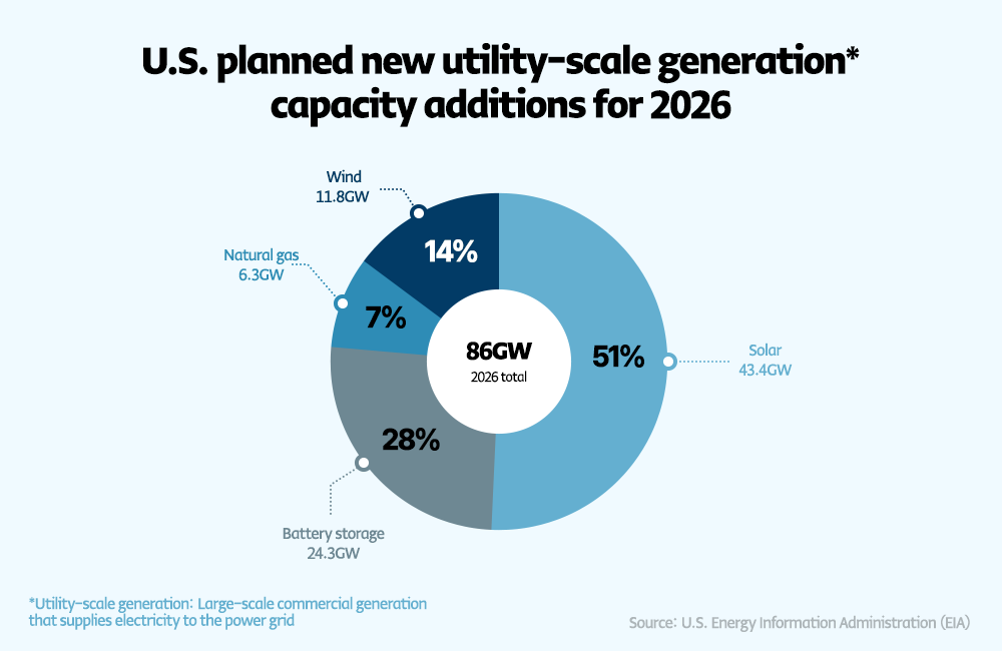
U.S. battery storage capacity is projected to roughly double, from 42 GW at the end of 2025 to 85 GW by the end of 2027. According to the U.S. Energy Information Administration (EIA), of the 86 GW of new generation capacity planned for 2026, solar accounts for 51% (43.4 GW) and batteries for 28% (24.3 GW) — a figure that already far exceeds the 15 GW added in 2025 and marks a new record.
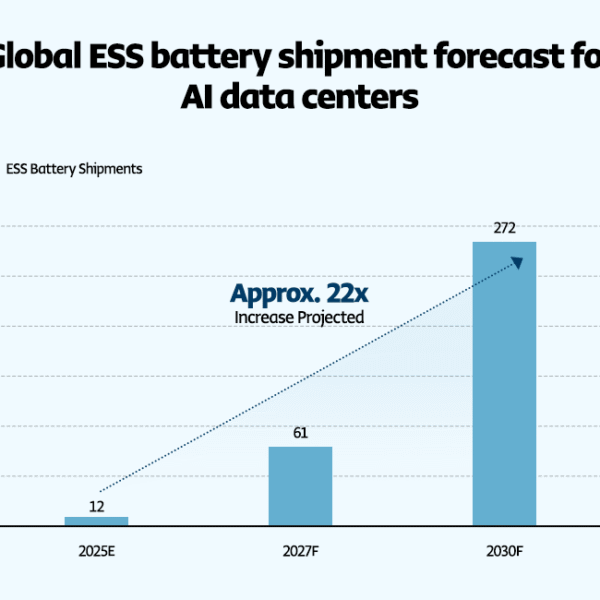
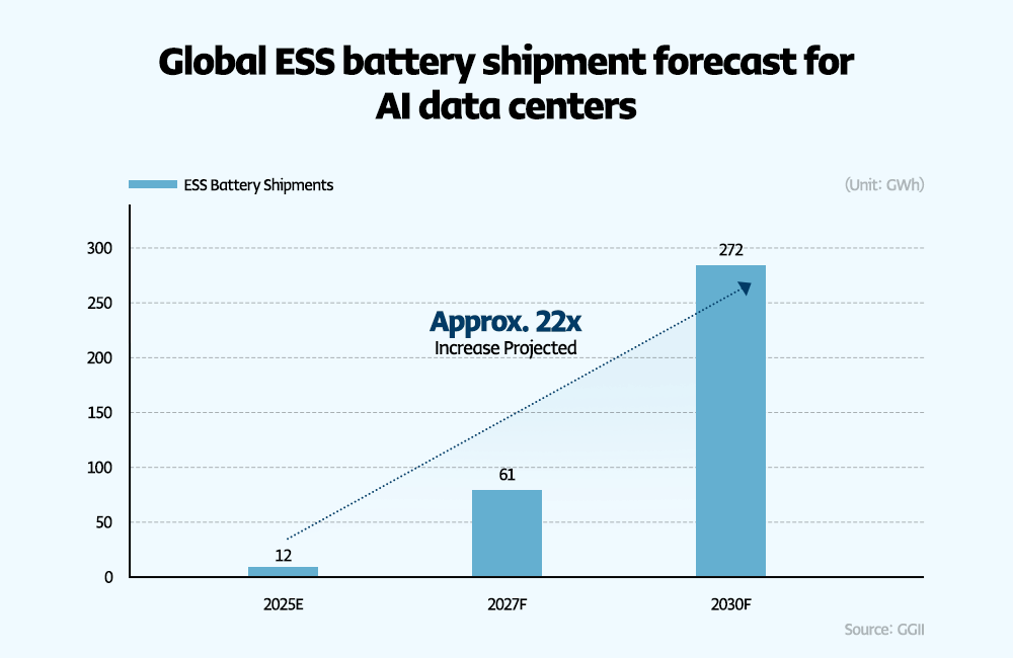
The AIDC-dedicated market is even more dramatic. Market research firm GGII forecasts that global ESS battery shipments for AI data centers will grow 22-fold, from roughly 12 GWh in 2025 to approximately 272 GWh in 2030. The U.S. data center BESS market alone is estimated to reach $527.8 million by 2030. Total U.S. data center power consumption is projected to more than double, from 180 TWh in 2024 to 391 TWh in 2030, with a significant share of that growth coming from new AIDCs featuring an ESS attach rate above 75%.
U.S. policy direction reinforces this trajectory. The Investment Tax Credit (ITC) under the Inflation Reduction Act (IRA) has been expanded to cover standalone ESS projects. The DOE has set a target, through its LDES initiatives, to bring system costs down to roughly $0.05 per kWh by 2030. Meanwhile, Foreign Entity of Concern (FEOC) regulations aimed at reducing dependence on Chinese-made battery cells are opening a new window of opportunity for battery supply chains in Korea, the United States, and Europe.
5. The Last Window of Opportunity to Win the U.S. Market
The expansion of the U.S. ESS market represents what may be a final, decisive industrial opportunity for Korea’s battery manufacturers. Korea’s three major battery makers — SK On, LG Energy Solution, and Samsung SDI — collectively known internationally as “K-battery” companies, already possess the three key advantages needed to compete in the North American ESS market: competitive pricing, product quality, and readiness to comply with FEOC requirements. In particular, if expanded LFP (lithium iron phosphate) production lines are combined with local U.S. manufacturing, these companies stand a strong chance of capturing a significant share of the North American AIDC battery market over the next five years.
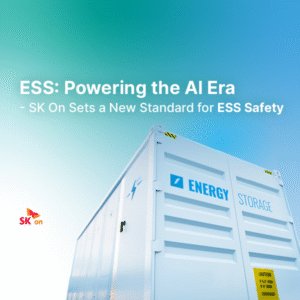
SK On’s own ESS brand, GRIDON, is pursuing local production in the United States as part of its strategy to expand market share. The company is reportedly in discussions with multiple U.S.-based customers on ESS supply contracts exceeding 10 GWh in scale, further raising expectations for its growth prospects. If this momentum is combined with transformer and HVDC (high-voltage direct current) exports from Korea’s three major power equipment makers — HD Hyundai Electric, Hyosung Heavy Industries, and LS Electric — Korea could position itself as an integrated exporter of both batteries and power equipment as a single package.
ESS is no longer mere infrastructure — it is a strategic asset. The real bottleneck of the AI era is not semiconductors, but power; and the real bottleneck in power is not generation capacity, but flexibility. The reason the United States is now concentrating capital and policy on ESS is clear: it is the only viable short-term solution capable of handling the ultra-high-density, highly volatile loads created by AIDCs, and the long-term glue that connects renewable energy and nuclear power into a coherent supply system.
The U.S. ESS market will serve as a bellwether that determines the direction of the global battery industry over the next five years. For Korea to seize this window of opportunity, two efforts must advance in parallel: strengthening batteries and power equipment as export industries, and rebuilding the domestic ESS ecosystem as a viable home market. ESS is no longer a mere accessory to power plants — it is a core strategic asset that will shape national competitiveness in the AI era.
■ Related articles

- Why Are Korean Companies Investing in Vietnam’s Energy Sector—and Why Now?

- SMRs: A Game Changer for Powering the AI Era

- SK On Expands U.S. ESS Push at ACP CLEANPOWER 2026

- [Inside ESS] From Early Detection to Rapid Response: SK On’s Proprietary Safety Technologies for ESS

- [Inside ESS] Powering the Future of Energy SK On ESS: GRIDON