Beyond Innovation, Cost Competitiveness in Next-Generation Batteries Is Critical
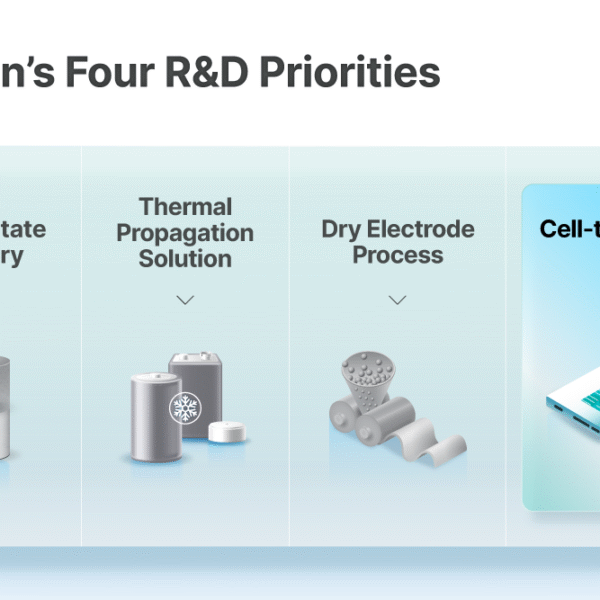
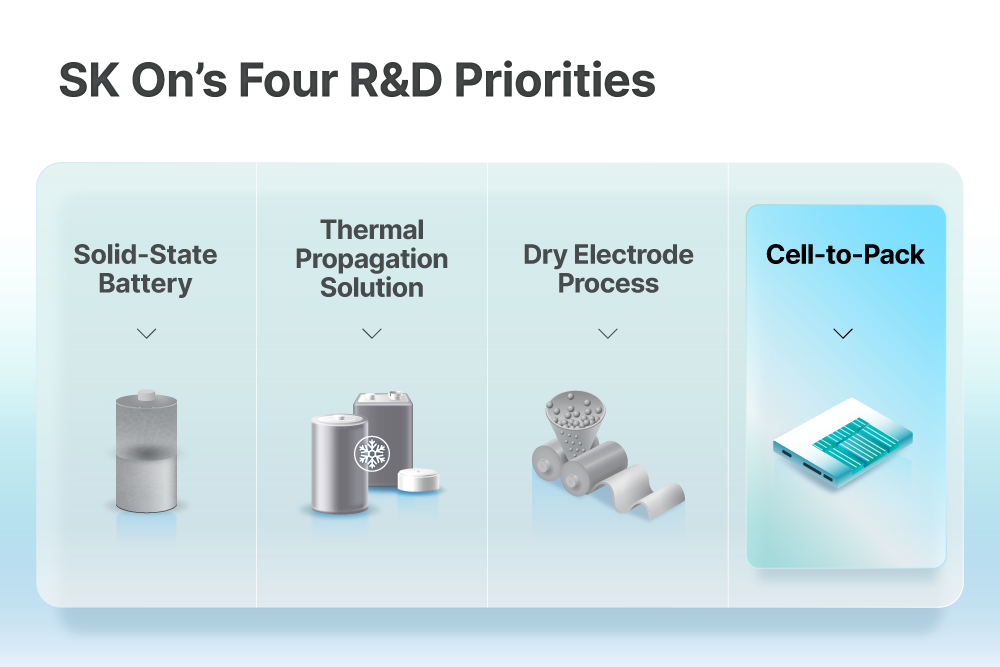
In batteries, cost is a core competitive factor. As battery pack prices trend downward toward an average of USD 100 per kWh across major chemistries like LFP and NCM, the overall cost of electric vehicles (EVs) is reaching a point at which it is comparable to that of internal combustion engine vehicles. This shift has been made possible through more stable raw material prices, large-scale production, and advancements in manufacturing technologies. Within this landscape, SK On is strengthening its cost competitiveness through Cell-to-Pack (CTP) and dry electrode technologies. As the fourth and final article in this series covering SK On’s four core R&D priorities, SK On will focus on CTP technology.
CTP Simplifies Battery Architecture and Enhances Cost Efficiency
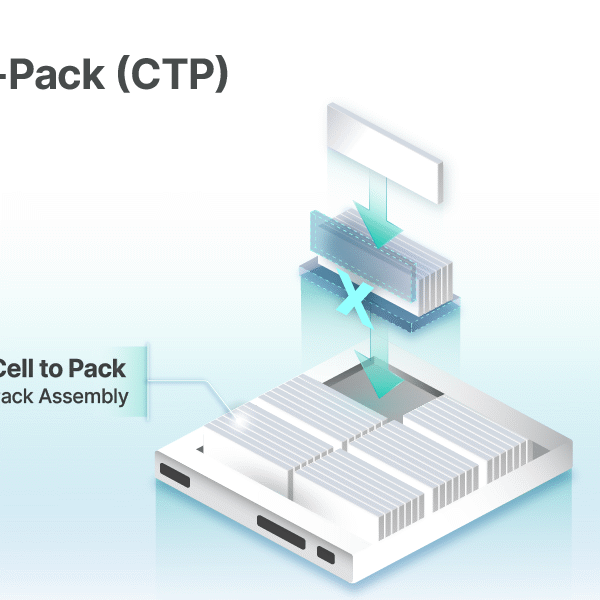
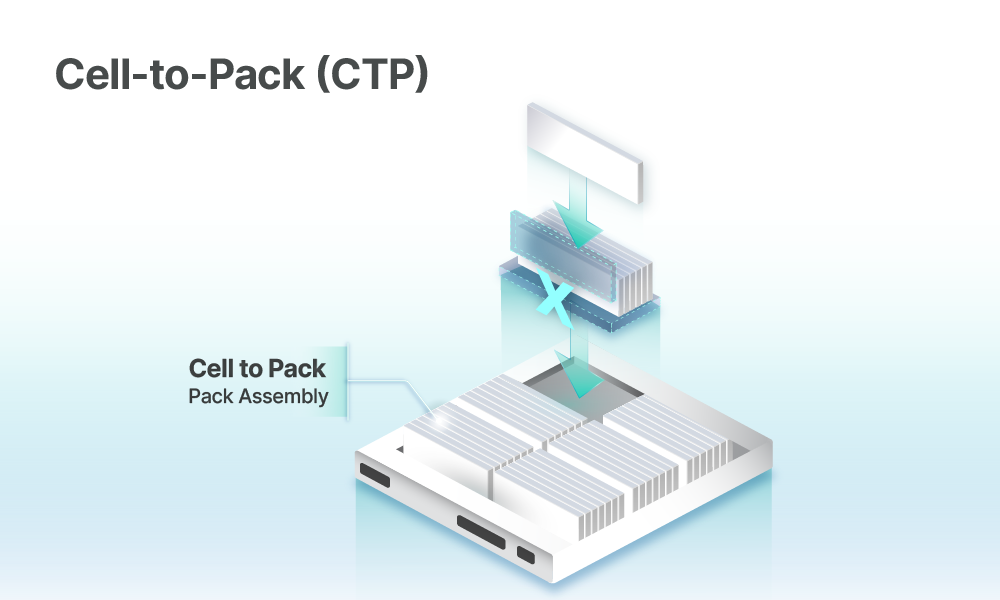
In battery manufacturing, reducing steps in the process directly translates to lower cost. Traditional EV batteries are built by grouping cells into modules, which are then assembled into a pack. By assembling cells directly into the pack structure, CTP eliminates the module stage entirely. This approach offers several advantages:
1) Maximized Space Efficiency allows more cells to be installed within the same pack volume by removing modules.
2) Improved Energy Efficiency increases energy density and driving range by enabling more cells within the same pack volume. Removing the module structure also reduces total weight, contributing to a lighter battery system.
3) Cost Reduction reduces assembly steps, which decreases labor and manufacturing costs while also eliminating module-related expenses.
Rising Importance of CTP under Strengthened Safety Standards
According to 360iResearch, the global CTP market is expected to grow at an average annual rate of 26.43%, reaching USD 277.5 billion by 2032. This growth has been driven in part by the tightening of thermal propagation (TP) safety standards worldwide, beginning with China’s GB 38031 in 2020. Since then, regulations in major regions — including Europe’s UN R100 and the U.S. FMVSS No. 305a — have significantly strengthened TP criteria regarding EV battery safety.
To meet these reinforced requirements, battery packs have incorporated more insulation and structural reinforcement, resulting in increased complexity and weight. Under these conditions, conventional module-based pack designs face limitations in improving both safety and space efficiency. CTP can offer a more efficient way to meet strengthened TP standards while simplifying the pack structure and reducing manufacturing costs, ultimately improving overall cost competitiveness.
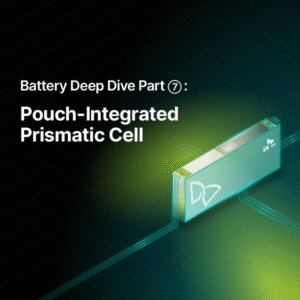
In particular, pouch-type CTP designs have been gaining traction. Pouch cells offer greater design flexibility and allow for more efficient cell arrangement, enabling higher space utilization. This synergy between pouch cells and CTP can support improvements in both energy density and lightweight pack design.
Enhancing Pouch-Type CTP Technology
To maximize the benefits that CTP technology has to offer, SK On has established a dedicated task force within its Future Technology Research Institute in Korea to further advance pouch-type CTP technology. By utilizing flexible aluminum pouch film, the design reduces structural constraints, improves space utilization, and is engineered to support a lighter and more adaptable pack configuration, while also serving to protect the cells from external impact. Additionally, thermal insulation materials placed between cells help control thermal propagation.
Next-Generation CTP with Large-Surface Cooling
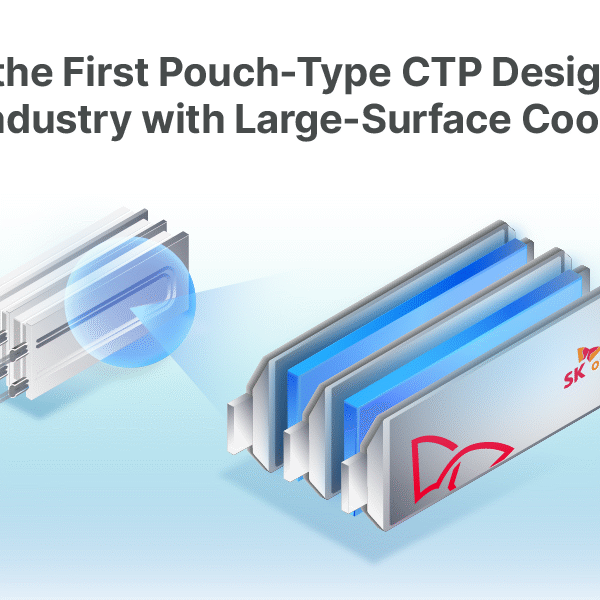
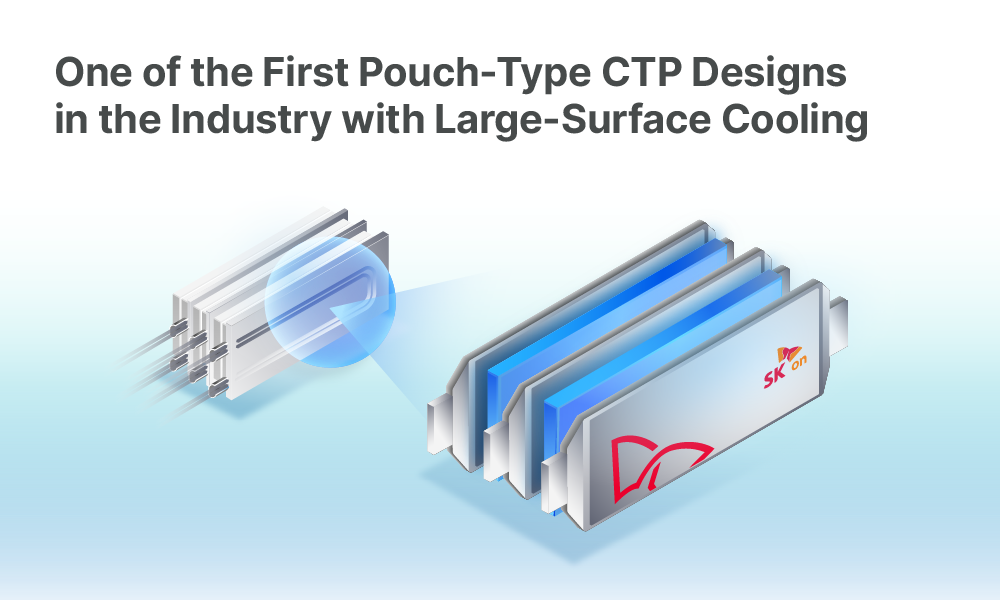
SK On has developed various CTP structures, including bottom-cooling and immersion-cooling designs. Building on these foundations, the company is expanding its portfolio with one of the industry’s first pouch-type CTP designs to apply large-surface cooling. This technology inserts aluminum cooling plates, — rather than thermal insulation materials — between cells, enabling rapid heat absorption and dissipation while also providing structural support. In this structure, the cooling plates are lighter and more durable compared to conventional insulation materials. As a result, the system achieves high space utilization and excellent cooling performance.
Battery Innovation through Four R&D Priorities
Through its four strategic R&D priorities, SK On continues to strengthen both battery safety and cost competitiveness. Solid-state batteries and TP prevention technologies raise the bar for safety, while dry electrode technology and CTP design enhance cost competitiveness. Together, these four initiatives form SK On’s technological journey to shape the next generation of battery innovation.
■ Related articles

- [Battery Deep Dive] Part 1: Solid-State Batteries

- [Battery Deep Dive] Part 2: Thermal Propagation Prevention

- [Battery Deep Dive] Part 3: The Dry Electrode Process